
Africa
Gambia
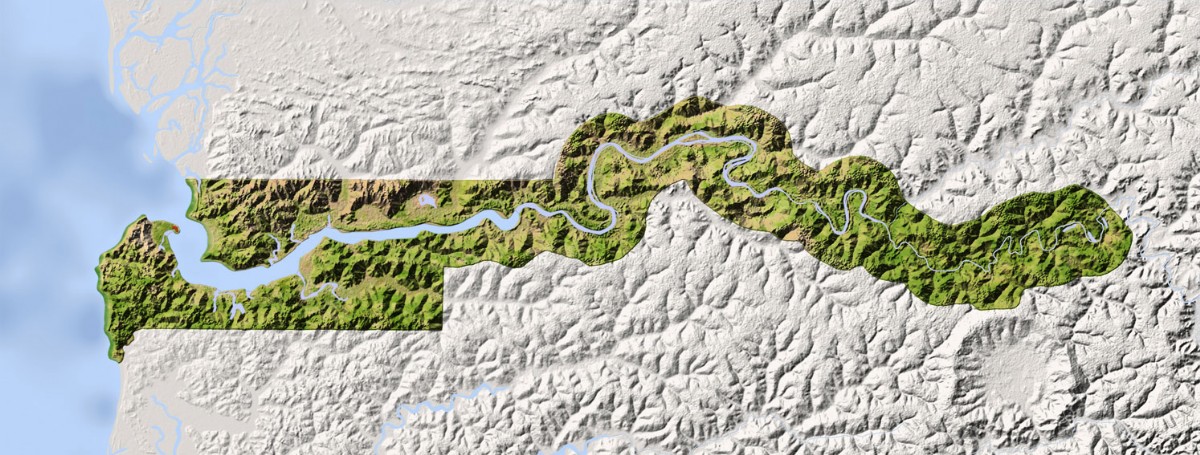
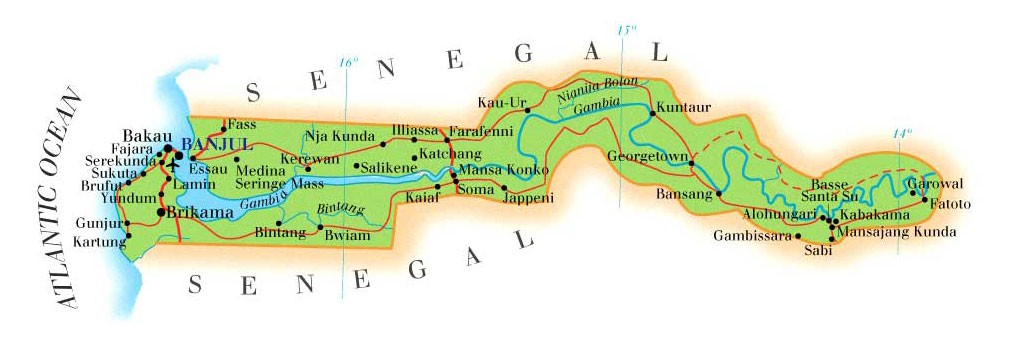
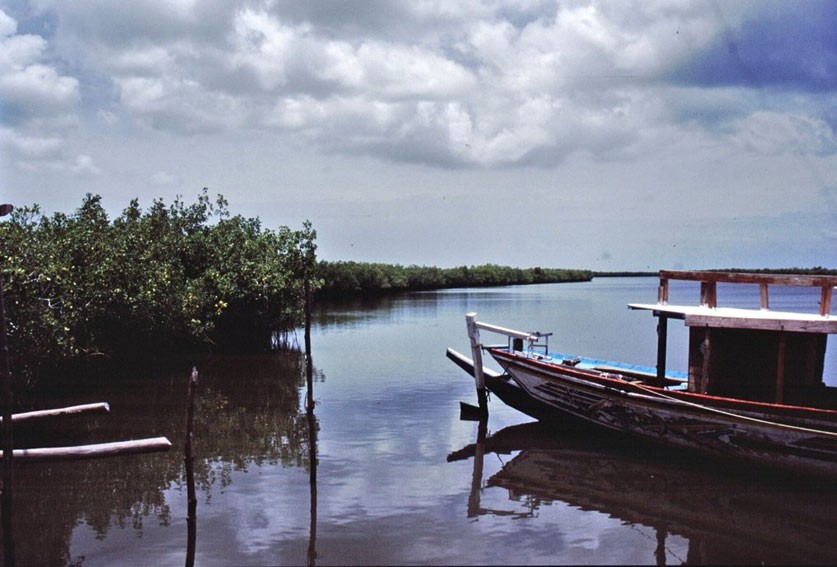
Gambia (usually called the Gambia) is made up of a narrow strip of land running either side of the River Gambia. Apart from its short Atlantic coast, it is completely surrounded by Senegal. The River Gambia flows through savanna grasslands, before reaching mangrove swamps near its mouth. The Gambia has a hot, tropical climate, with a rainy season between June and November.
People
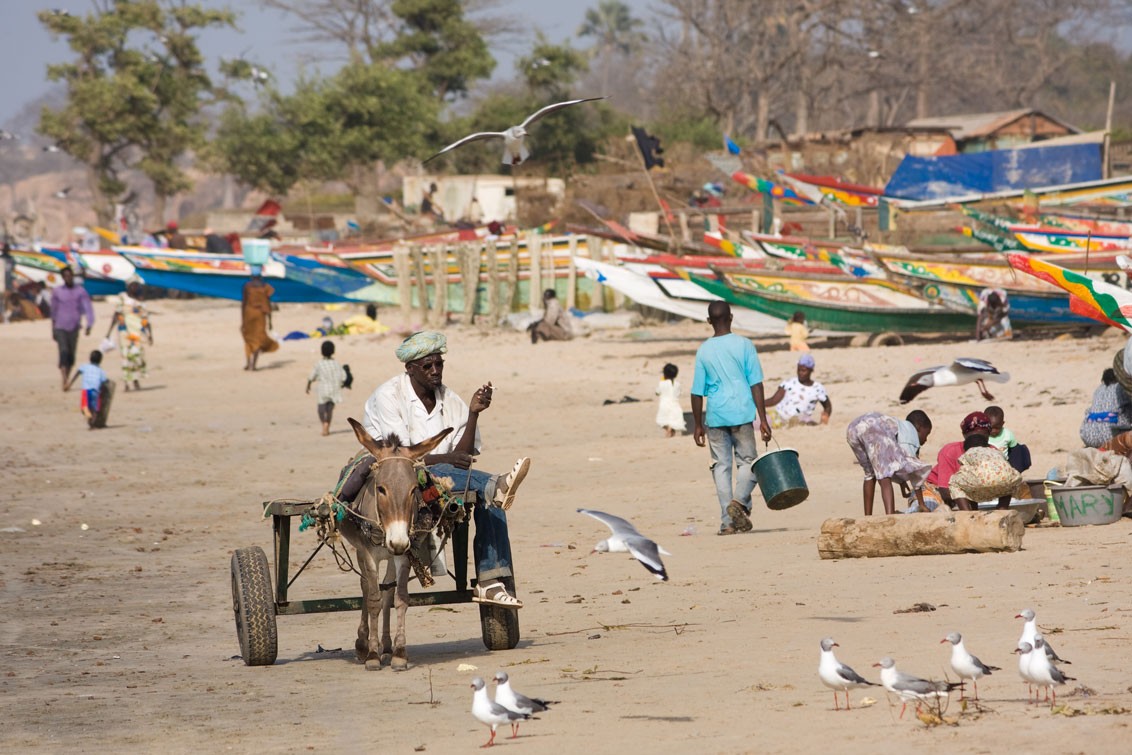
The Gambia is home to many different ethnic groups, including the Mandinka, Fulani, Wolof and Jola peoples. Each have their own language and traditions. The largest group, the Mandinka, are a mainly Muslim people whose ancestors originate in Mali. Mandinka families traditionally live together in groups of linked houses called compounds. The villages, made up of these compounds, are each ruled by group of elders. Islam is the major religion in the Gambia; it was introduced by Arab traders in the 10th century.
Economy
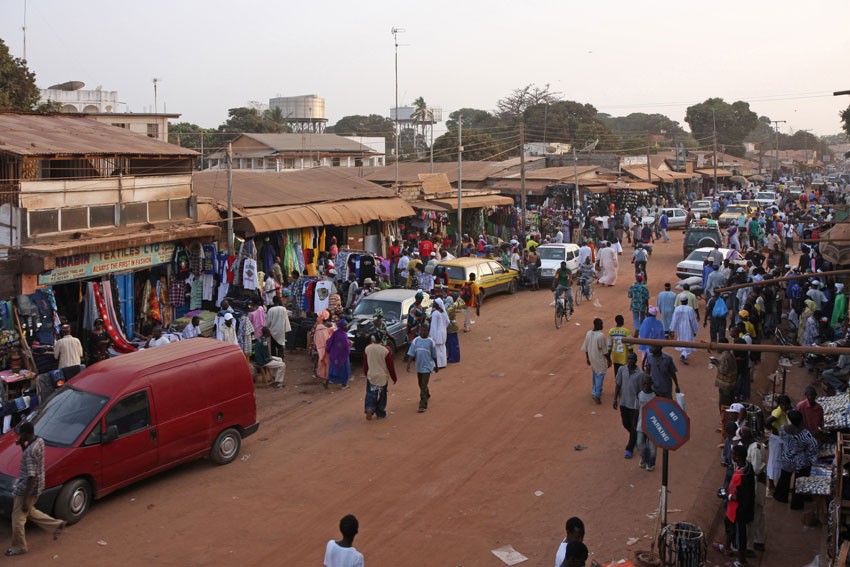
Like many countries in West Africa, the Gambia has an economy based on subsistence agriculture—family-run farms where the farmers grow enough food for their families and sell any extra produce at markets. Peanuts (groundnuts), are a major cash crop, along with other nuts, such as coconuts, brazils and cashews. For centuries, people have traded and transported goods by boat along the River Gambia.
Consultant: Nicholas Harris
Facts about Gambia
Population 2,773,000 (2023 estimate)
Area 10,380 sq km
Highest point unnamed elevation 53 m (174 ft)
Capital Banjul, population 495,099
Other major cities Brikama (pop. 77,700), Farafenni (30,000)
Languages English, Mandinka, Wolof, Fulani
Religions Muslim 96%, Christian 3.5%, indigenous beliefs 0.5%
Ethnicity Mandinka 42%, Fulani 18%, Wolof 16%, Jola 10%, Serahuli 9%, others 5%
Currency Gambian dalasi (GMD)
Chief exports peanuts, fish, cotton lint, palm kernels

History of Gambia
10th century
Muslim merchants set up trade routes from the Gambia across the Sahara, trading gold, ivory and slaves
13th century
Much of present-day Gambia is ruled by the Mali Empire
1455
Portuguese set up trading posts along the River Gambia
1588
Portuguese grant trading rights to English merchants on the River Gambia
16th–19th centuries
Hundreds of thousands of West Africans are sold into the slave trade on ships bound for the Americas
1700s–1850s
British and French struggle for control over the River Gambia
1816
British set up a military post called Bathurst, now the capital, Banjul
1856
France hands over its last territory on the River Gambia to Britain. It is governed from Sierra Leone
1888
The Gambia becomes a separate British colony
1939–45
Gambian soldiers fight alongside the Allies in World War II
1963
The Gambia becomes self-governing
1965
The Gambia becomes independent, with Dawda Jawara as prime minister; it remains a member of the British Commonwealth
1970
In a referendum, the Gambia’s citizens vote for it to become a republic. Dawda Jawara becomes the new president
1981
Rebels try to take over the government and the coup is put down (defeated) with help from Senegalese troops; more than 500 people are killed
1982–89
Senegal and the Gambia combine their armies, economies and currencies together to form a union called Senegambia
1994
Jawara’s government is overthrown by a coup led by Lieutenant Yahya Jammeh
1996
Jammeh is elected president
2000
A group of soldiers and businessmen are charged with treason and plotting to overthrow the government
2001
Political parties banned at the beginning of Jammeh’s rule are allowed to operate again
2004
Large reserves of oil are discovered
2006
Thousands of Senegalese refugees flee into southern Gambia, escaping political violence in Senegal
2017
Following the December 2016 presidential election, in which Adama Barrow is declared the winner, President Yahya Jammeh declares the result void and calls for a new vote; the ensuing crisis triggers an invasion by a West African peacekeeping force; Jammeh then announces he will step down and leave the country
2022
Government announces that Jammeh and his associates are to be prosecuted for "torture, enforced disappearances and numerous human rights violations"