
States of the US
Ohio
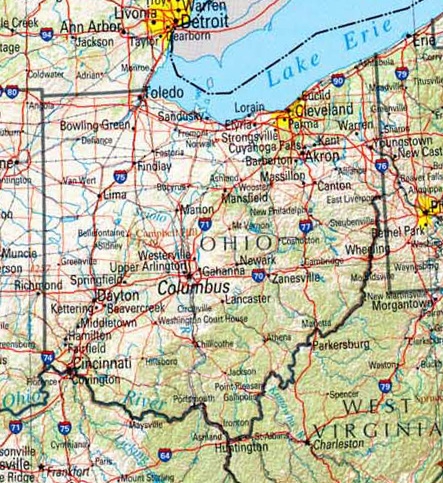
Ohio is located in the Midwest region of the United States. Running along its southern border with West Virginia and Kentucky is the Ohio River, while much of its northern border is the Lake Erie shoreline. Northwestern Ohio consists of a flat wetland known as the Great Black Swamp (now drained and converted to farmland). Across the central and eastern parts of the state the land rises gently to the Allegheny Plateau. As a result of erosion by the ice sheet of the last Ice Age, most of the plateau is low-lying. But the ice did not reach the southeastern corner of the state, where there are now rugged hills and forests.
Name
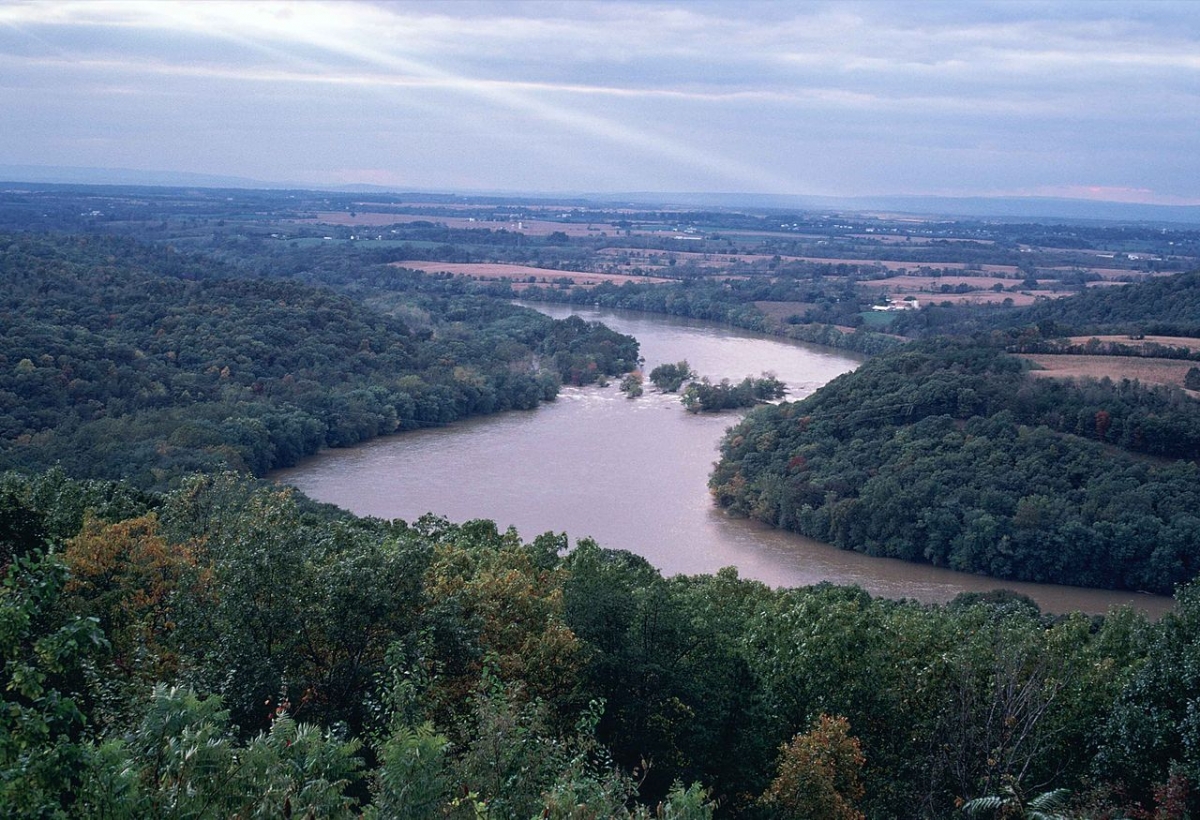
The name "Ohio" comes from a word in the language of the native Seneca people, an Iroquois tribe: ohi-yo (pronounced O-HEE-yoh). It was their name for both the Ohio River and Allegheny River, and means “large creek” or “good flowing stream”. It was once thought to mean "beautiful river", after a French mistranslation. The translation of "creek" is thought to be more appropriate than "river" since the Ohio flows into a larger river, the Mississippi.

Climate
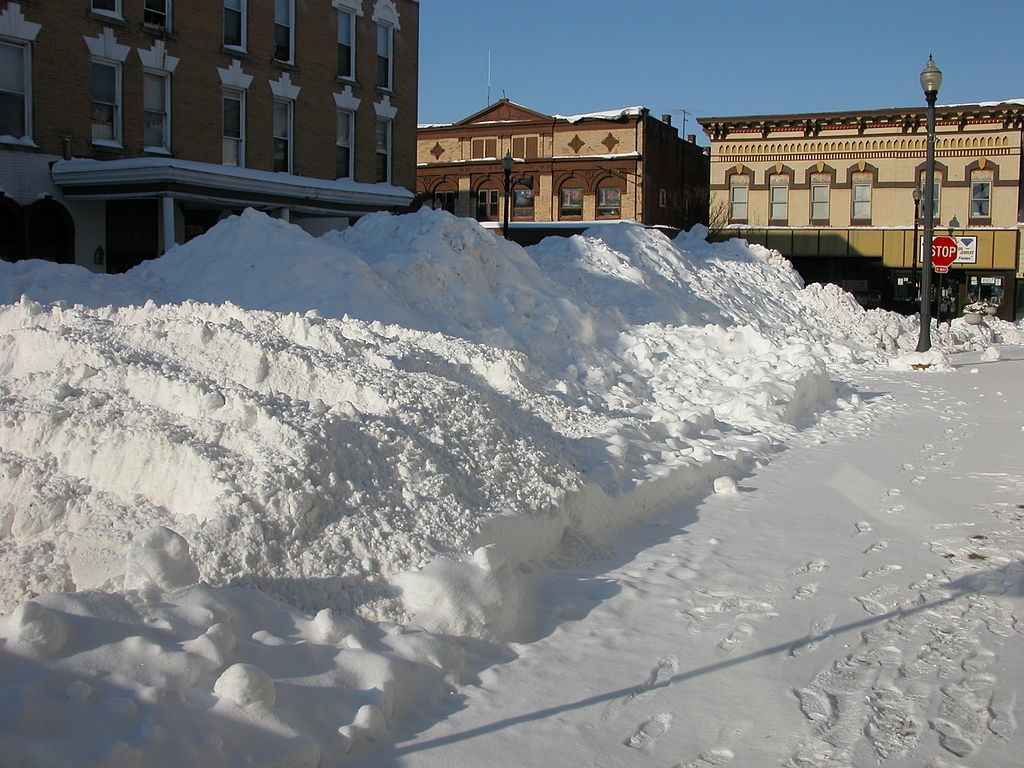
Ohio has a humid continental climate, becoming subtropical in the extreme south. Summers are typically hot and humid throughout the state (cooler in the northeast), while winters are generally cold, though milder in the south. Precipitation is moderate throughout the year. Severe snowstorms are not uncommon around the southeastern shore of Lake Erie, part of what is known as the Snowbelt. They are caused by cold air masses moving across the warmer lake water and picking up water vapour, which condenses and falls as snow downwind of the lake (known as the "lake effect").

Economy
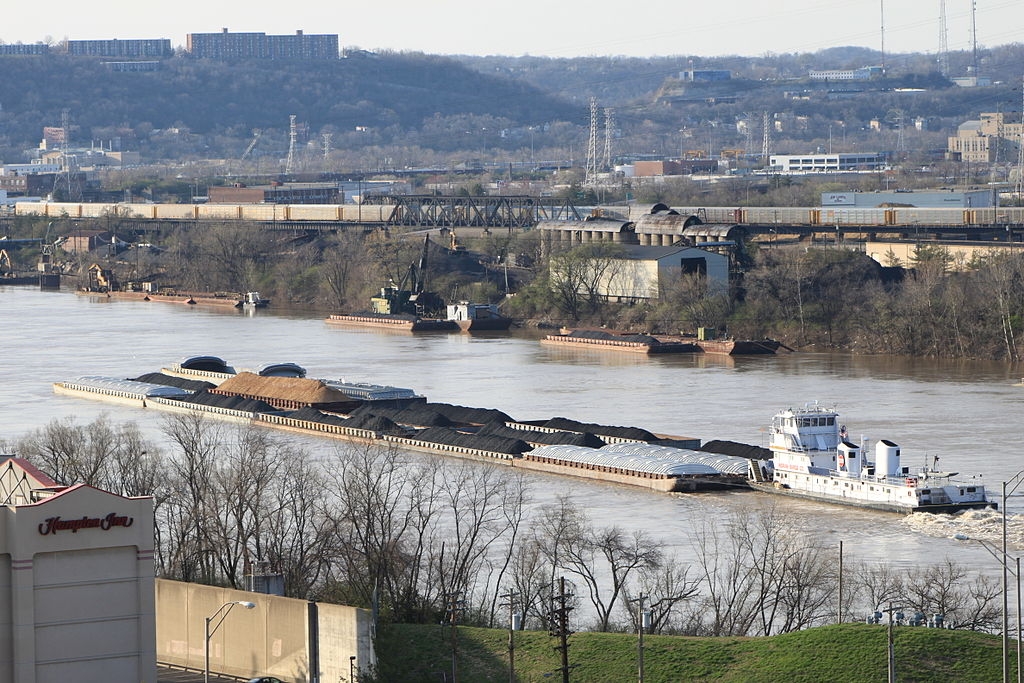
Lake Erie ports, especially Toledo and Cleveland, once handled the import of metal ores, coal and oil, along with the export of steel and automobile parts. Ohio is still the centre of steel production in the US, although it has been in steep decline for several decades. For this reason, Ohio is known as a Rust Belt state.
The ceramic and glass industries are also long established in the state. Ohio’s rubber and plastics industry, dominated by the Goodyear Tire & Rubber Company based in Akron, together with fabricated metals, food processing (including frozen foods), cleaning products, electrical equipment and appliances, are all important to Ohio’s economy. Dayton is the state's aerospace and aviation technology hub. New and developing industrial sectors include bioscience, medical and technological research—and renewable energy, giving the state the nickname, "Fuel Cell Corridor”.

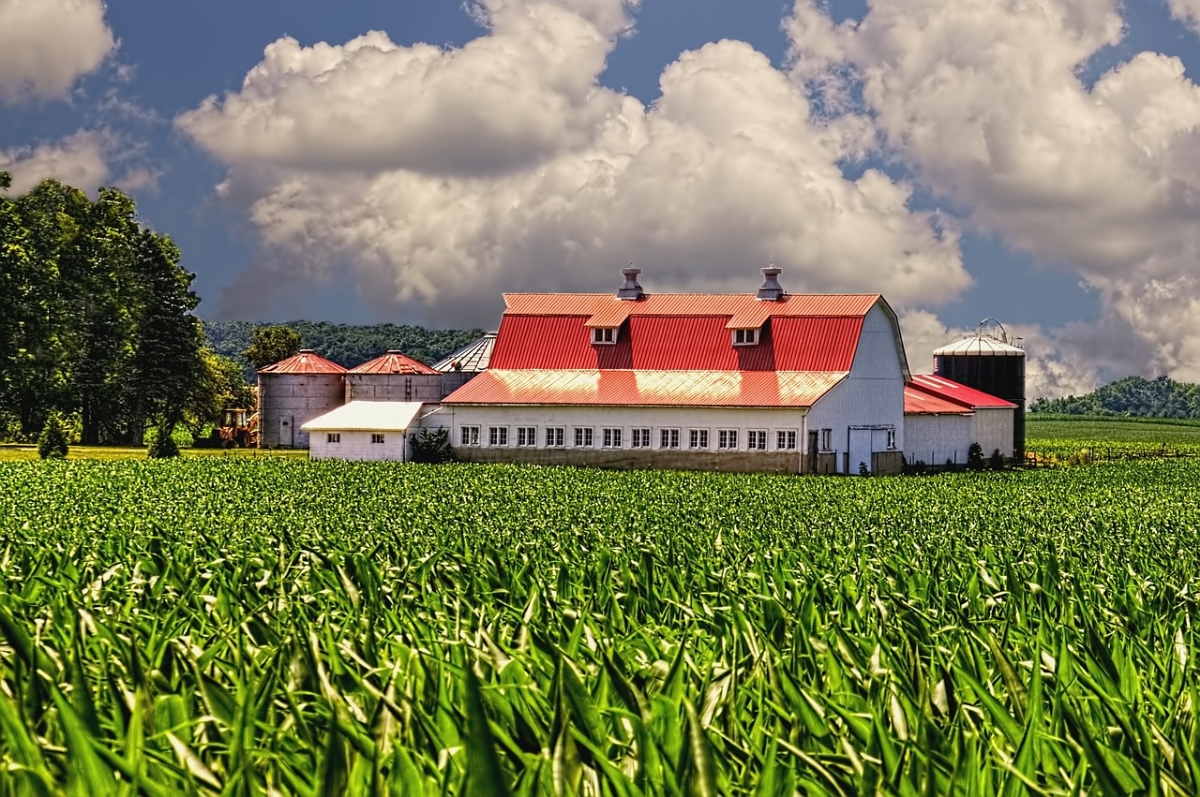
Ohio also has extensive farmland. Maize, soya beans, hay, wheat, tomatoes, cattle, pigs and and dairy items are the chief products.
Cincinnati
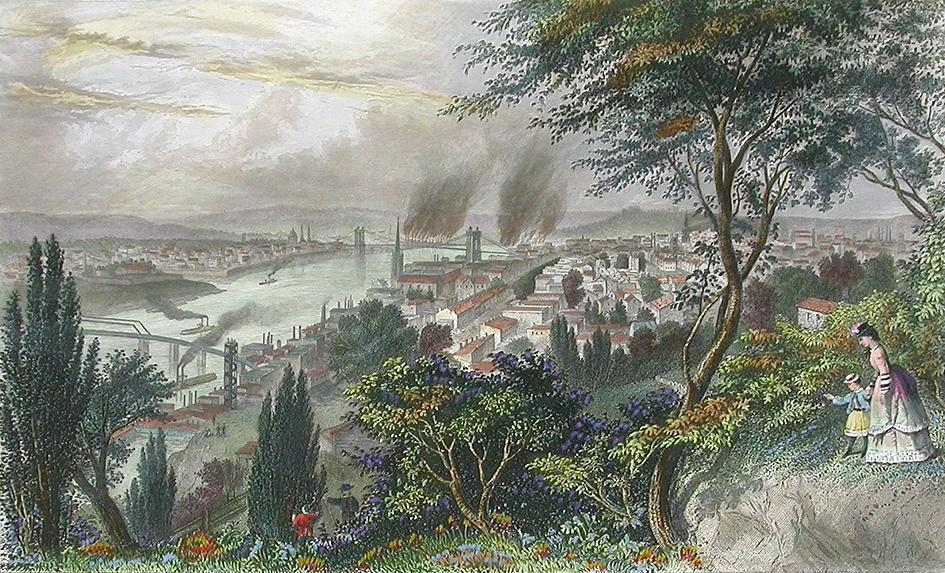
Founded in 1788, Cincinnati is located where the Licking River meets the Ohio River. Today it lies at the heart of a metropolitan area, overlapping into Kentucky, which has a population of more than two million people. In the 19th century, Cincinnati, grew up as a trading centre for farm and meat products, using steamships on the Ohio River. It became a boomtown, the third largest manufacturing city in the country. The shift from water to rail transport later in the century slowed Cincinnati's growth. The city is known for its fine architecture of these years, giving it the nickname "Paris of America”.
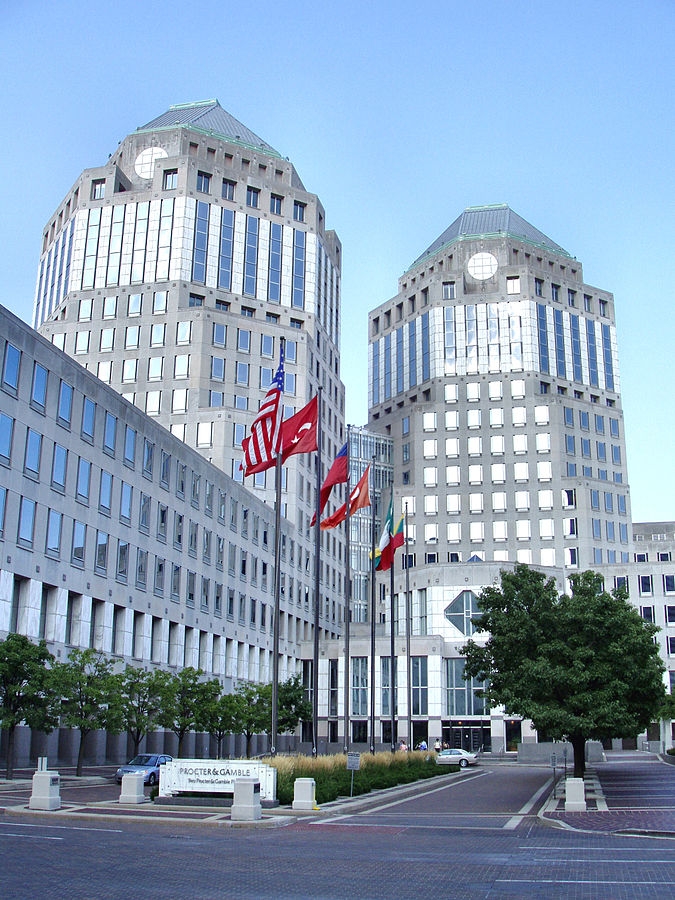
Procter & Gamble, founded by William Procter and James Gamble in Cincinnati in 1837, still has its headquarters based in Cincinnati, together with manufacturing plants located throughout the state. Now the eighth largest company in the world, the company’s main products are cleaning agents and personal hygiene products.

Cleveland
Founded in 1796 on the shore of Lake Erie, Cleveland grew rapidly after the completion of the Ohio and Erie Canal, a link between the Ohio River and the Great Lakes, in 1832. Cleveland was now connected to both the Atlantic Ocean via the Erie Canal and the Gulf of Mexico via the Mississippi River. Iron ore, shipped from Minnesota, and coal transported by rail, arrived in Cleveland to supply Ohio's iron and steel industry. Many oil refineries were founded in Cleveland in the late 19th century. It was home to Standard Oil, making it the "oil capital of the world", and producing the world's first billionaire, John D. Rockefeller.

Already a centre of the chemicals industry, in the early 20th century the city emerged as a major car manufacturer. Following a long period of decline since the 1950s, Cleveland's economy has diversified into financial services, healthcare and biomedical research. Today, Greater Cleveland has a population of over 2 million.

Facts about Ohio
Area 44,825 sq miles (116,096 sq km)
Highest point Campbell Hill 1549 ft (472 m)
Population 11,785,935
Capital Columbus
Largest cities Columbus, 913,175; Cleveland, 362,656; Cincinnati, 311,097; Toledo, 265,304, Akron, 188,701; Dayton, 135,512; Parma, 78,951; Canton, 69,197
Nickname Buckeye State
State bird Cardinal
State flower Scarlet carnation
State tree Buckeye
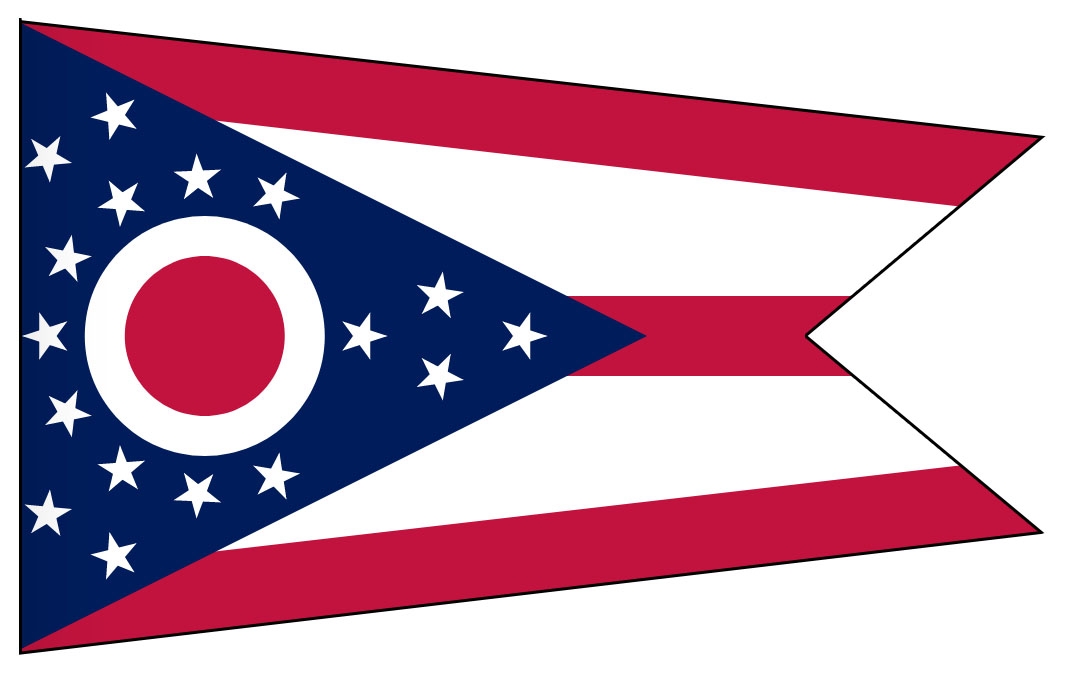

Consultant: Nicholas Harris
History of Ohio
c. 1000–200 BC
Adena mound-building culture flourishes in the central Ohio valley
c. 200 BC–400 AD
Hopewell mound-building culture becomes established in the region
c. 1000–1500
Fort Ancient culture: a number of chiefdoms flourish in the Ohio Valley
17th century
Beaver Wars: Iroquois Confederacy claims much of the Ohio country as hunting and beaver-trapping grounds, driving out other Native American peoples such as the Iroquoian Petun, Erie, Chonnonton and Wyandot, and the Algonquian Miami, Mascouten, Lenape, Shawnee and Odawa. After disease epidemics and war, the area gradually becomes repopulated, mostly by Algonquians and other multi-ethnic native peoples
1669
French explorer Robert de la Salle begins his exploration of the Ohio Valley and claims the entire area for France
1680
Fort Miami near present-day Toledo is constructed by the New France Governor-General Louis de Buade de Frontenac
early 18th century
The French set up fur trading posts in the region, including Fort Sandoské (1750)
mid-18th century
British also establish trading posts in the area, including Loramie's Fort
1754
George Washington is sent to the Ohio Country by the Virginia-based Ohio Company to fight the French for control of the territory, sparking the outbreak of the French and Indian War
1763
Treaty of Paris: following its defeat in the French and Indian War, France cedes New France (including today’s Ohio), their lands east of the Mississippi River, to Great Britain; Britain forbids settlement west of the Appalachian Mountains, including Ohio
1787
The newly-independent United States creates the Northwest Territory (Ohio Country, parts of Illinois Country and parts of old New France south of the Great Lakes) under the Northwest Ordinance; slavery is not permitted in the new territory. Settlement begins with the founding of Marietta the following year
late 18th century
Settlers pour into Ohio from New England, New York and Pennsylvania (including German Americans), travelling by stagecoach, wagon or barge; Native Americans, supported by the British, resist American settlement, but they are decisively defeated in the Battle of Fallen Timbers of 1794
1799
Ohio becomes a Territory
1803
Ohio is admitted to the Union as the 17th state, with Chillicothe as its capital
1804
An iron smelting plant, called Hopewell Furnace, is opened near Youngstown
1816
Columbus becomes Ohio's capital
1825
Ohio's growth is boosted by the opening of the Erie Canal
1830
Indian Removal Act: under President Andrew Jackson, the US government forces the removal of most Native American tribes, including those of Ohio, to Indian Territory west of the Mississippi River
1832
Ohio and Erie Canal connects Lake Erie with the Ohio River
1835–36
Toledo War: Ohio fights with Michigan in a boundary dispute over the Toledo Strip; Michigan gives up its claim to the strip in exchange for its statehood and approximately three-quarters of the Upper Peninsula
1850s
Immigrants from Germany, Central Europe and Ireland arrive in Ohio
late 19th century
After the Civil War, canal transport gives way to railway transport. Industry develops rapidly, drawing on shipments of iron ore from the upper Great Lakes region. The petroleum industry is established around Cleveland. Immigrants from all over the world swell the states’ urban population
1910–1940
First Great Migration: tens of thousands of African Americans travel north from the rural South of the US to live and work in northeastern and Midwestern cities, including those of Ohio
1920
The American Professional Football Association is founded in Canton, becoming the National Football League (NFL) in 1922
1930s
The Great Depression strikes the state hard. By 1933, more than 40% of its factory workers and 67% of its construction workers are unemployed
1995
Rock 'n Roll Hall of Fame museum opens in Cleveland
2001
Civil unrest in the Over-the-Rhine neighbourhood of downtown Cincinnati begins with a peaceful protest following the police shooting of unarmed African American Timothy Thomas
2023
(Feburary) A toxic waste spill occurs following a freight train derailment near the town of East Palestine. Authorities carry out a "controlled burn" of the hazardous chemicals, but there are concerns about whether the air, soil and water supply are still contaminated.