
States of the US
South Carolina
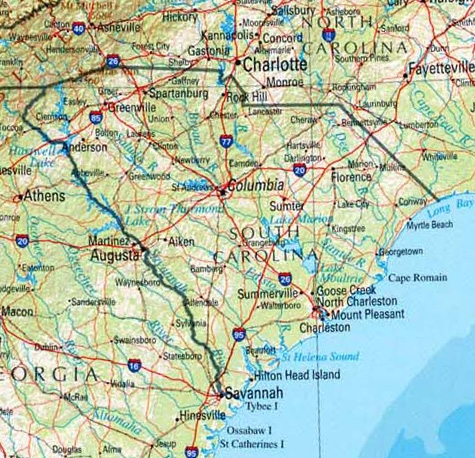
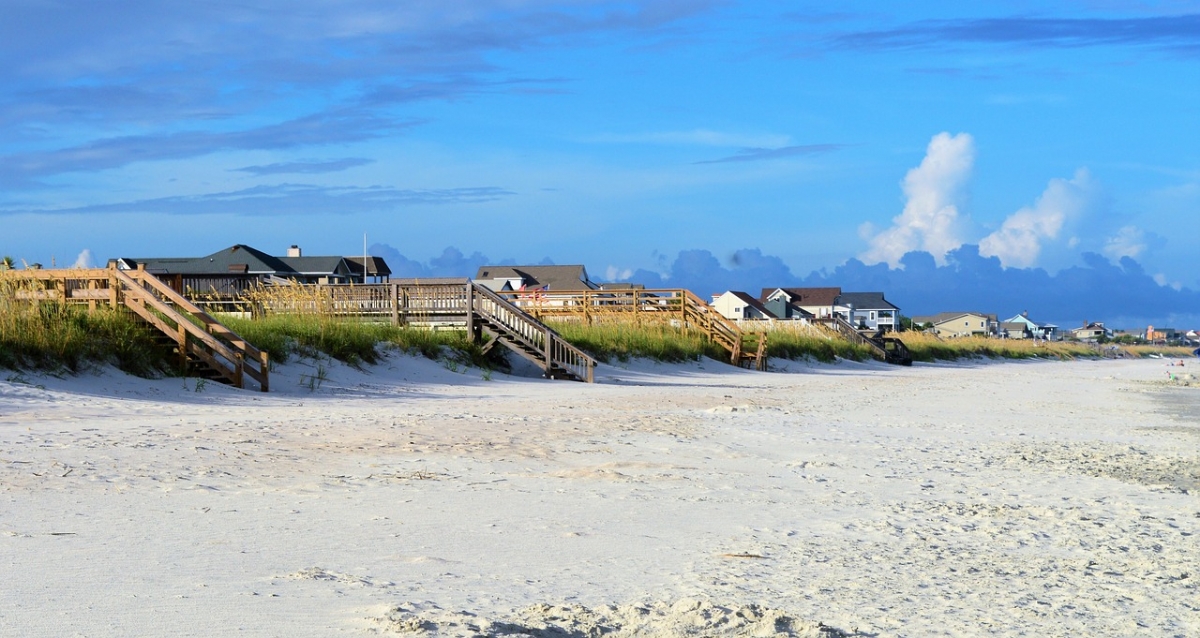
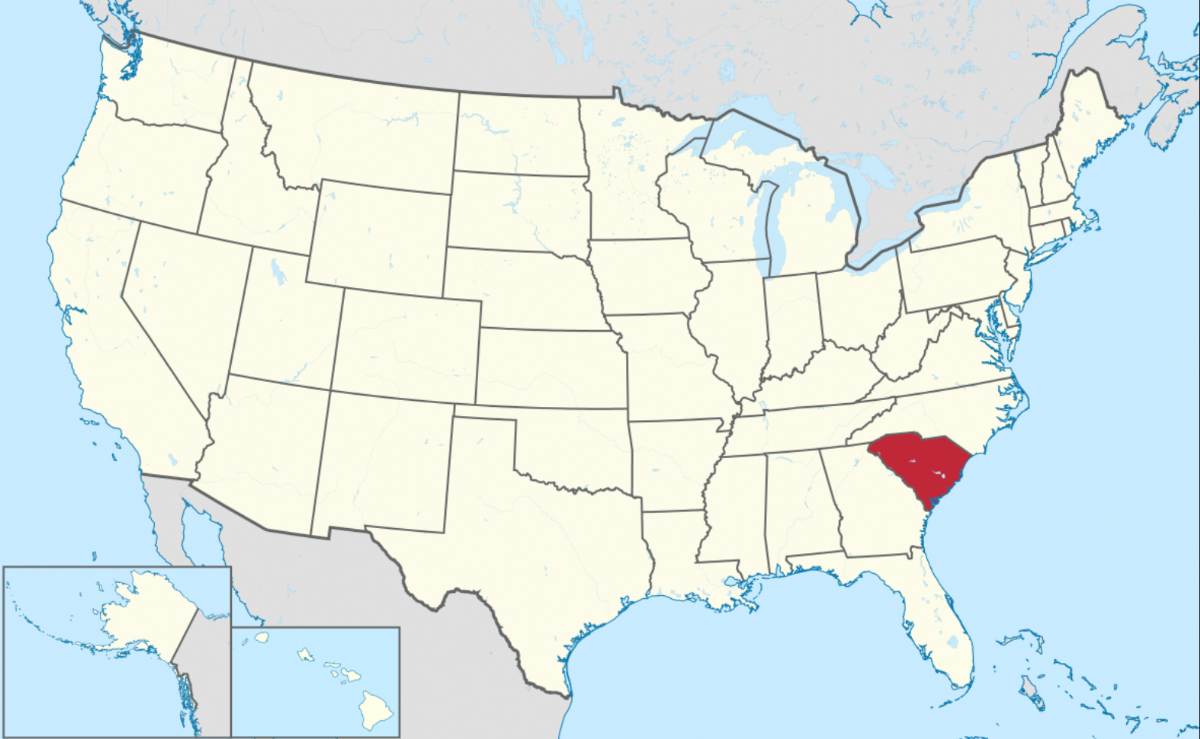
South Carolina is located in the southeastern United States. The state includes part of the Atlantic Coastal Plain. On the Grand Strand north of Georgetown, the coast is lined with sandy beaches. The shore becomes marshy to the south, where rivers and creeks flow into the ocean to create a maze of inlets and islands (the Sea Islands). Just inland are the Sandhills, ancient dunes lining what was once the coast millions of years ago. To the northwest of the coastal plain, above the Fall Line, the rolling, forested uplands of the Piedmont begins. These merge with the Blue Ridge Mountains, part of the Appalachian range, in the northwestern tip of South Carolina.

Name
In 1629, King Charles I of England granted a charter to Sir Robert Heath to set up a new colony "under the name, in honour of that king, of Carolana" (Carolus is Latin for “Charles”). The colony included the region that is now made up by North Carolina, South Carolina, Georgia and Tennessee. Since no settlements were set up, however, Heath's charter was later forfeited.
In 1663 King Charles II granted a new charter to the land to eight of his prominent supporters, called the Lords Proprietors, in gratitude for their assistance in restoring him to the English throne in 1660. The land now became officially known as the Province of Carolina. South Carolina split from North Carolina in 1729.

Climate
Coastal South Carolina has a subtropical climate, while upland areas are more temperate. Average temperatures become cooler as the elevation increases to the northwest. Lowland South Carolina has long, hot summers and short, mild winters. This area is prone to hurricanes sweeping in off the Atlantic Ocean.
Economy
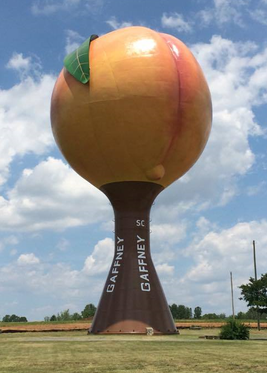
Once a cotton state, South Carolina's chief crops now include tobacco, soya beans, maize, rice, peanuts, pecans, sweet potatoes and hay. The state is second in only to California in the production of peaches. Cattle, pigs and poultry are widely raised. Fishing and forestry are important to the economy.
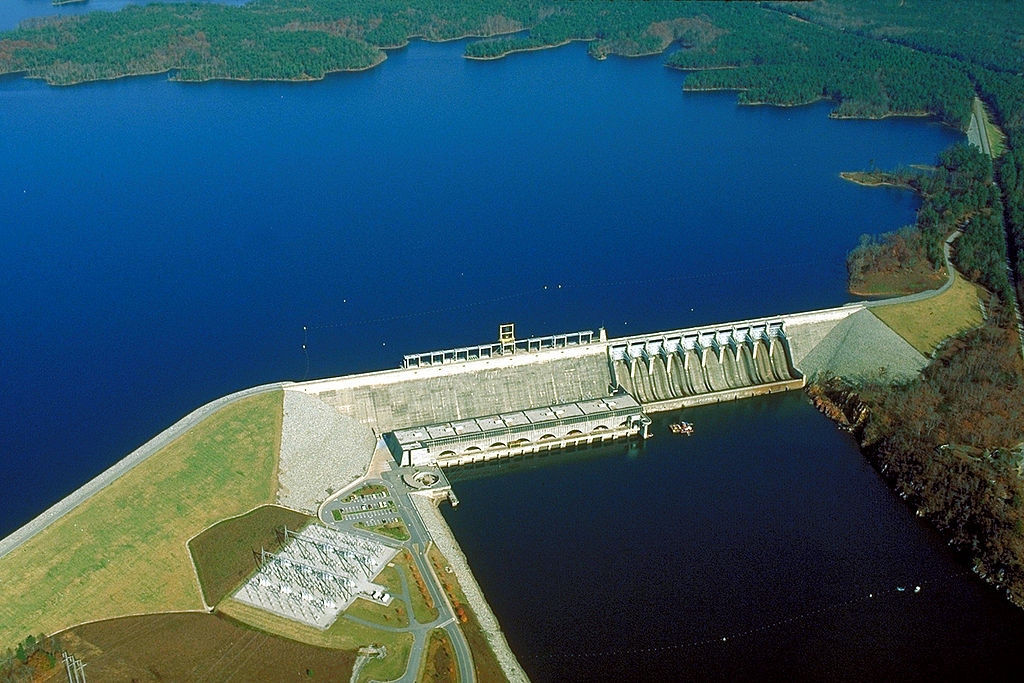
Textile and clothing industries, driven by water power from waterfalls of the the Piedmont and based on the state’s cotton crop, were once dominant. Chemical and paper products, machinery, cars and tourism are among the state’s major industries today. Hydro-electric power is one of its most important natural resources.
Facts about South Carolina
Area 30,109 sq miles (77,982 sq km)
Highest point Sassafras Mountain 3560 ft (1085 m)
Population 5,373,555
Capital Columbia
Largest cities Charleston, 155,369; Columbia, 142,416; North Charleston, 121,469; Mount Pleasant, 95,232; Rock Hill, 75,654
Nickname Palmetto State
State bird Carolina wren
State flower Yellow jessamine
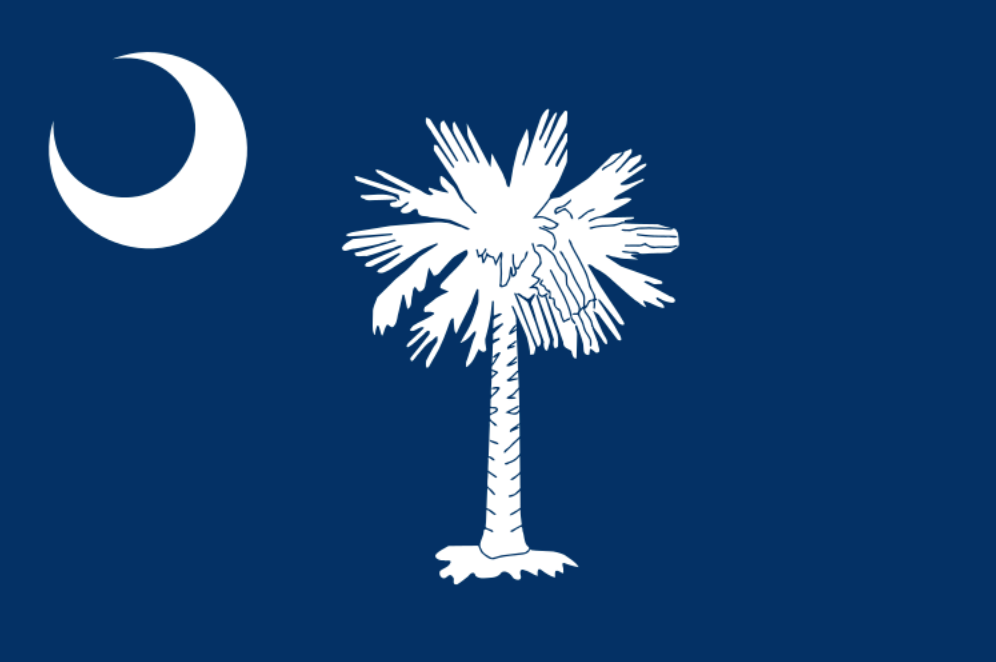
State tree Palmetto
Consultant: Nicholas Harris
History of South Carolina
before 16th century
Native American peoples, including the Catawba (Siouan language), Cherokee (Iroquoian language) and Yamasee (Muskogean language), live in today's South Carolina at the time when Europeans first arrive in the region
1521
The coast of South Carolina is explored by Spaniard Francisco de Gordillo
1526
Spanish explorer Lucas Vázquez de Ayllón founds the first European settlement in the present-day United States: San Miguel de Gualdape, near present-day Georgetown, South Carolina. Founded with 600 settlers, including African slaves, it is abandoned after only three months
1562
Frenchman Jean Ribaut establishes a Huguenot settlement on Parris Island in Port Royal Sound, but it is short-lived
16th–early 17th centuries
Spanish missions extend north from Florida almost as far as present-day Charleston
1629
King Charles I of England grants the territory between latitudes 36°N to 31°N to Sir Robert Heath. It is named Carolana, a Latin word which means “Land of Charles”. Since no settlements are made, Heath's charter is later forfeited
1663
King Charles II grants a charter to start a new colony in the area of North Carolina, South Carolina, Georgia and Tennessee to eight of his prominent supporters
1670
The first English settlement is made at Albemarle Point on the Ashley River, but poor conditions force the settlers to move to Charles Town (now Charleston)
1680s
Wealthy colonists, mostly arriving from Barbados, set up plantations worked by African and Native American slaves. Rice soon becomes the main crop; dams and canals needed to irrigate the rice fields are built. The fur trade with the Creek and other Native American tribes prospers
1712
The colony is divided into North and South Carolina
1715–16
The settlers come under attack by the Native American Yamasee people
1729
South Carolina formally becomes a royal colony
1730s–60s
Indigo becomes the colony's second staple crop after rice. European immigration is encouraged: Germans, Swiss, Scottish-Irish and other migrants arrive. Religious toleration brings settlement by merchants from the French Huguenot and Sephardic Jewish communities of London
1776
An independent government of South Carolina is set up with John Rutledge as president
1786
The site of Columbia is chosen for the new capital
1788
South Carolina is the eighth state to ratify (sign up to) the US Constitution
early 19th century
Cotton plantations spread across state
1860
South Carolina is the first state to secede (break away) from the Union
1861
Confederate batteries begin shelling Fort Sumter in Charleston Harbor, starting the American Civil War
1865
Columbia and other parts of South Carolina are devastated by Union forces under General William T. Sherman marching through the state
1880s
Conservative Southern Democrats, calling themselves "Redeemers", regain political power and pass Jim Crow laws to create public segregation and control the movement of African American labourers
1890–94
Governorship of "Pitchfork Ben" Tillman, a white supremacist who opposes civil rights for African Americans and defends the actions of violent lynch mobs. He is responsible for South Carolina's 1895 constitution, which disenfranchises most of the black majority and many poor whites
early 20th century
Many African Americans leave the state to go to live and work in northern cities during the Great Migration
1961
Nine black Friendship Junior College students, who later become known as the Friendship Nine, take seats at the whites-only lunch counter at a McCrory's in Rock Hill and refuse to leave. When police arrest them, the students choose to serve a jail sentence rather than pay a fine, known as the "jail, no bail" strategy. It is a key event in the Civil Rights Movement
1969
Having rejected the Nineteenth Amendment giving women the right to vote (which came into effect nationally 1920), the South Carolina legislature post-ratifies the amendment
1970s
Textile manufacturing in the state goes into decline
1989
(September) Hurricane Hugo makes landfall in South Carolina. In what is described as the single greatest natural disaster ever to strike the state, powerful storm surges and high winds inflict extensive damage across the barrier islands and other parts of the state, causing 35 deaths and 420 injuries
2010
Nikki Haley becomes the first woman and the first person of Asian-Indian descent to be elected governor