
Africa
Morocco
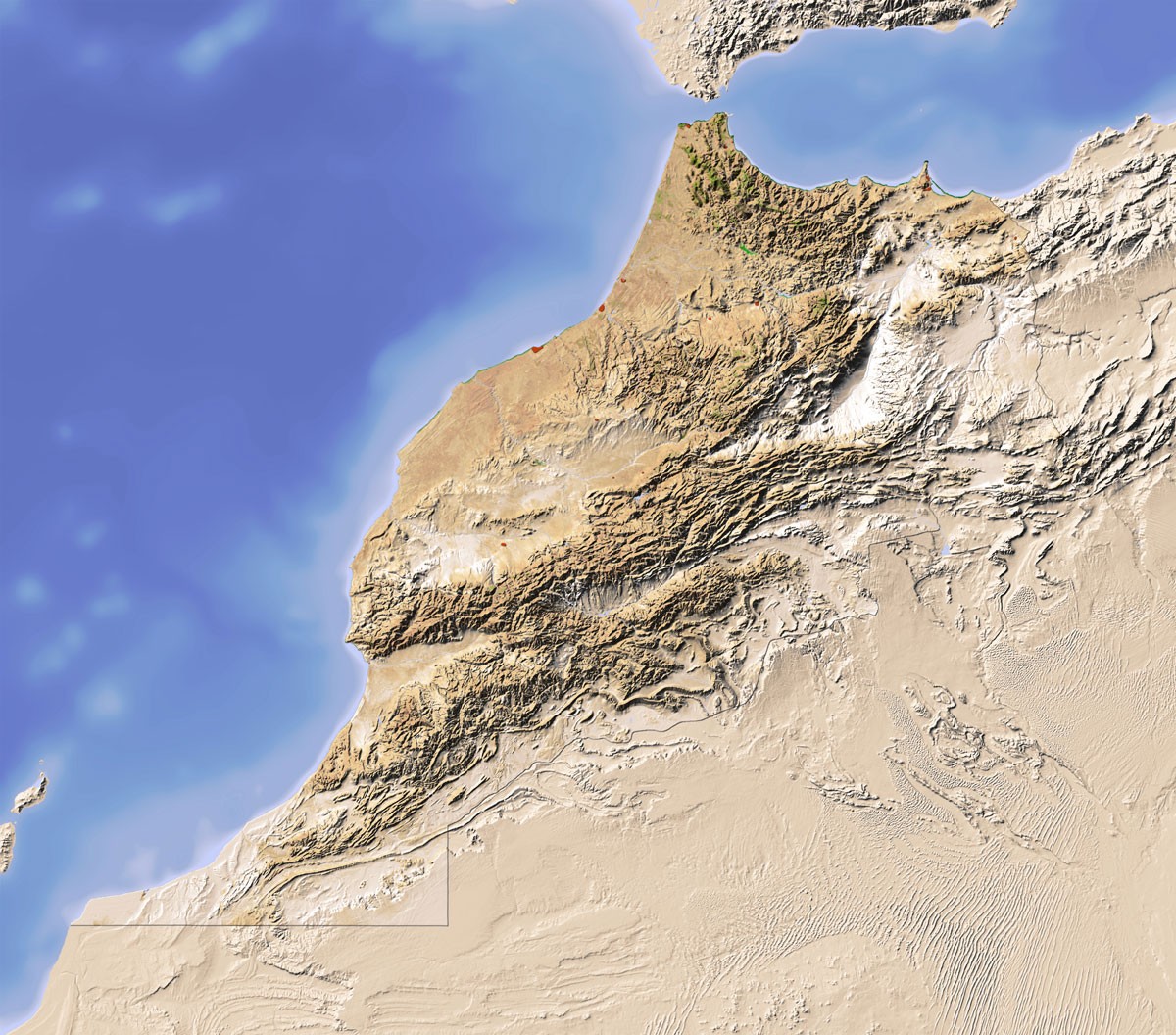
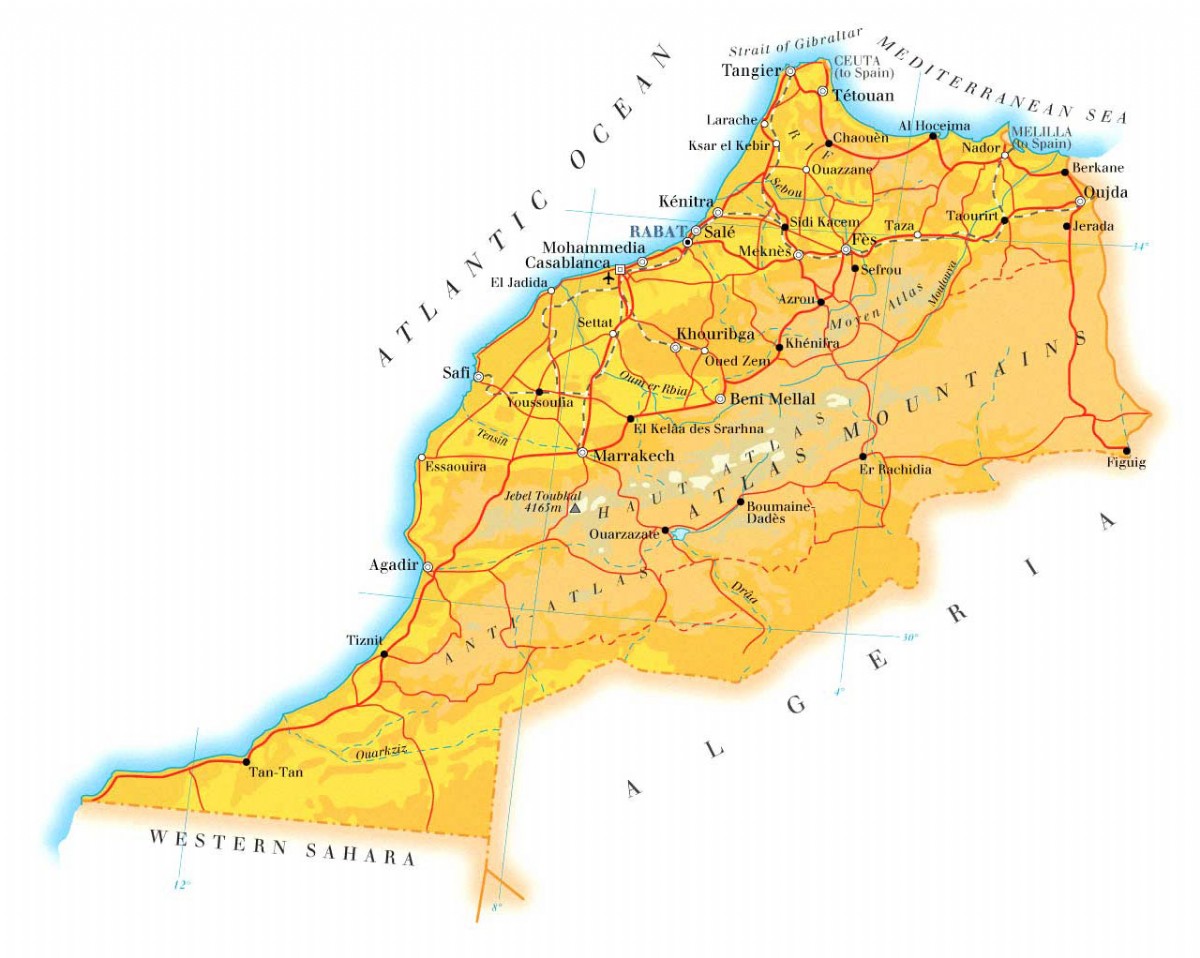
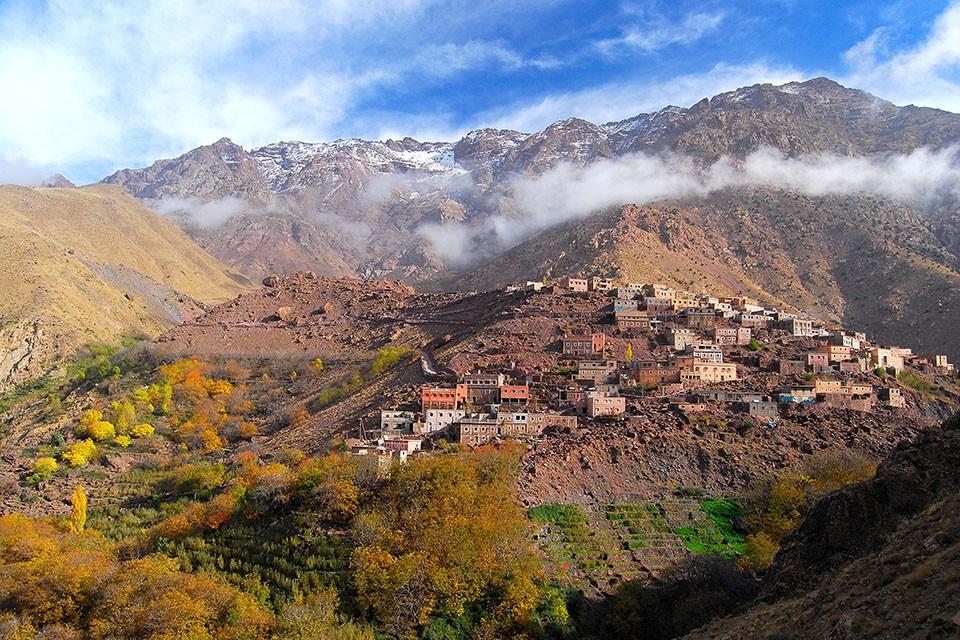
Morocco is separated from Europe by the Strait of Gibraltar, a strip of water just over 14 kilometres (9 miles) wide. Much of the land is made up of rugged hills and mountains. The Atlas Mountains run across the middle of the country: some peaks rise more than 4000 metres (13,000 feet) and are topped by snow in winter. To the north, plains stretch all the way to the coast. South of the mountains, dry valleys reach into the Sahara Desert. These southern regions have arid climate; elsewhere, the climate is hot in summer and warm in winter. Morocco is ruled by a monarch and an elected parliament. The king decides on military and foreign policies; he can also make laws called dahirs.

People
Nearly all Moroccans are descended from the Berber people—the region’s first settlers—as well as from Arabs who arrived later. Moroccans speak a form of Arabic called Darija, similar to the dialect spoken in Algeria and Tunisia. Most people live north of the Atlas Mountains, where the climate is warm and sunny, though not too hot.
Migrants
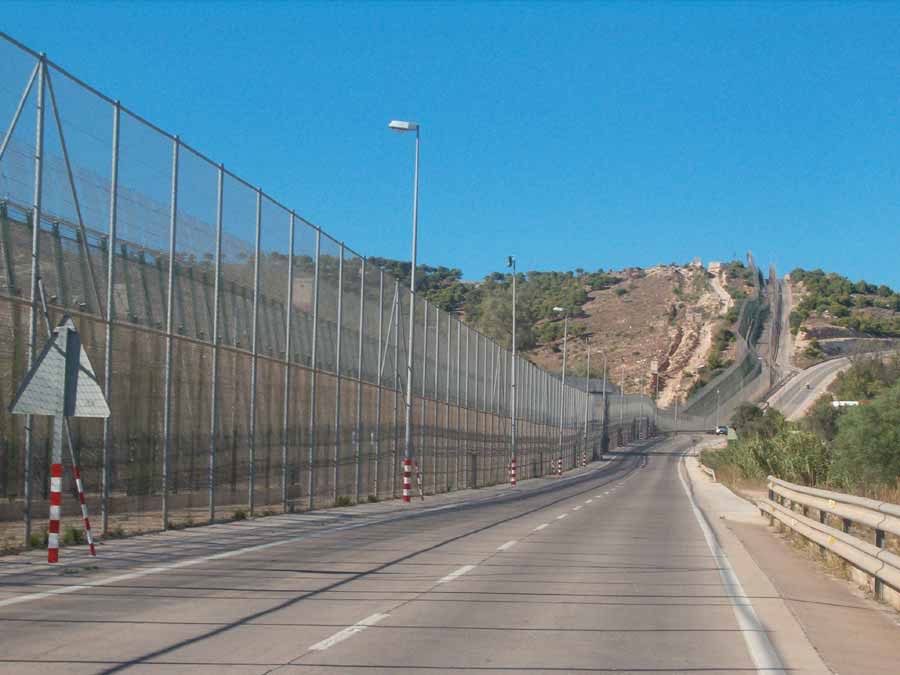
Because Morocco lies so close to Europe, it attracts thousands of migrants from sub-Saharan Africa every year, who use Morocco as a base for attempting voyages by sea to Spain. Tensions have grown up between Moroccans and these migrants. Most are very poor, and risk everything to make the dangerous journey (the currents are extremely strong) across the Strait of Gibraltar.

Agriculture
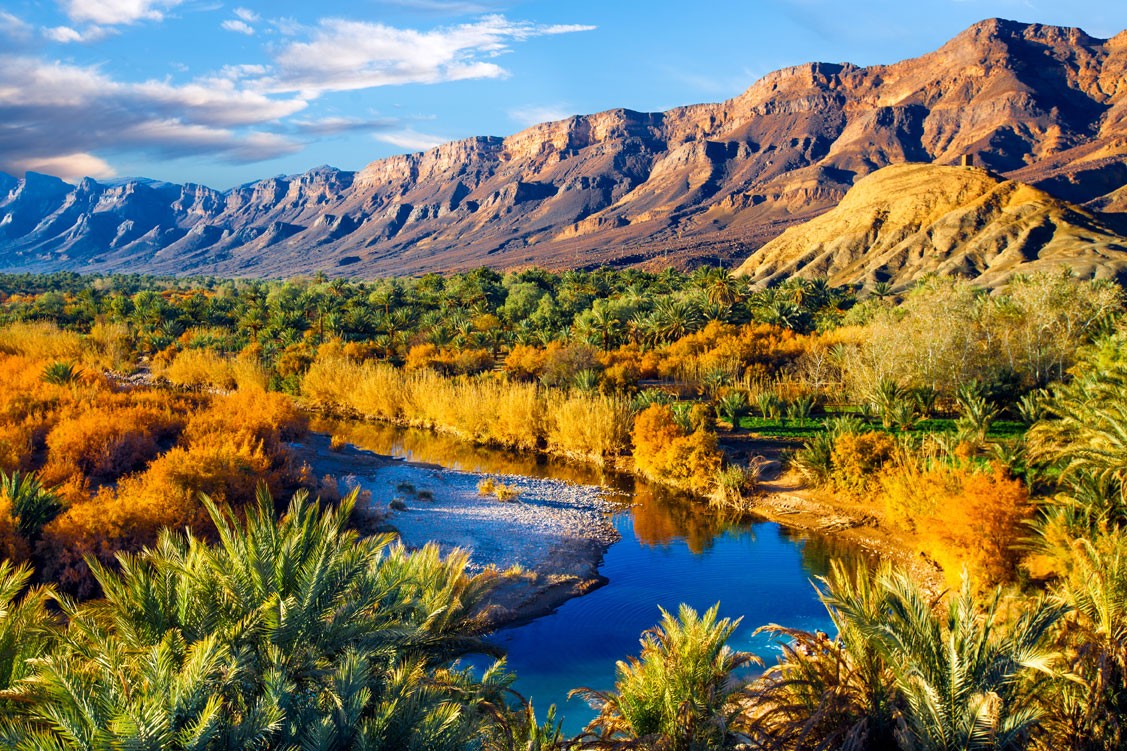
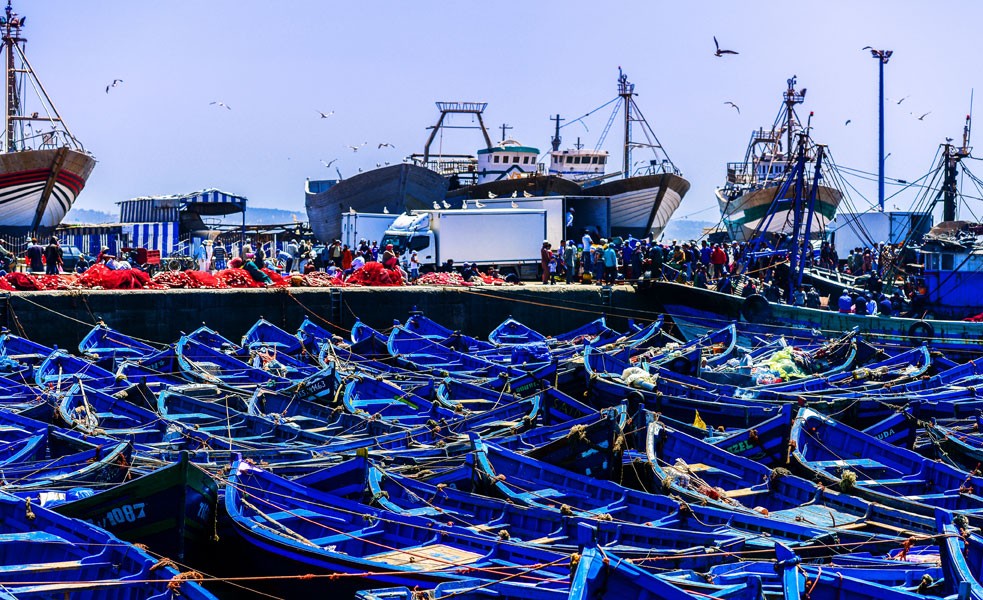
Over a third of Moroccans make a living from agriculture. The warm Mediterranean climate in the north is perfect for growing citrus fruits, tomatoes and vegetables. Much of the crop is exported to Europe. However, the harvest's success depends on rainfall. When drought occurs, the country has to import foods, such as grain, to be able to feed everyone.
Industry
Morocco is one of the world’s largest producers of minerals called phosphates, which are used to make chemicals and fertilizers. The tourist industry is also very important: more than 10 million tourists visit Morocco’s resorts and historic cities, such as Marrakech and Casablanca, every year.

Towns and cities
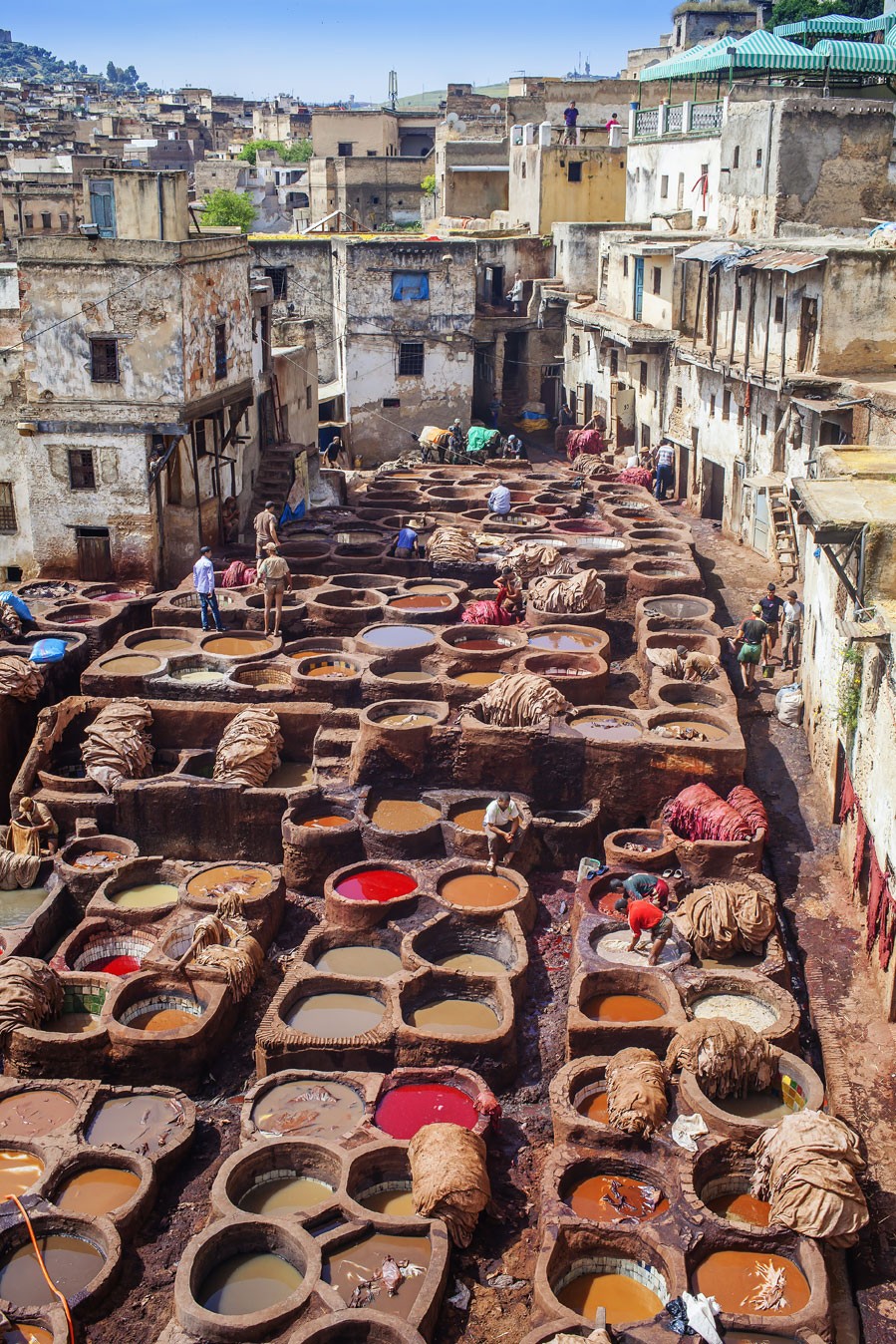
Most Moroccan towns and cities—including the four historical capitals, Fès (Fez), Marrakech, Meknès and Rabat—have an old walled city, called a medina. They also have a new town, or ville nouvelle, built alongside, dating from the time of the French-Spanish Protectorate in the 20th century. A kasbah, is part of the medina: a citadel or fortress where the local leader would live at a time when the city was under attack.
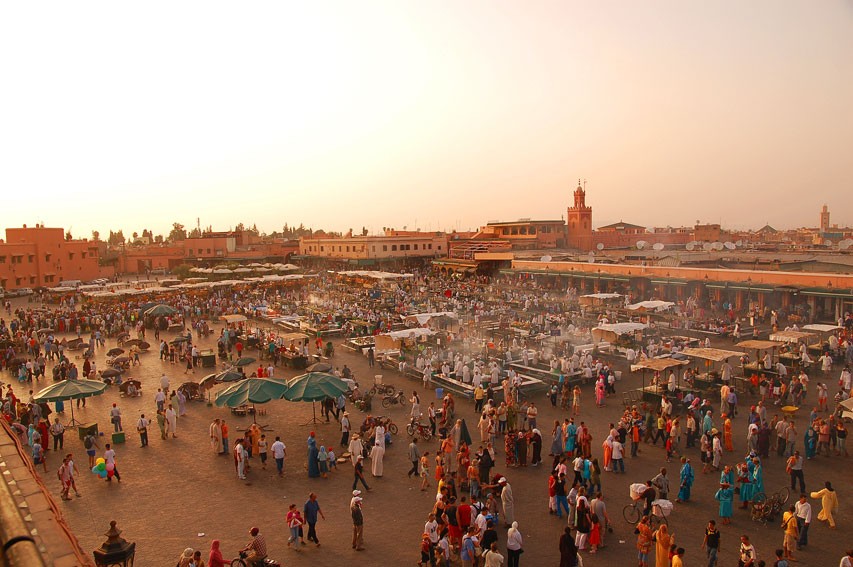
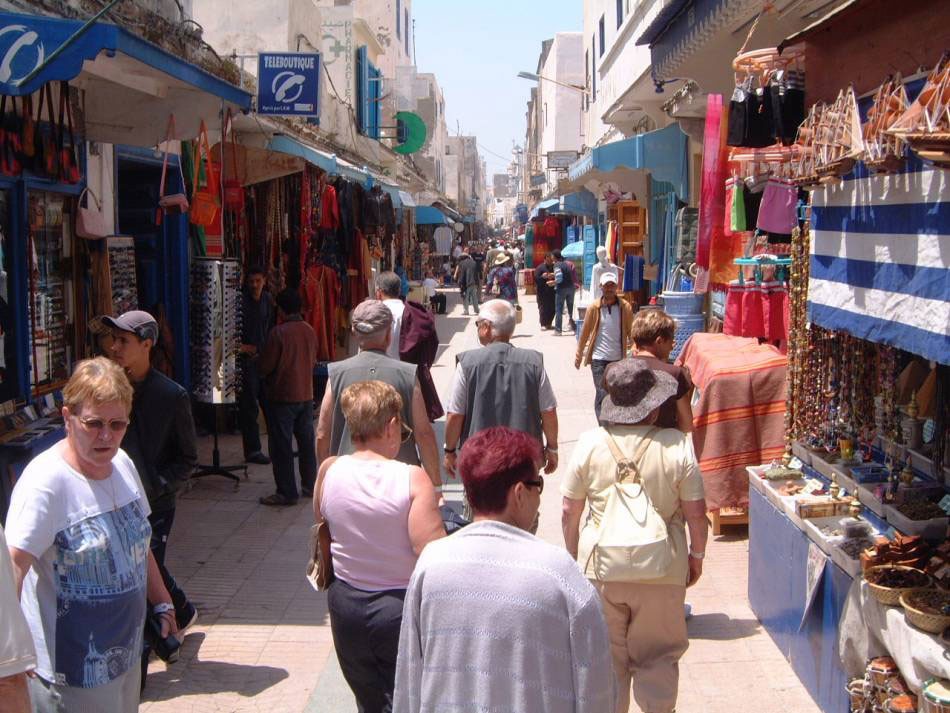
An important part of any Moroccan city is the souk or market. This is often divided into separate souks specializing in different comodities or crafts. Marrakech has the largest traditional souk in Morocco, with some 18 different souks selling a wide variety goods, ranging from traditional Berber carpets to modern electronics.
Consultant: Nicholas Harris
Facts about Morocco
Population 37,493,183 (2024 estimate)
Area 446,300 sq km
Highest point Jebel Toubkal 4165 m (13,665 ft)
Capital Rabat, (metro area population 2,120,192)
Other major cities Casablanca (metro area pop. 4,270,750), Tangier (1,275,428), Fès (Fez, 1,256,172), Marrakech (928,850)
Languages Arabic, Berber, French
Religions Muslim 99%, others 1%
Ethnicity Arab-Berber 99%, others 1%
Currency Moroccan dirham (MAD)
Chief exports clothing and textiles, electrical parts, oil and petroleum products, citrus fruits, vegetables, fish, fertilizers

History of Morocco
3rd century BC
Morocco’s Mediterranean coast is part of the Berber kingdom of Mauretania (not related to modern-day Mauritania)
40
Mauretania becomes a province of the Roman Empire
681
Muslim Arabs invade and rule the region as part of the Islamic Empire
1485
Jews and Muslims expelled from Spain under the Spanish Inquisition arrive and settle in Morocco
1520
Morocco is hit by a severe famine, devastating its population
1660
The Alawite dynasty comes to power: they are the ancestors of Morocco’s current ruling family
1860
Morocco and Spain disagree over the ownership of an enclave, Ceuta; Spain declares war and wins control of Ceuta
1884
Spain takes control of northern Morocco
1906
France and Spain begin policing Moroccan ports, collecting fees from ships which pass through them
1912
At the Treaty of Fès (Fez), Morocco becomes an official French protectorate
1956
Morocco becomes independent from France and Spain, but Spain still has control over some Moroccan territories
1963
Independent Morocco’s first general elections are held
1965
Unrest and protests lead to King Hassan declaring a state of emergency in Morocco
1975
Morocco invades and seizes control of Spanish Sahara, a territory to the south (now Western Sahara), sparking a guerrilla war with the Sahrawi indigenous Polisario Front
1991
Ceasefire between Morocco and Polisario Front; ownership of the territory is left undecided, with Morocco controlling around 70% of the territory of Western Sahara
2001
King Mohammed tours Western Sahara; it is the first time a Moroccan king has visited the region in ten years
2003
Terrorist attacks in the Moroccan city of Casablanca kill more than 40 people
2004
A huge earthquake hits northern Morocco, killing more than 500 people
2011–12
Inspired by the Arab Spring protests and revolutions in other North African and Middle Eastern countries, tens of thousands of people take to the streets of Rabat, Casablanca, Tangier and Marrakech, calling for political reform
2023
(September) A 6.8-magnitude earthquake, its epicentre about 70 km southwest of Marrakech, kills more than 2800 people and injures thousands