
States of the US
Iowa
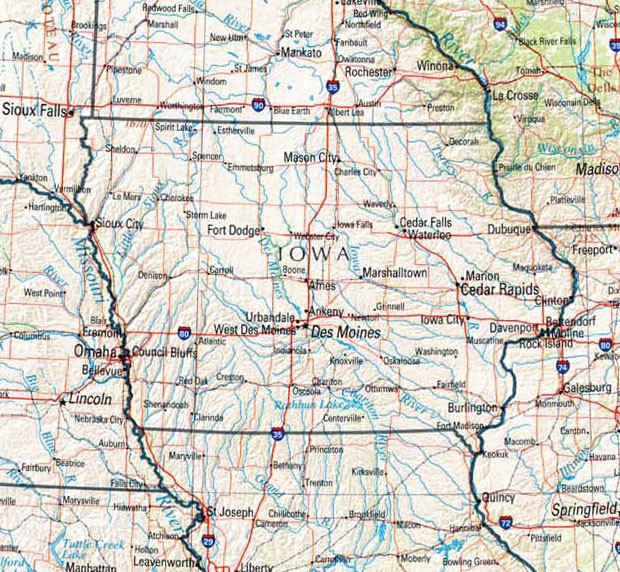
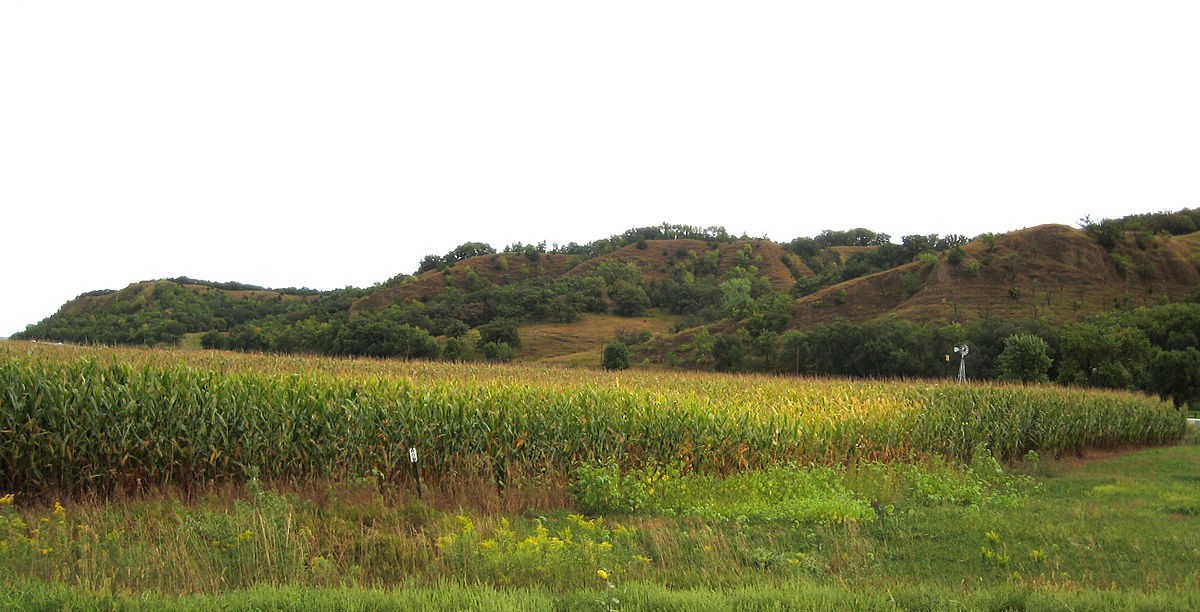
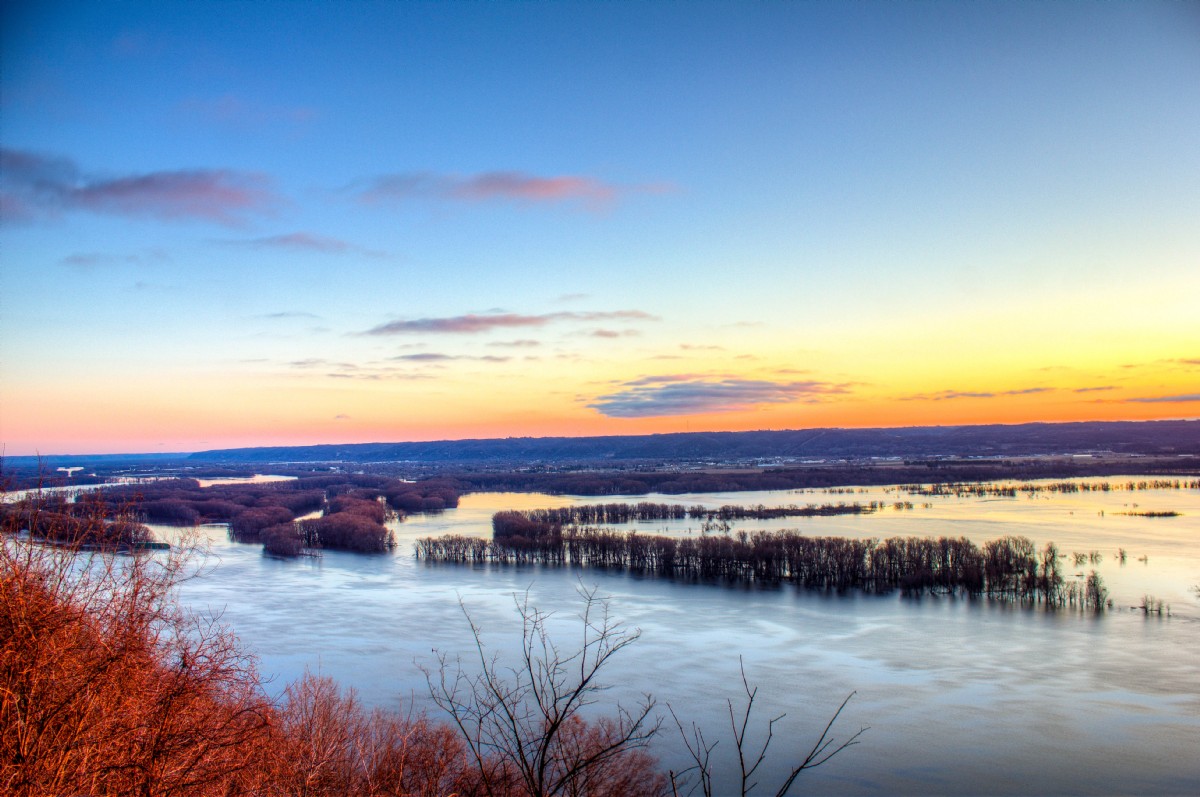
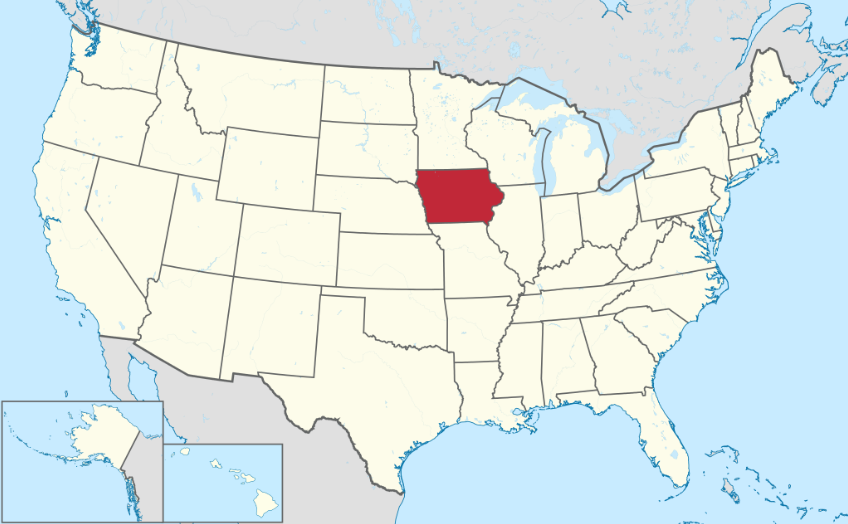
Iowa is located in the Midwest region of the United States. It is made up of rolling hills and plains, crossed by many rivers flowing to meet either the Missouri, which forms most of its western border, or the Mississippi, its eastern border. The only highlands are found in the northeast, part of the Driftless Zone (a highland area not glaciated during the last Ice Age), or the steep bluffs (banks) that line the Missouri and Mississippi rivers. Iowa was once covered by tall prairie grasses, with dense forest in the river valleys. Today, most of the tallgrass prairie and forests have disappeared, replaced by cultivated land.
Name
Iowa takes its name from the Iowa (Ioway), one of the many Native American peoples who occupied the region at the time of European exploration. It is thought the name orginally comes from the word ayuhwa (meaning “asleep”). This is probably what another tribe, the Dakota, called them. In the pronunciation of the French explorers, the name became aiouez. In their own language, the Iowa are known as the Baxoje (sometimes spelled “Pahucha”), which means “grey snow”.
Climate
Iowa's climate is continental, with extremely cold winters and hot, humid summers. Violent thunderstorms, severe floods and occasional drought are typical summer occurrences. Despite the frequent loss of soil, washed away in summer floods, Iowa has some of the most fertile agricultural land in the world.
Economy
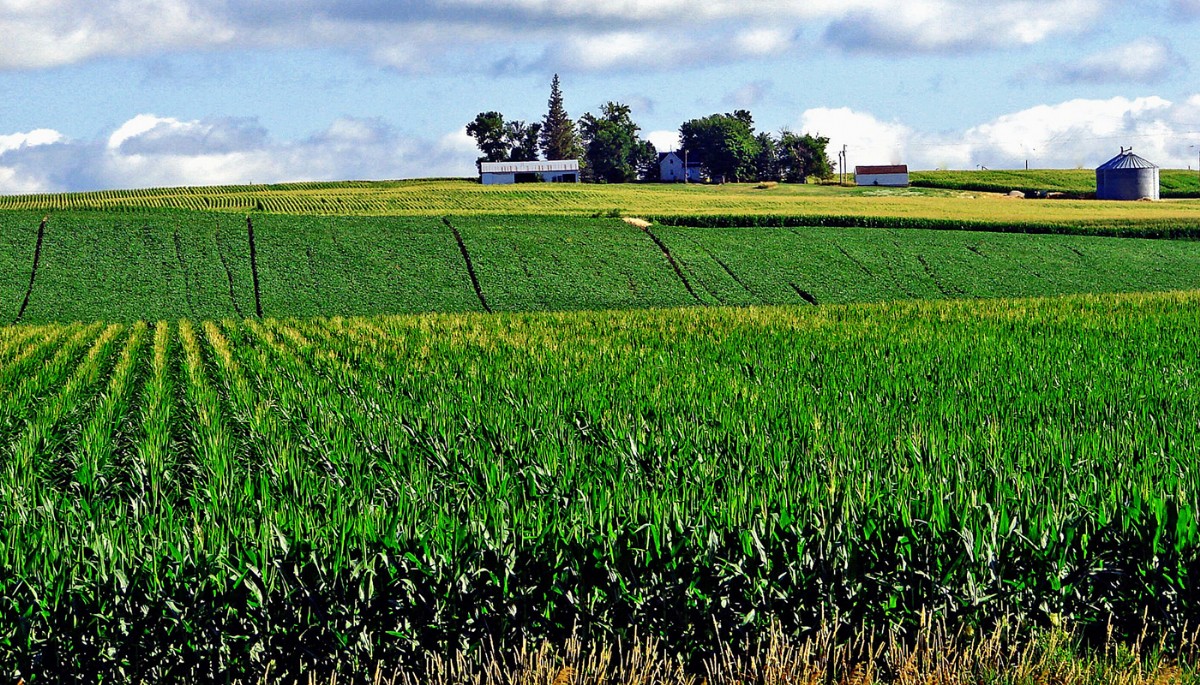
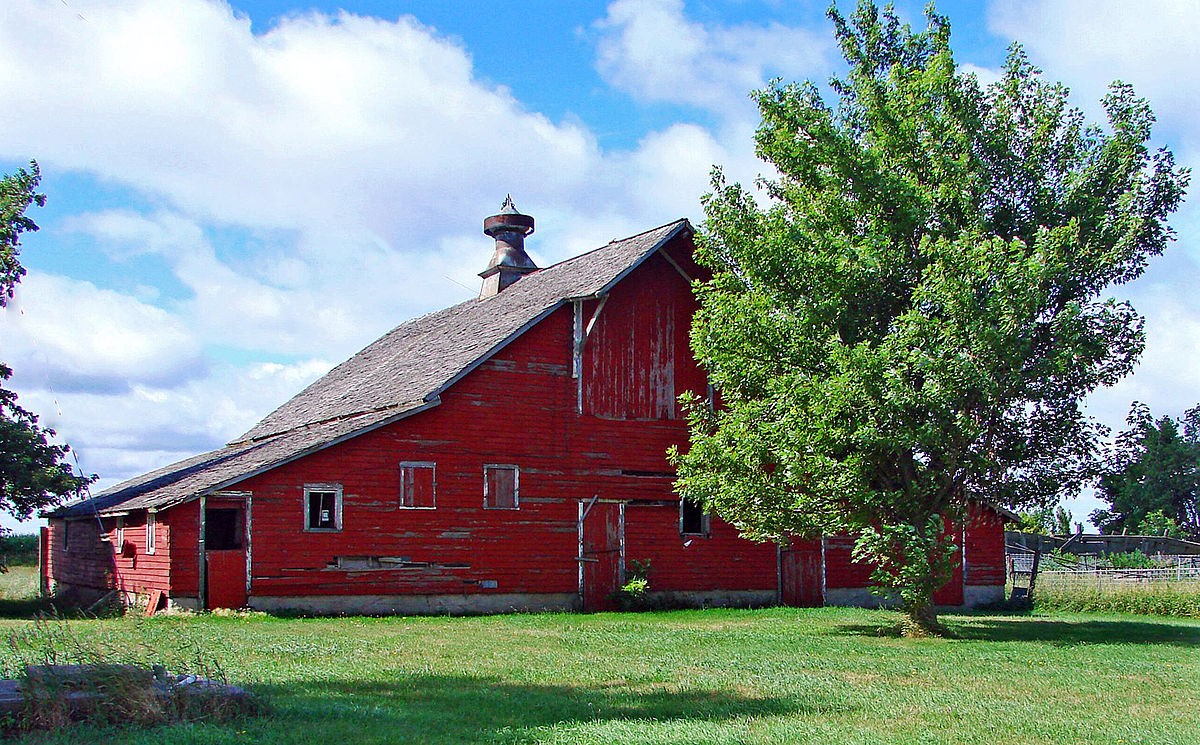
Lying in the heart of the Corn Belt, Iowa is the US’s largest producer of maize—and, in some years, soya beans as well. Iowa's other main agricultural products are pigs, hay, oats, cattle, eggs and dairy products. Although Iowa produces one tenth of the entire nation's food supply, the value of its manufactures is twice that of its agricultural products. Food processing is Iowa’s largest industry. Products also include machinery, electric equipment and chemicals. Biotechnology, finance and insurance are also important industries.
Facts about Iowa
Area 55,869 sq miles (144,701 sq km)
Highest point Hawkeye Point 1671 ft (509 m)
Population 3,207,004
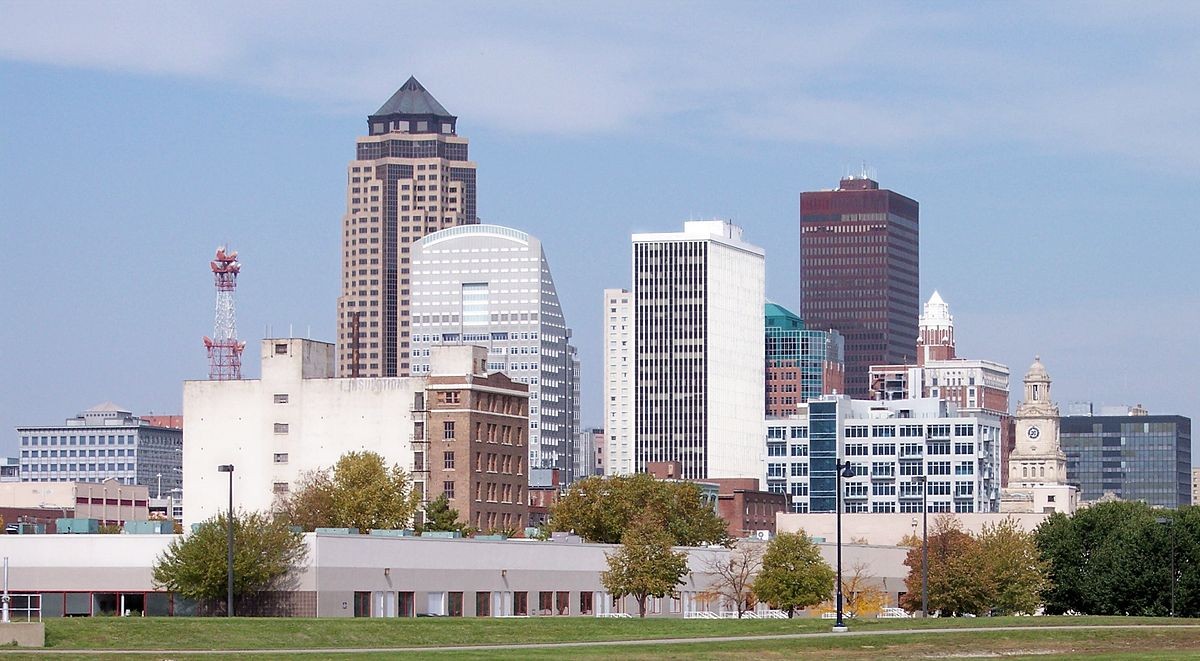
Capital Des Moines
Largest cities Des Moines, 210,381; Cedar Rapids, 135,958; Davenport, 100,354; Sioux City, 85,727; Iowa City, 75,678
Nickname Hawkeye State
State bird Eastern goldfinch
State flower Wild rose
State tree Oak
Consultant: Nicholas Harris
History of Iowa
17th century
Various Native American tribes, including the Dakota, Ho-Chunk, Ioway, Otoe, Illiniwek, Meskwaki, Omaha and Sauk, occupy the area of Iowa when the first European explorers arrive
1673
French explorers Jacques Marquette and Louis Joliet travel down the Mississippi River to Iowa; the area of Iowa is claimed for France and becomes part of French territory, known as Louisiana
late 18th century
French and British traders established trading posts along the Mississippi and Des Moines rivers.
1803
Louisiana Purchase: Iowa is taken under US control
1808
With construction of Fort Madison, US establishes military control over the region
1813
Fort Madison is seized by Native American forces with the support of the British
1832
Black Hawk War; led by their chief, Black Hawk, Native American warriors fight to regain their lands, but are defeated; as punishment for the uprising, all Native American tribes, including the Sauk, Meskwaki, Ho-Chunk and Dakota, are removed from Iowa (from 1832 to 1860)
1833
First US settlers move to Iowa to farm the prairies and work the mines
1838
US Congress establishes the Territory of Iowa (before that Iowa was included in the Missouri, Michigan and Wisconsin territories)
1846
Iowa becomes the 29th state of the Union
1850s–60s
The introduction of railways allows farming products to be delivered to markets in the east; this turns Iowa into a major farming state
1857
Des Moines becomes the new state capital; the state's present boundaries are fixed
1861
Iowa supports the Union during the Civil War; Iowa contributes proportionately more men to the armed forces than any other state
late 19th century
Immigrants from Europe, including Germans, Czechs, Dutch and Scandinavians, arrive in Iowa
1970
Iowan scientist Norman Borlaug, who developed strains of disease-resistant wheat, wins the Nobel Prize for this work in promoting the "Green Revolution".