
States of the US
New Mexico
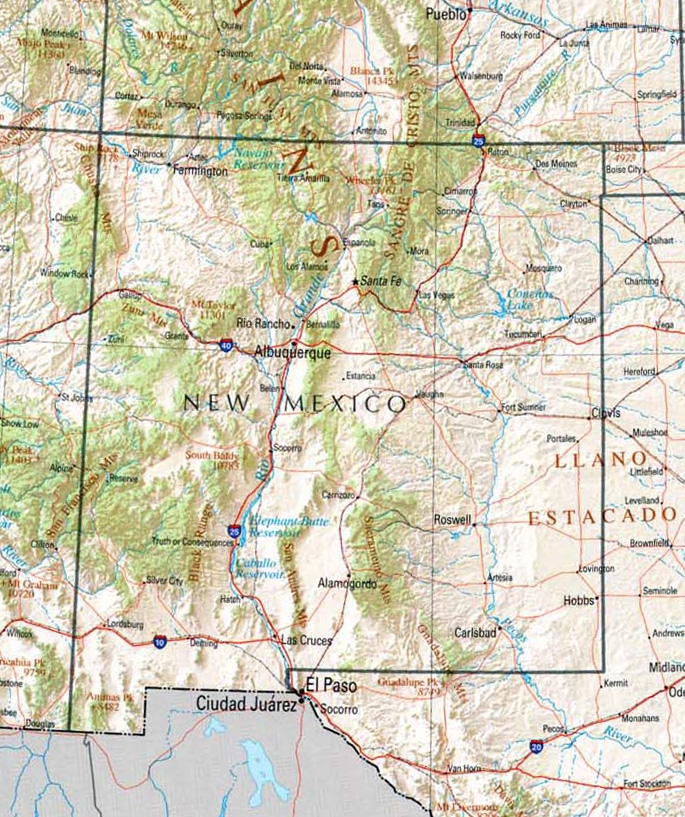
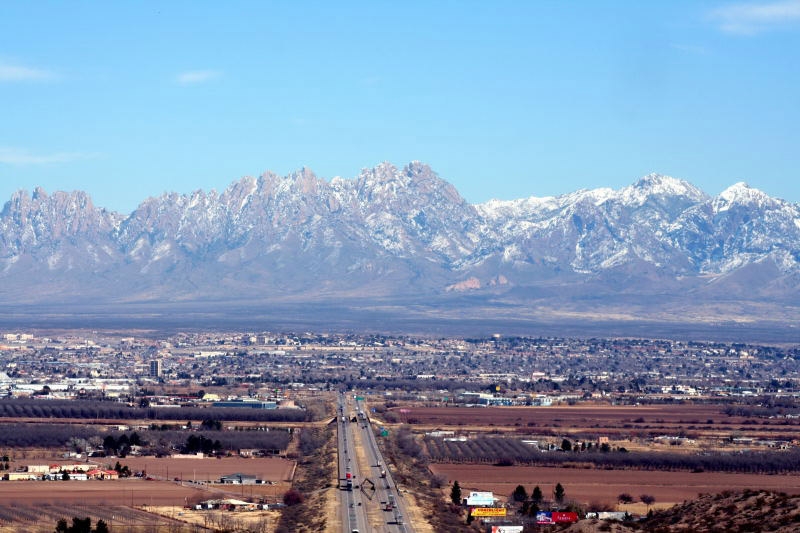
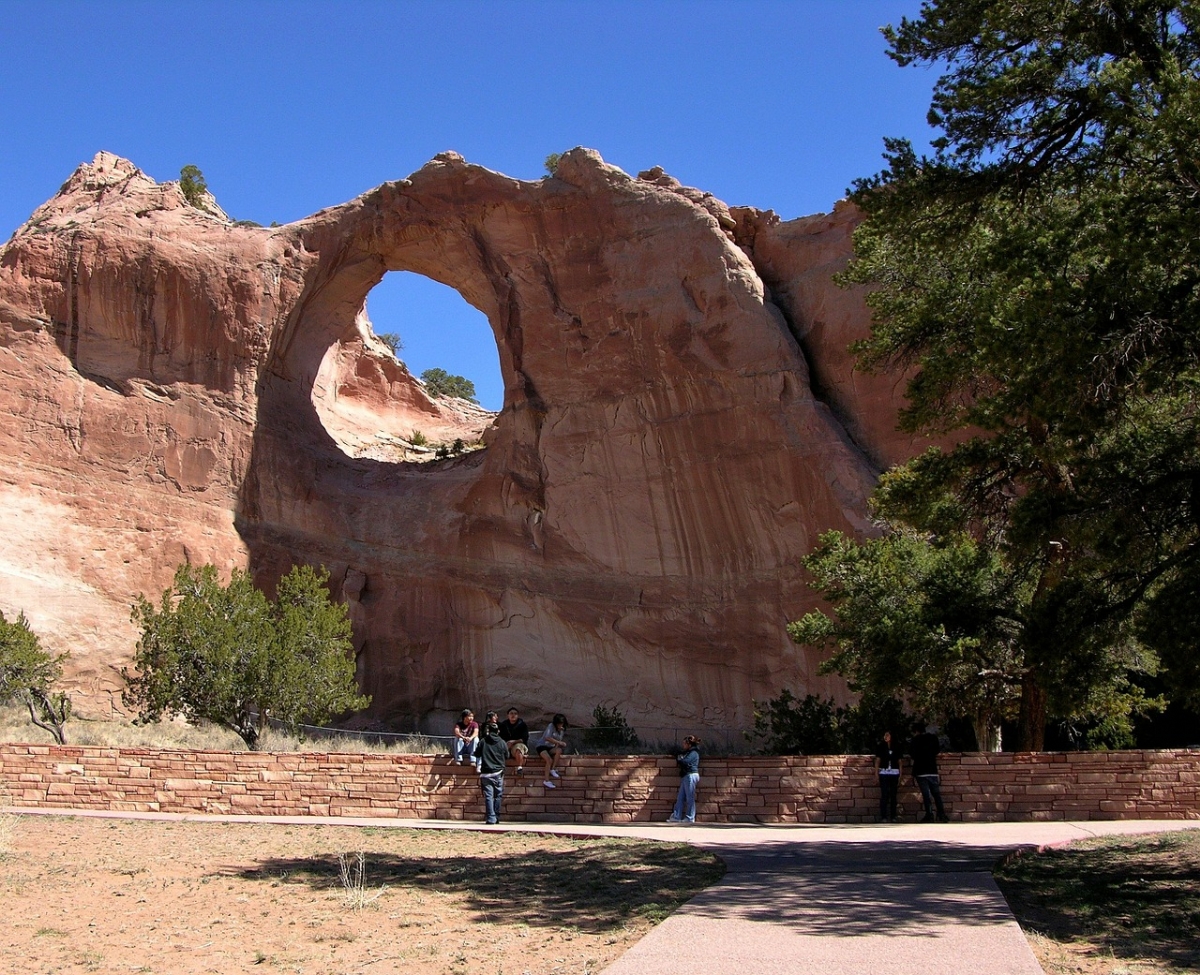
New Mexico is located in the southwestern region of the United States. Its landscape features mesas (small plateaus with flat tops and steep sides), deserts, forested mountain slopes and rocky, snow-covered peaks. The rugged Sangre de Cristo range, part of the Rocky Mountains, runs north-south to the east of the valley of Rio Grande in the centre of the state. The semi-arid uplands of the Gila Wilderness lie in southwestern New Mexico. The Great Plains occupy the eastern portion of the state. Rising in the south is the Llano Estacado, or Staked Plain, one of the largest mesas on the North American continent. A flat, dry, scrubland plain, its western edge is marked by the Mescalero Escarpment, a steep slope that forms the eastern flank of the Pecos Valley.
Name
New Mexico, or Nuevo México in Spanish, was known by this name to Spanish explorers in the 16th century. (The present-day country of Mexico was known as “New Spain” until it became independent in 1821, adopting the name "Mexico" then.)
Francisco de Ibarra, a Spanish adventurer in search of gold, reported in 1563 that the region he explored could be a “new Mexico”, home to wealthy Native American civilizations similar to those of the Aztec Empire (“Mexico” was the Aztecs’ own name for their heartland). Juan de Oñate established the official name when he was appointed the first governor of the new Province of New Mexico in 1598.

Climate
The climate of New Mexico is generally semi-arid or fully arid, with long, hot summers and cold winters. There is a wide temperature range, both between summer and winter months and within each day (this is known as the diurnal range). The high ranges of the Rockies have a mountain climate, with higher precipitation and cooler temperatures than at lower altitudes. Water is rare in arid regions; the little rain that falls is likely to evaporate rapidly in the high summer temperatures. Summer rains fall almost entirely during brief, but intense thunderstorms.

Economy
Minerals are the New Mexico's richest natural resource: the state is a leading producer of uranium, manganese and potassium. There are also has significant reserves of oil and natural gas. Manufacturing industries, centred around Albuquerque, include food products, chemicals, transportation equipment, timber and electrical machinery. Hi-tech manufacturing, particularly for the defence industry, is also important.
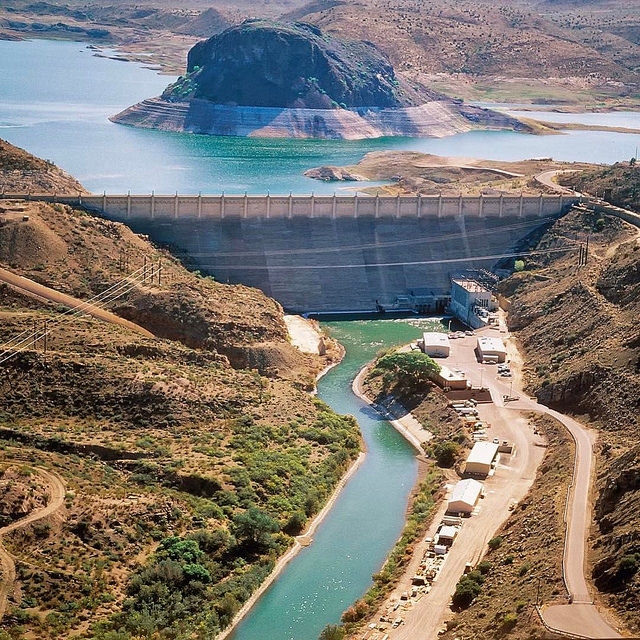

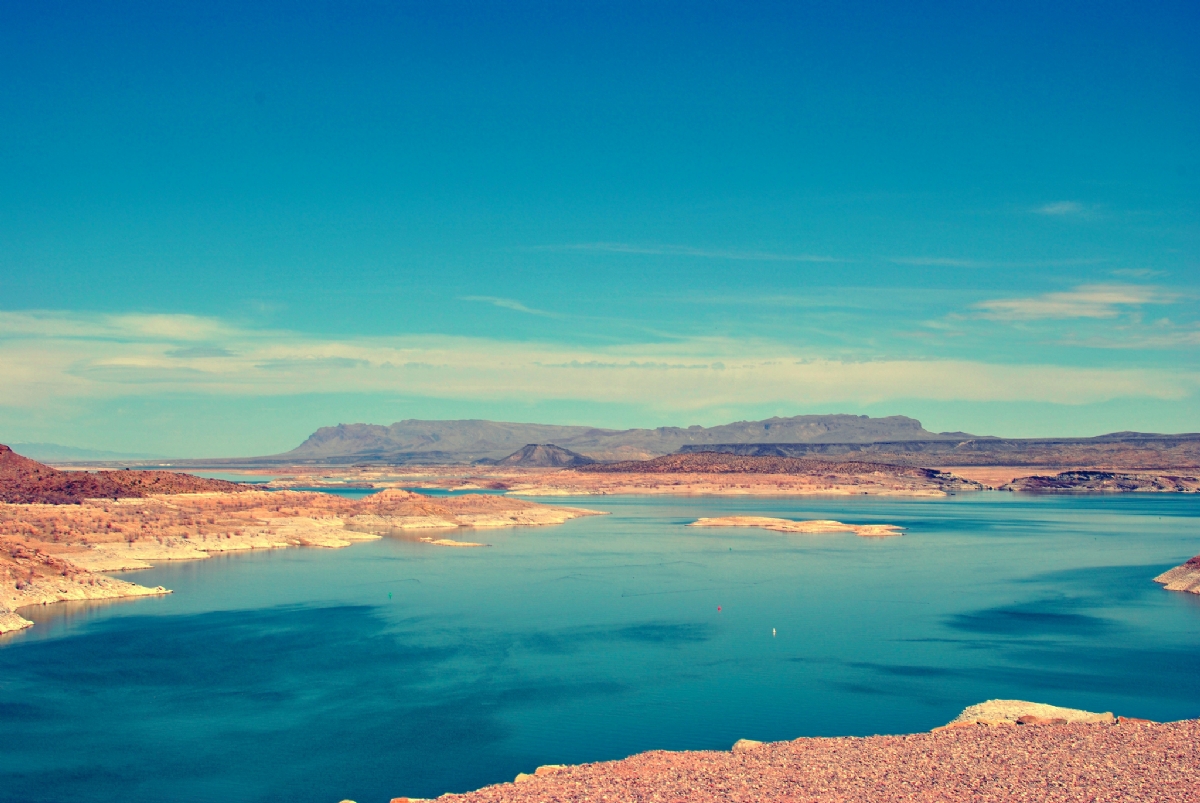
New Mexico's agriculture is dominated by livestock raising, with cattle and sheep grazing on large ranches. The Elephant Butte Dam on the Rio Grande is a major irrigation source for the small area given over to cultivation. Major crops are alfalfa hay and sorghum. Onions, pecans, vines and chili peppers are also grown.
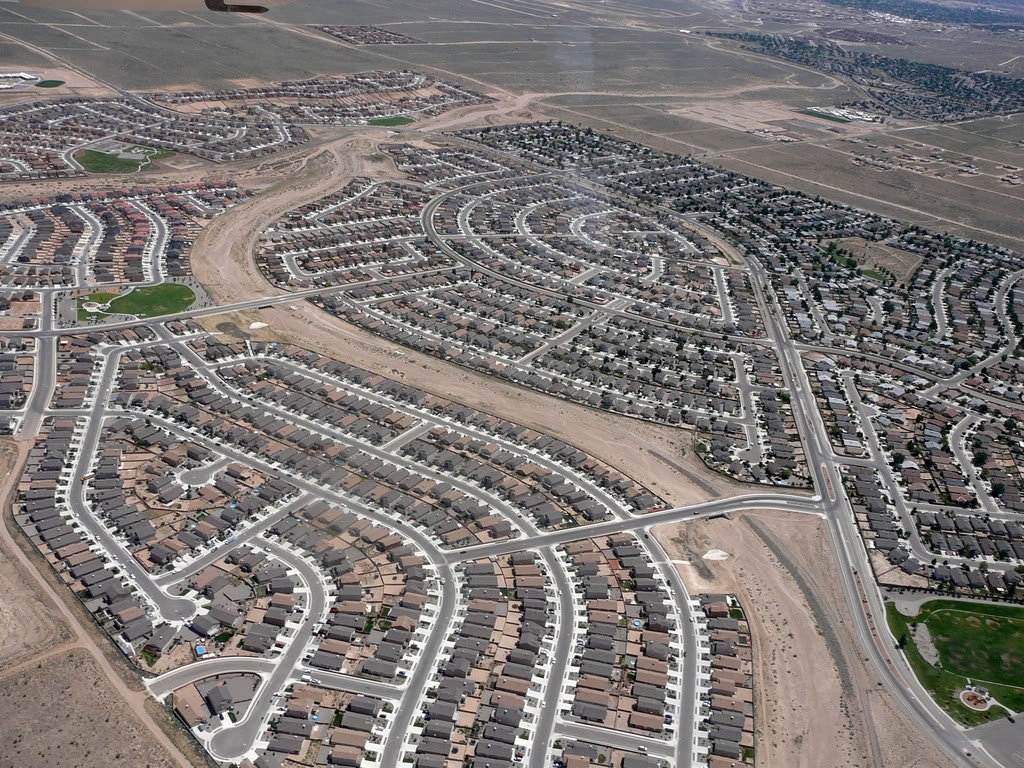
Facts about New Mexico
Area 121,589 sq miles (315,194 sq km)
Highest point Wheeler Peak 13,167 ft (4013 m)
Population 2,114,371
Capital Santa Fe
Largest cities Albuquerque, 560,274; Las Cruces, 114,892; Rio Rancho, 110,660; Santa Fe, 89,167; Roswell, 47,109
Nickname Land of Enchantment
State bird Roadrunner
State flower Yucca
State tree Pinyon
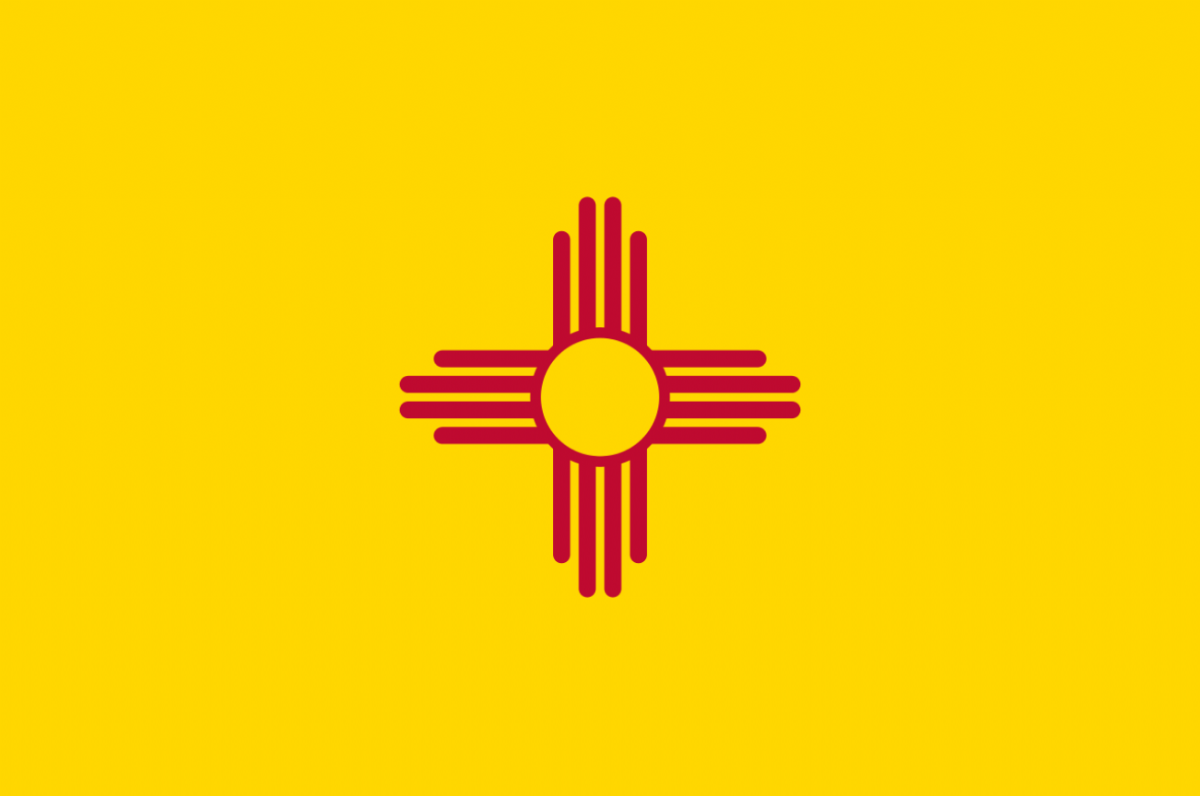

Consultant: Nicholas Harris
History of New Mexico
13th century
The Native American Pueblo civilization flourishes along the Rio Grande and its tributaries; they cultivate maize and live in houses constructed of adobe, stone and other local materials clustered together in small towns called pueblos
16th century
At the time the first Europeans arrive, the region is settled by Native American peoples: the Pueblo villagers and groups of Navajo, Apache and Ute
1540–42
Spanish explorer Francisco Vásquez de Coronado leads an expedition to explore and find the fabulous riches of the “Seven Cities of Gold”, supposedly located in the New Mexico desert. When Coronado arrives at Hawikuh pueblo (native village), known to the Spanish as Cibola, he finds nothing
1598
Juan de Oñate is appointed the first governor of the new Province of New Mexico; he founds the San Juan de los Caballeros colony, the first permanent European settlement in New Mexico, on the Rio Grande near Ohkay Owingeh Pueblo; El Camino Real de Tierra Adentro, Royal Road of the Interior, is extended north from New Spain by 700 miles (1100 km) to reach the new colony
1609
Pedro de Peralta is made governor of the Kingdom and Provinces of New Mexico
1610
The settlement of Santa Fe is established at the foot of the Sangre de Cristo Mountains; it becomes capital of the province
1676–92
The subjection of Native Americans to forced labour and attempts by missionaries to convert them to Christianity leads to a violent revolt by the Apache and Pueblo; most New Mexico settlements are abandoned by the Spanish during this period
1692
Diego de Vargas Zapata re-establishes Spanish control
1706
Albuquerque is founded by the Spanish
1803
The part of New Mexico north of the Canadian River and east of the Sangre de Cristo Mountains, still ruled by France, is sold to the US as part of the Louisiana Purchase. The US assigns this portion of New Mexico to Louisiana Territory until 1812, then to Missouri Territory
1821
Province of New Mexico is claimed by newly independent Mexico, following the Mexican War of Independence
1836
The Republic of Texas claims the portion of New Mexico east of the Rio Grande when it secedes from Mexico
1841
Texan army is captured by Hispanic New Mexico militia
1848
Following victory by the US in the Mexican–American War, under the Treaty of Guadalupe Hidalgo, Mexico cedes its northern lands, including New Mexico, to the US
1850
Texas abandons its claim to the area in New Mexico lying east of the Rio Grande, in exchange for $10 million
1850
US Congress establishes a separate New Mexico Territory, which includes most of the present-day states of Arizona and New Mexico, as well as part of Colorado
1853
US acquires the southwestern “boot heel” of the state from Mexico as part of the Gadsden Purchase
1862
Confederate occupation of New Mexico Territory is ended after the Battle of Glorieta Pass during the Civil War
1863
Arizona is made a separate territory
1860s–80s
Conflict between the US settlers and the Apache and Navajo peoples
1879
The completion of the Santa Fe Railroad encourages the great cattle boom of the 80s; bitter conflict between cattle ranchers, homesteaders and old Spanish families over land follows
1886
With the surrender of Apache chief Geronimo, the Apache Wars and most of the Native American conflicts in the area come to an end
1912
Congress admits New Mexico as the 47th state in the Union
1928
A major oil discovery brings prosperity to the state
1943–45
The first atomic bombs are designed and manufactured at Los Alamos atomic research centre
1947
Roswell incident: High-altitude nuclear test surveillance balloon, part of an experiment called Project Mogul from Holloman Air Force Base, crashes. The debris from the crash is found near Roswell. The event sparks conspiracy theories, starting in the 1970s, mistakenly claiming that the debris involved a flying saucer and that the truth has been covered up by the US government
1957
A B-36 bomber accidentally drops a nuclear bomb while landing at Kirtland Air Force Base in Albuquerque; fortunately, only its conventional "trigger" detonates
1989
New Mexico becomes the first of only four states to officially adopt the English Plus resolution, which supports acceptance of non-English languages
2008
New Mexico officially adopts a Navajo textbook for use in public schools.