
States of the US
West Virginia
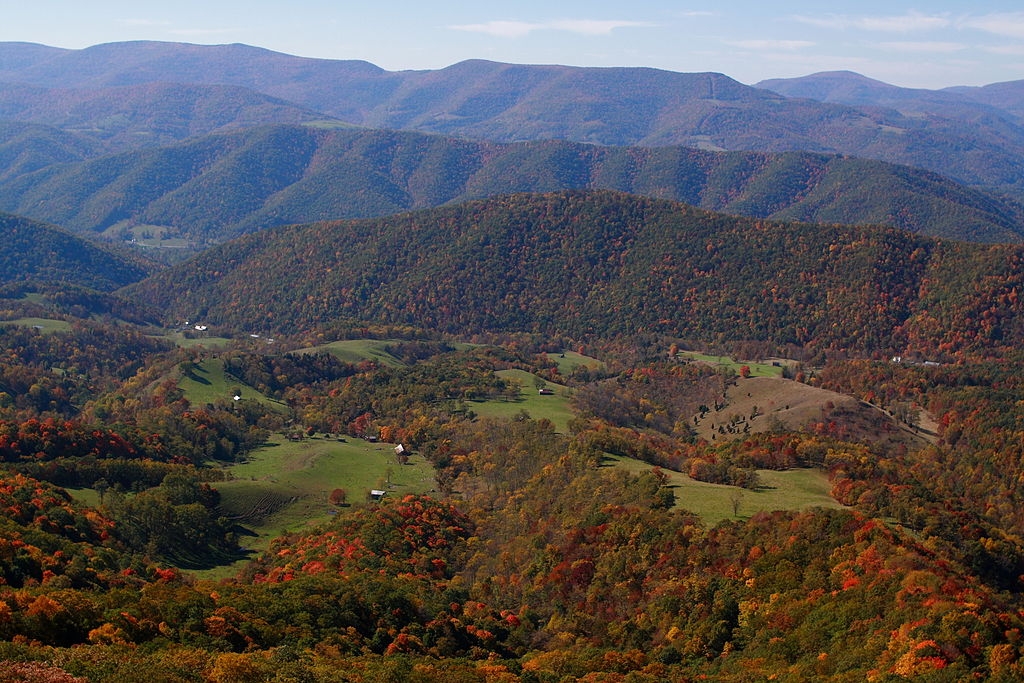
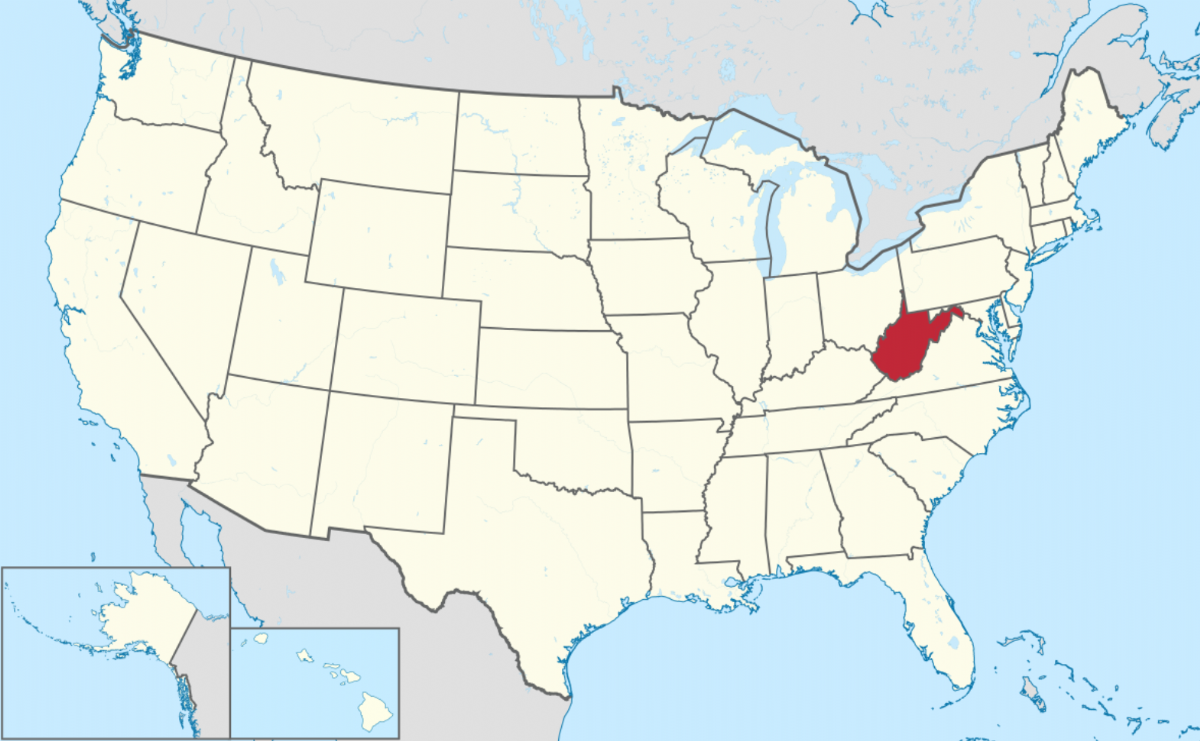
The state of West Virginia is located in the eastern central region of the United States. Nicknamed the "Mountain State”, almost its entire area is hilly, rugged and covered with thick deciduous forest. Much of the state lies on the Allegheny Plateau, part of the Appalachian Mountains. West Virginia’s winding border with Virginia follows the eastern escarpment (sloping edge) of this plateau. The underlying rocks are mostly limestone, and the state has many karst features, including caves. West Virginia is known for its logging and mining industries, based on its plentiful resources of wood and coal.

Name
The name Virginia may have been proposed by Sir Walter Raleigh (1552–1618) for his new colony in America, naming it after Queen Elizabeth I, known as the "Virgin Queen”. Alternatively, Virginia may have come from Wingina, the name of the leader of the native Algonquian-speaking people at the time Raleigh was seeking to establish his colony on Roanoke Island.
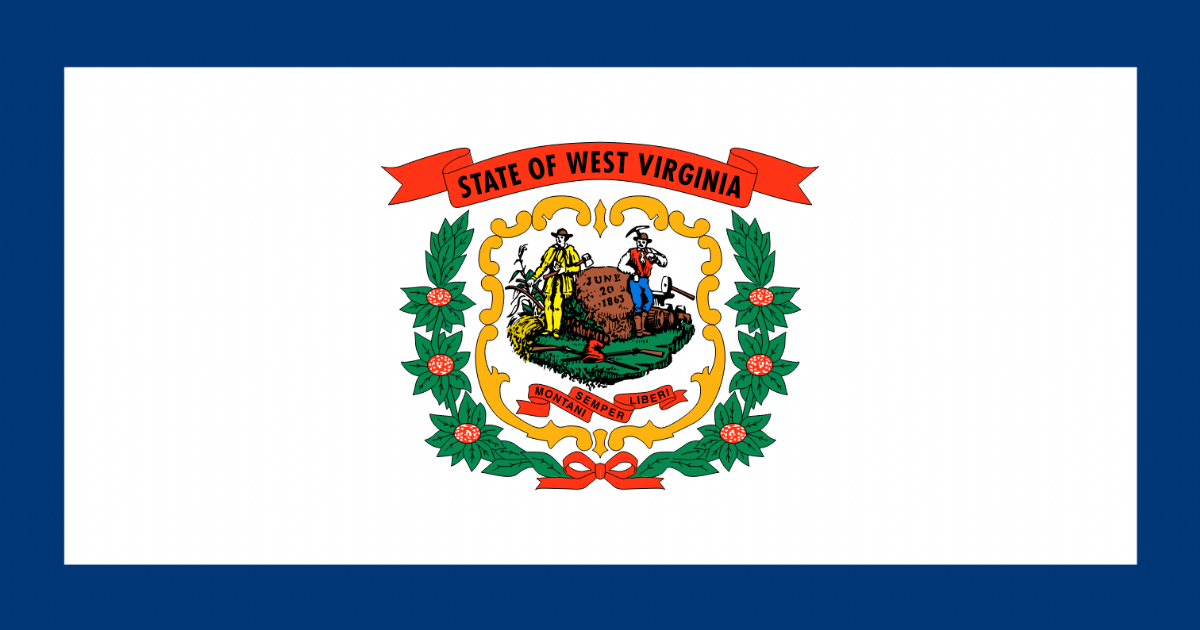
However the name was arrived at, Virginia originally the name for to the entire east coastal region of America, extending from Maine to South Carolina and including the island of Bermuda. West Virginia came into being when the western part of the state separated from the rest of Virginia in 1863.
Climate
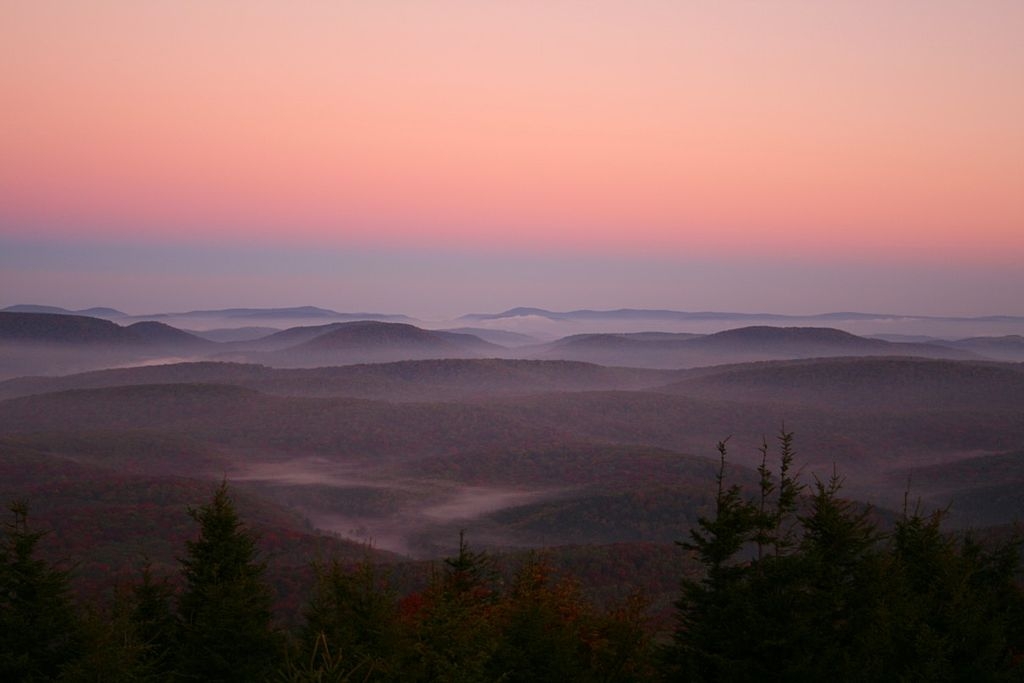
West Virginia has a continental climate, with hot summers—except on the highest mountains—and cold winters. The state experiences some of the most frequent bouts of precipitation in the US, with some places averaging nearly 200 days a year with either rain or snow. Dense fogs are common in many valleys. West Virginia is also one of the cloudiest states.
Economy
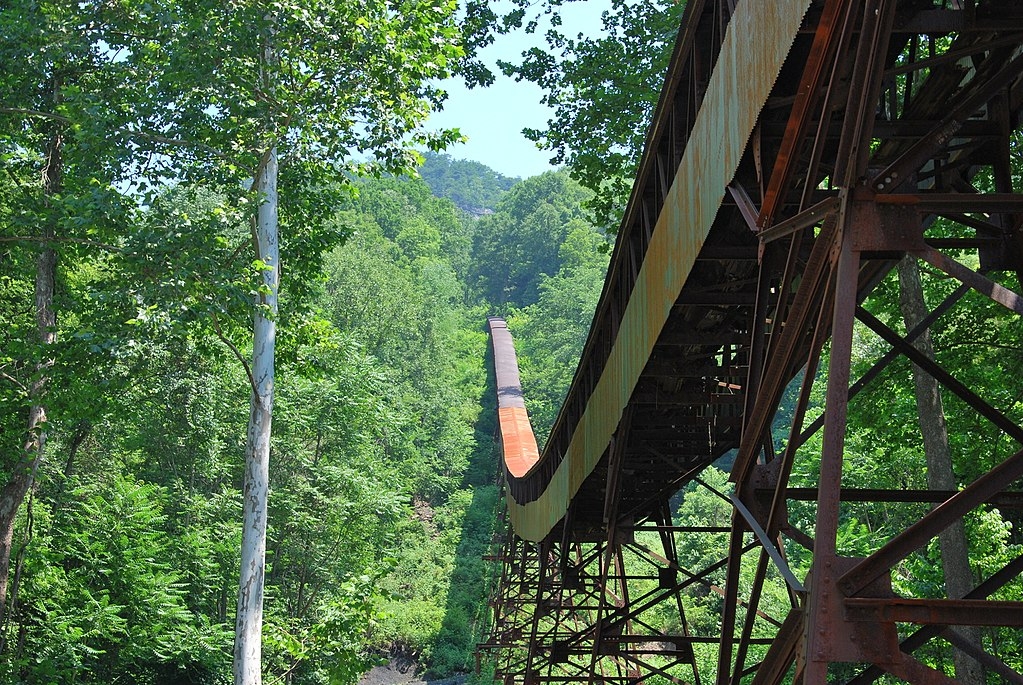
One of the major resources in West Virginia is coal: mining has been a mainstay of the states’ economy since its rapid industrial expansion, beginning in the 1870s. Today, although West Virginia is still a top coal-producing state, second only to Wyoming in the United States, mining is in decline. Deep layers of underground coal have been worked out, leaving thinner seams of coal on top of mountains, which can be mined only by removing the mountaintop itself.

Other important natural resources are oil, natural gas and hardwood forests for timber. Industrial products include steel, glass, cement, aluminium and chemicals. Apart from in the river valleys, farming is not extensive in this densely forested upland state. Fruit, hay, maize and tobacco are the main crops, while poultry and dairy cattle are widely raised.
Facts about West Virginia
Area 24,230 sq miles (62,755 sq km)
Highest point Spruce Knob 4863 ft (1482 m)
Population 1,770,071
Capital Charleston
Largest cities Charleston, 46,838; Huntington, 45,325; Morgantown, 30,429; Parkersburg, 29,025; Wheeling, 26,208
Nickname Mountain State
State bird Cardinal
State flower Rhododendron
State tree Sugar maple
Consultant: Nicholas Harris
History of West Virginia
17th century
The region is mostly unpopulated, serving as hunting grounds for Native American Iroquois (who have, by 1670s, driven other tribes, such as the Moneton, out of the region)
1607
What is now West Virginia becomes part of the British Virginia Colony. Cut off from the east by rugged mountains, the area is visited only by explorers and fur traders
1671
At the direction of the Virginia Colony, a party led by Thomas Batts and Robert Fallam discovers Kanawha Falls
1725
German families establish a settlement in the Eastern Panhandle on the Potomac and name it New Mecklenburg (now Shepherdstown)
1742
Coal is discovered in West Virginia
1749
The British government grants the Ohio Company large tracts of land in the Allegheny Plateau
1751–52
Christopher Gist, a surveyor of the Ohio Company, explores the country along the Ohio River north of the mouth of the Kanawha River
1754–63
French and Indian Wars: British settlers fall into conflict with the French in the Ohio valley; during the war, most settlers flee the area, returning after British forces capture Fort Duquesne in 1758
1763
A British proclamation forbids settlement west of the Allegheny Mountains, for fear of sparking conflict with the Native Americans, who are resentful at encroachment on their hunting grounds. This proclamation is largely ignored by settlers
1774
Lord Dunmore's War: Crown Governor of Virginia, John Murray, Earl of Dunmore, leads a force against the Shawnee Indians, under Hokoleskwa (or "Cornstalk"), and is victorious at the Battle of Point Pleasant
1776
Virginia, which still includes the area of West Virginia—commonly known as Trans-Allegheny Virginia—becomes a state of the newly-independent United States
early 19th century
The opening the Mississippi River to navigation and the completion of the National Road at Wheeling leads to growth of population and prosperity in Virginia. Tensions start to emerge between the western and the eastern halves of the state. The east is dominated by the wealthy planters and slave-holders, and who command a majority in the state government
1861
At the outset of the Civil War, the northwestern counties of Virginia overwhelmingly oppose the secession of Virginia from the Union, but are unable to halt it. Delegates representing most of Virginia's western counties meet at the Wheeling Convention and form the "restored government" of Virginia, led by Francis Pierpont. The decision to separate from Virginia is approved by a referendum. After a vote, the proposed name of the new state, “Kanawha”, is rejected in favour of “West Virginia”
late 19th century
Bituminous coal mined in West Virginia fuels much of the Industrial Revolution in the US
1863
New state of West Virginia admitted to the Union
1977
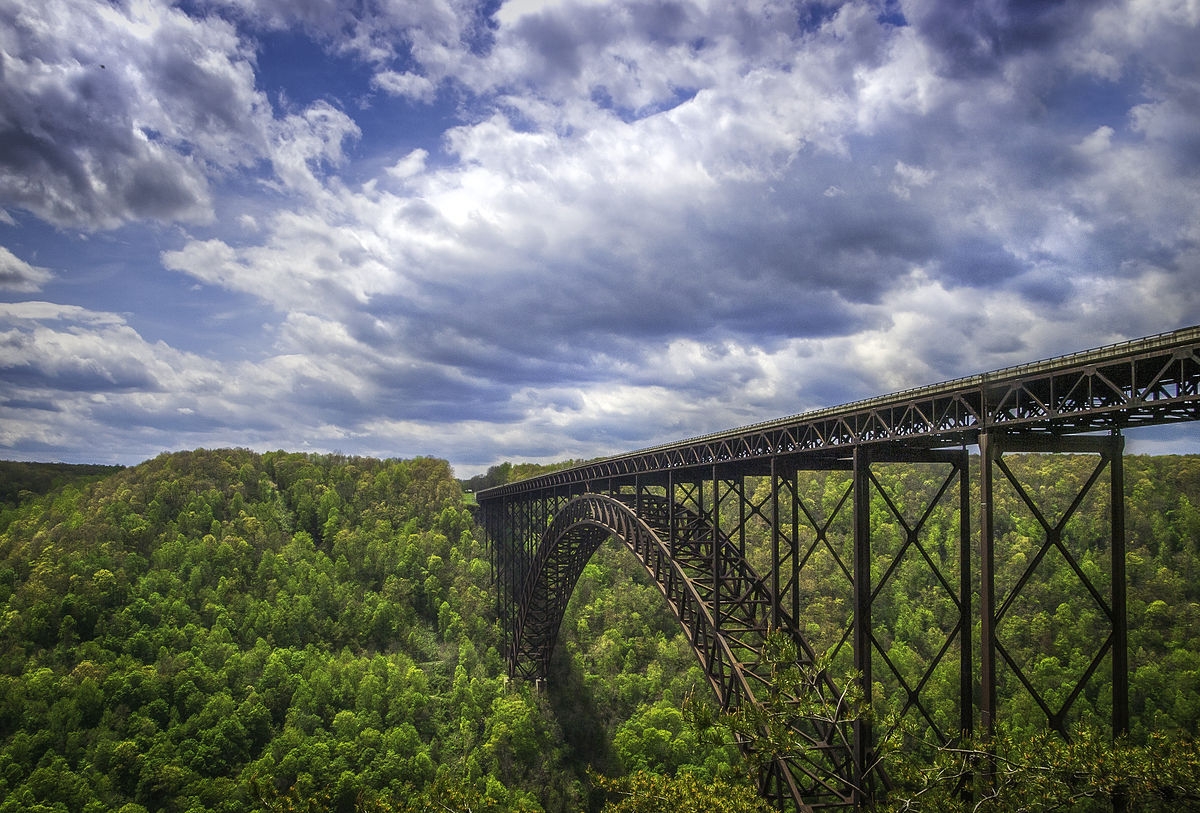
New River Gorge Bridge, a steel arch bridge 924 m (3030 ft) long over the New River near Fayetteville, then the world's longest single-span arch bridge and still one of the highest road bridges in the world (267 m / 876 ft above the river), is completed.
2000
Construction of the Robert C. Byrd Green Bank Telescope (GBT), the world's largest fully steerable radio telescope, in Green Bank, West Virginia, is completed
2014
The Elk River chemical spill: 38,000 litres of MCHM, a chemical foam used to remove impurities from coal, iss released from a Freedom Industries facility into the Elk River, a tributary of the Kanawha River, in Charleston