
Africa
Democratic Republic of the Congo
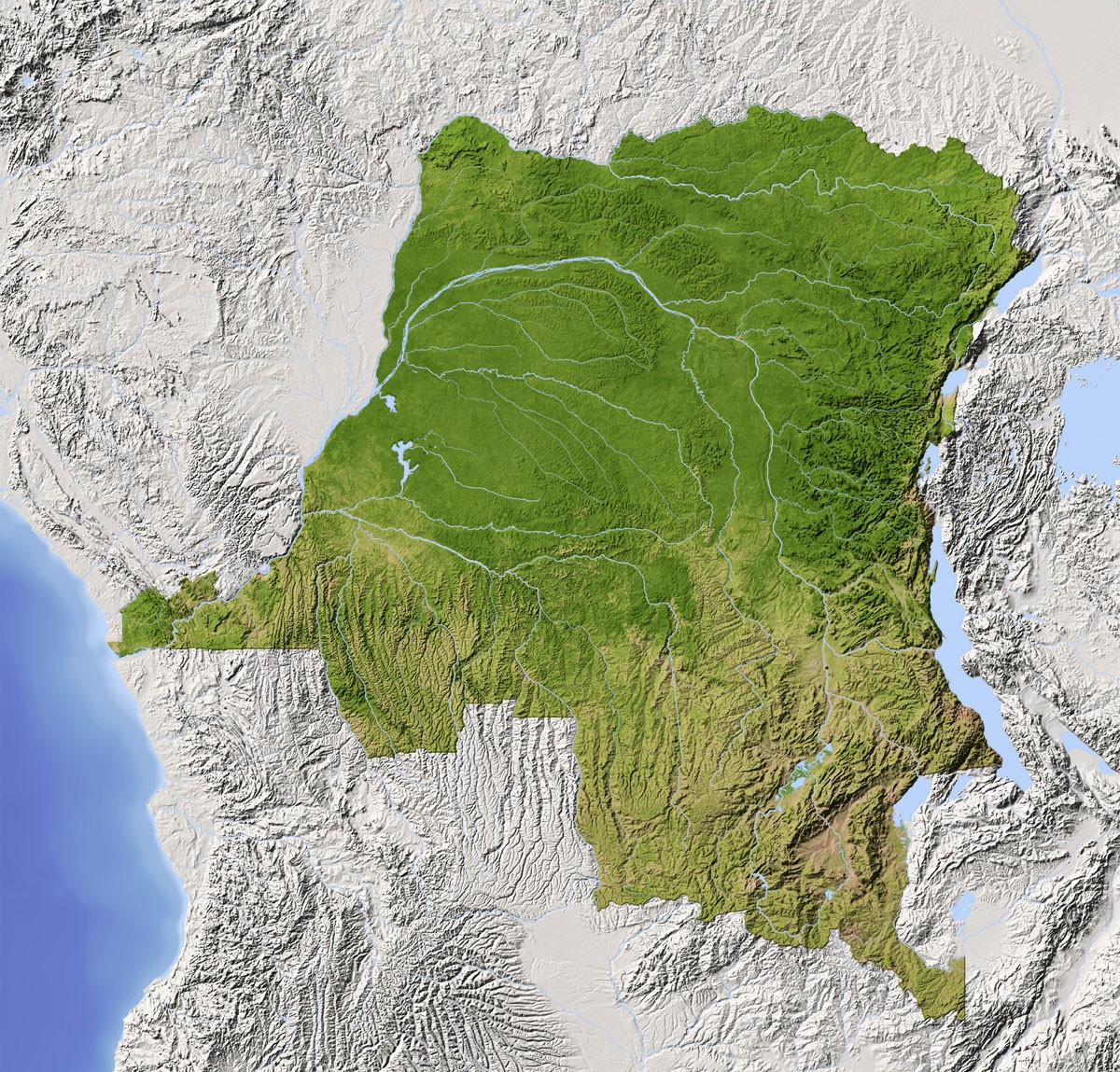
The Democratic Republic of the Congo (often called DR Congo or DRC) is Africa’s second largest country. Along with its neighbour, the Republic of the Congo, it is situated in the Congo Basin, a lowland area where rivers from all over Central Africa flow into the River Congo. Along the country’s eastern border stretches the Mitumba Mountains (Monts Mitumba), which slope down to the savanna grasslands of the south. Rainforest covers more than half the country. Lying on the equator, the country has a hot, tropical climate with a rainy season from October to April. Since 1996, when the First Congo War broke out, the DRC has suffered almost continual civil war. Today, it is one of the poorest countries in the world.

People
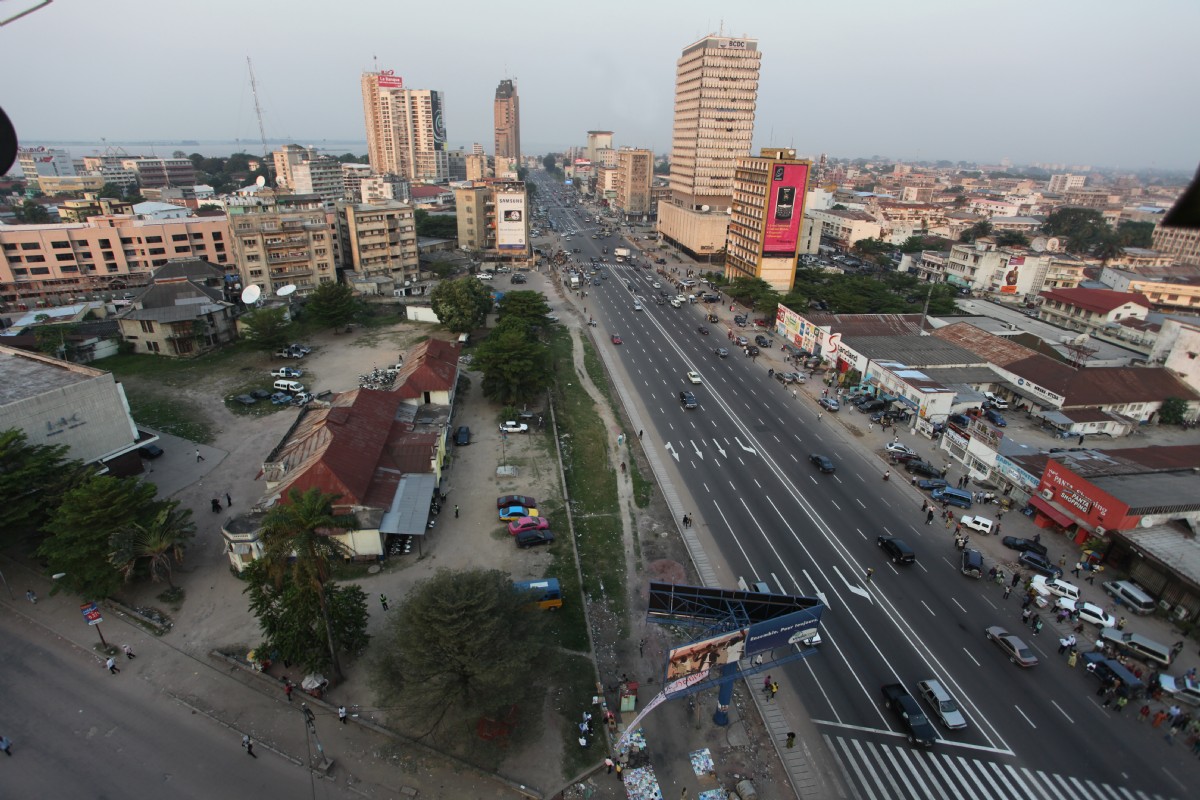
Over 215 different languages are spoken in the DRC, but most people speak or understand French as well as their native language. Around two-thirds of the population live in villages in the countryside. Most work as subsistence farmers, growing food such as cassava and maize for their families; some also grow cash crops such as coffee beans for export.
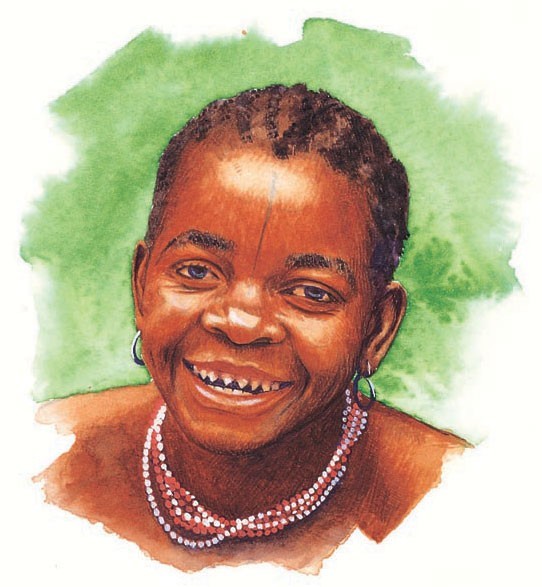
Traditional peoples, such as the Efé, have lived in the rainforests of the DRC for thousands of years, hunting, fishing and gathering plants. The Efé are among the shortest peoples in the world, with men growing to an average height of 142 centimetres (4 feet 8 inches) and women being about 5 centimetres (2 inches) shorter. The Efé are one of three groups of “pygmies” living in the Ituri Rainforest in eastern DRC. Together they are known as Mbuti people.
Economy
In terms of its GDP (gross domestic product; the value of all the goods and services produced in a country) per person, the DRC is ranked as the poorest country in the world. Two-thirds of the population works in farming. Although there is a lot of arable land (suitable for growing crops), war has made it difficult to farm there, and only about 10% of it is used. With a population of over 77 million people, the country cannot produce enough to feed everyone, and it imports millions of pounds’ worth of food every year. Around two-thirds of the population is affected by malnutrition. The main crops grown for export are coffee, which is exported to European countries such as Italy and France, and rubber, which is produced from a fluid obtained from rubber trees.

Despite its poverty, the DRC is often described as the richest country in the world in terms of natural resources. The country is rich in forests and in minerals, but war and political turmoil have disrupted the forestry and mining industries.
Mining
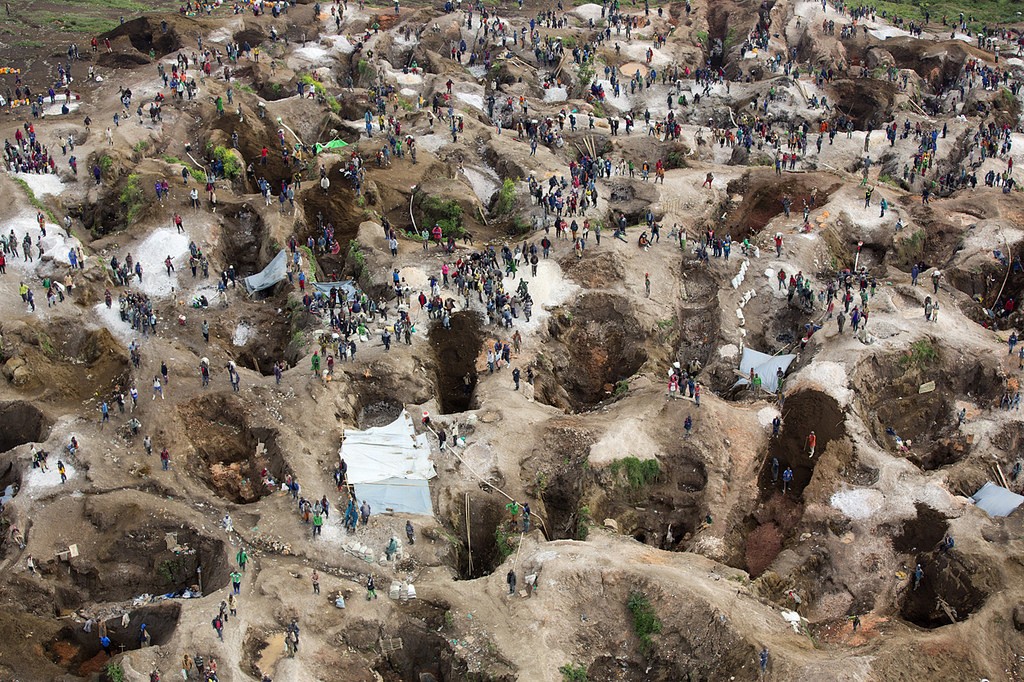

Mining provides a large part of the DRC’s foreign income. The west of the country, Kasai, is rich in precious minerals such as diamonds, while the southeastern region of Katanga has large reserves of copper, cobalt, tin and gold. The presence of large mining companies and the wealth from minerals has meant that this region is more developed than the rest of the country, with better roads and public services.
Many areas rich in minerals are so remote that large mining companies cannot reach them easily. Here, individual workers use traditional methods such as panning to find them. This is known as artisanal mining. Most diamonds are mined in this way. Coltan (the ore from which the elements niobium and tantalum—a metal used to make electronic components—are extracted) is mined in eastern DRC by workers using picks and shovels.

River Congo
With a length of 4700 kilometres (2920 miles), the River Congo is the second longest river in Africa, after the Nile, and the ninth longest in the world. It is the world's deepest river, with depths in some places greater than 220 metres (720 feet). The Congo is known as the Lualaba upstream of Boyoma Falls (Kisangani Falls). The Chambeshi, a tributary of the Lualaba, which rises in Zambia, is generally accepted as the source of the Congo.
The Congo's drainage basin covers more than 4 million square kilometres, an area larger than India. The river and its tributaries flow through the Congo rainforest, the second largest tropical rainforest in the world after the Amazon rainforest.


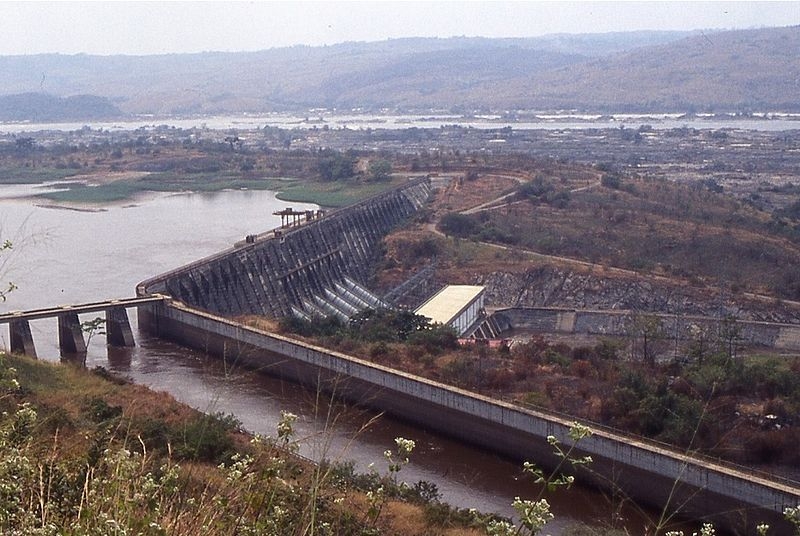
From Kisangani, the Congo flows northwestwards, before turning southwestwards. Past Mbandaka it joins with the Ubangi River and flows into the Pool Malebo (Stanley Pool). Kinshasa and Brazzaville lie on opposite sides of the Pool. After that, the river narrows and becomes a series of rapids and waterfalls, known together as the Livingstone Falls, before reaching the sea.
The Congo is an immensely powerful river and so potentially valuable for hydro-electricity. Scientists have calculated that it could provide all of sub-Saharan Africa's electricity needs. The largest hydro-electricity stations are currently the Inga dams, about 200 kilometres (120 miles) southwest of Kinshasa. There are plans for the construction of a new dam that could produce 40 gigawatts, twice that of China's Three Gorges Dam.
Consultant: Nicholas Harris
Facts about the DRC
Population 111,050,097 (2025 estimate)
Area 2,344,885 sq km (905,370 sq miles)
Highest point Margherita Peak 5110 m (16,762 ft)
Capital Kinshasa (population 15,628,000)
Other major cities Mbuji-Mayi (pop. 2,765,000), Lubumbashi (2,695,000), Kananga (1,593,000), Kisangani (1,640,000), Bukavu (1,190,000), Mbandaka (1,188,000), Tshikapa (1,024,000), Bunia (768,000), Goma (707,000), Likasi (635,000), Kolwezi (573,000)
Languages French (official language), Kikongo, Lingala, Swahili, Tshiluba (recognized national languages)
Religions Christian (Roman Catholic) 50%, Christian (Protestant) 20%, Christian (Kimbanguist) 10%, Muslim 10%, indigenous religions and other 10%
Ethnicity Bantu (Mongo, Luba, Kongo and others) 80%, Mangbetu-Azande and other 19%, “pygmy” peoples 1%
Currency Congolese franc (CDF)
Chief exports Diamonds, copper, gold, cobalt, wood products, oil, coffee

History of the DRC
500 BC
Bantu people move into the Congo region from West Africa.
c.AD 1390–1891
The Kongo kingdom is a major power in the region.
1400s
Portuguese explorers arrive and their Catholic missionaries are allowed to settle by the Kongo king.
1600s
The Portuguese begin capturing Congolese people for the slave trade.
1874–77
Welsh explorer Henry Stanley navigates River Congo to the Atlantic Ocean. He is later hired by the Belgian king Léopold II to establish the king's authority in the Congo basin.
1885
Léopold II makes the region of present-day DRC his private property, naming it the Congo Free State and forcing local people to harvest rubber for export.
1908
Amid protests over mass killings and atrocities carried out on behalf of King Léopold, the Belgian government takes over the Congo Free State from Léopold II. It becomes known as the Belgian Congo.
1920s
Congolese preacher Simon Kimbangu founds the Kimbanguist Church, calling for peace and racial equality. His teachings are still popular today.
1960
The Belgian Congo becomes independent, calling itself the Republic of the Congo. As the former French colony of Middle Congo also chooses that name on its independence, the two countries are often called Congo-Léopoldville and Congo-Brazzaville after their capitals.
1965
Joseph Mobutu stages a military takeover and becomes president. He rules for 32 years.
1971
Mobutu changes the country’s name to Zaïre.
1996–97
The First Congo War: forces from Rwanda and Uganda invade the country and form a coalition with forces opposing Mobutu. Victory for the opposition in the civil war results in a new president, Laurent-Désiré Kabila. The country is renamed the Democratic Republic of the Congo (DRC).
1998–2003
The Second Congo War: civil war breaks out, involving nine African countries in the fighting. More than 5 million people die, making it the deadliest war in modern African history.
2001
President Laurent Kabila is shot dead by a bodyguard. Joseph Kabila succeeds his father as president.
2002
Eruption of Mount Nyiragongo devastates much of the eastern city of Goma.
2004
Kivu conflict breaks out between government forces and the Democratic Forces for the Liberation of Rwanda (FDLR), a Hutu group which led the 1994 genocide in neighbouring Rwanda in eastern DRC. Forces of Laurent Nkunda, a military officer who leads a rebel group which will become the National Congress for the Defence of the People or CNDP clash with government troops and briefly occupy Bukavu.
2006
Thousands of people are displaced in Kivu as the army and UN peacekeepers step up their drive to disarm Nkunda's forces ahead of the elections. Presidential and parliamentary polls are held and Joseph Kabila is re-elected president.
2007
Major outbreak of the deadly Ebola virus
2006–08
Clashes continue in Kivu between Nkunda's rebel forces and government troops before a peace agreement is reached in January 2008
2008–09
North Kivu conflict between government military and Tutsi army led by Nkunda. UN peacekeeping effort in the region is bolstered.
2009
Joint Rwandan-DRC offensive against FDLR ends, Nkunda is captured and CNDP signs a peace treaty with the DRC government.
2012
Former CNDP soldiers led by Bosco Ntaganda form a rebel group called the March 23 Movement (M23) and mutiny against the government. Mainly drawn from Tutsi communities within DR Congo, M23 fighters temporarily seize control of Goma.
2013
The M23 rebel group declares a ceasefire ahead of peace talks; Ntaganda later surrenders. UN Intervention Brigade (MONUSCO) is deployed to fight and disarm rebels in the east.
2015–16
DRC government forces fight against the FDLR Hutu rebels
2017–present
Insurgency by Allied Democratic Forces, an alliance between Hutu fighters and Islamist terrorist groups, breaks out. Conflict between ADF and government troops forces 1.7 million people to flee their homes during the year.
2018
Ebola virus disease breaks out in the Kivu region. It becomes the second-deadliest outbreak of the virus, surpassed only by the 2013 West African epidemic
2019
Felix Tshisekedi is declared the winner of December 2018's presidential election.
2022–present
M23 movement led by Bertrand Bisimwa launches a new military offensive in North Kivu, clashing with government forces and MONUSCO and resulting in the displacement of hundreds of thousands of refugees. Rwanda is accused of backing the M23 rebels.
2023
(May) At least 440 people dead and over 5000 missing after floods in the villages of Bushushu and Nyamukubi in South Kivu, following heavy rains and landslides
2024
Worst flooding in six decades as heavy rainfall causes the River Congo to overflow and inundate the capital, Kinshasa. More than 300 people died and 280,000 households are forced to leave their homes. Tens of thousands of houses are destroyed.
2024
(February) M23 rebels launch renewed attacks on the city of Goma, causing tens of thousands of people to flee their homes
2025
Rwandan-backed M23 rebels capture Goma (January), then occupy Bukavu (February) as the DRC government army retreats. In spite of peace agreement signed by DRC and Rwanda, M23 seizes Uvira on the northern tip of Lake Tanganyika close to border with Burundi (December).
2026
(May) An epidemic of the viral disease Ebola is reported in Ituri Province in the east of the country, a mining hub and a conflict zone. Having spread to neighbouring provinces and Uganda, the disease claims 240 lives by the end of May.