
States of the US
Colorado
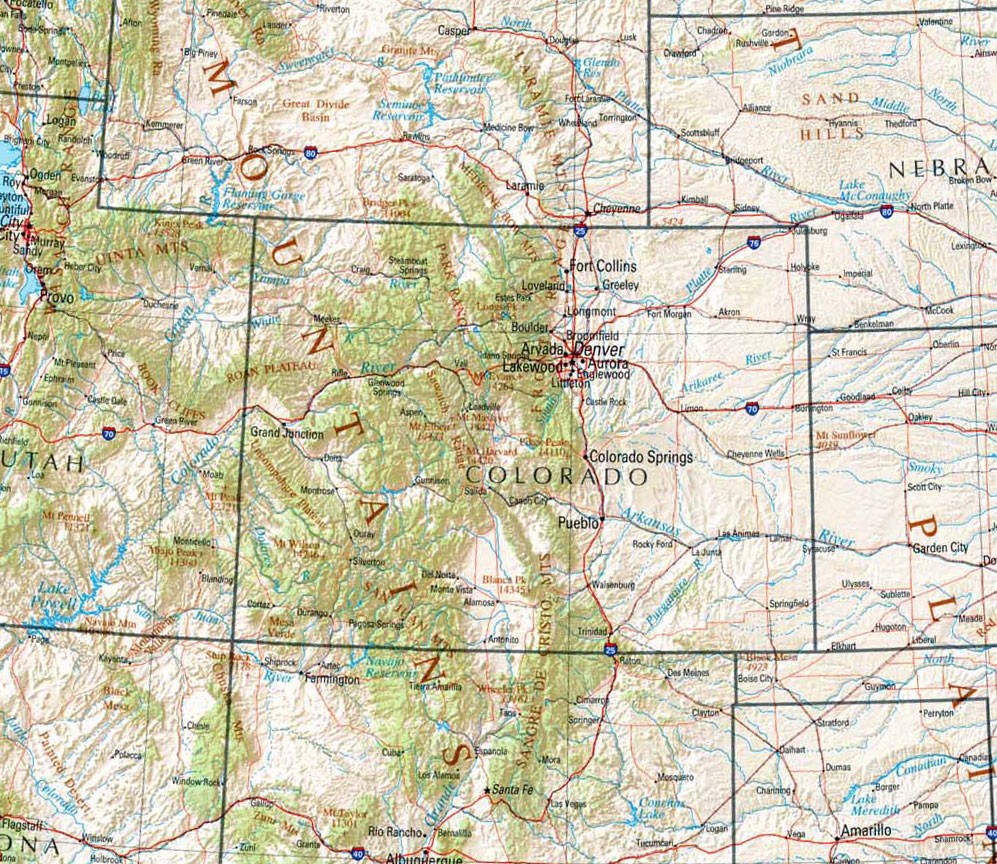
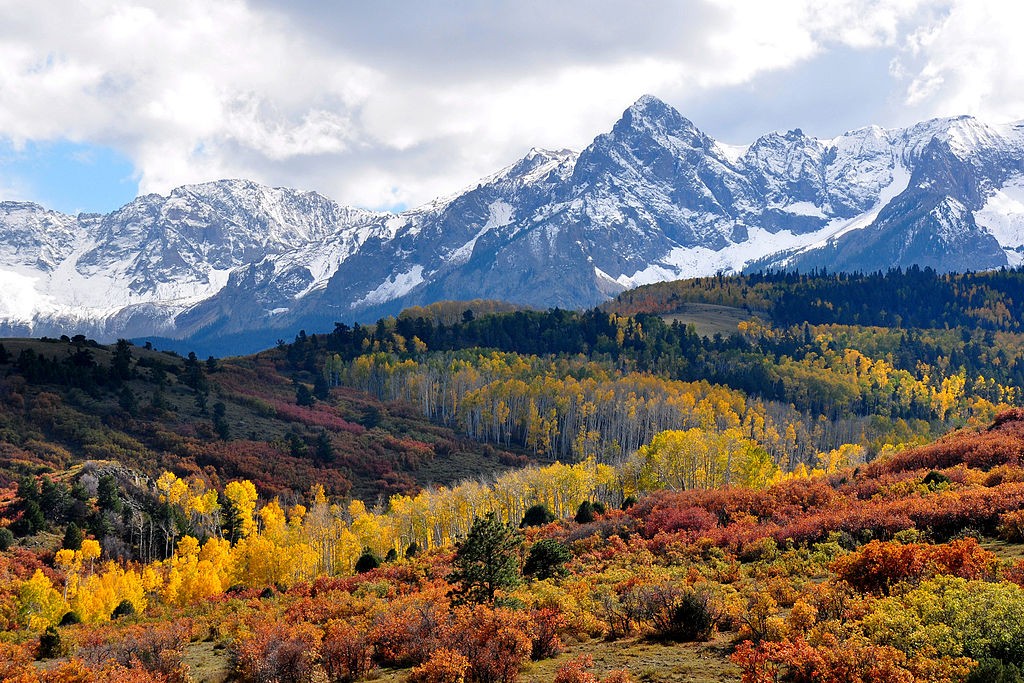
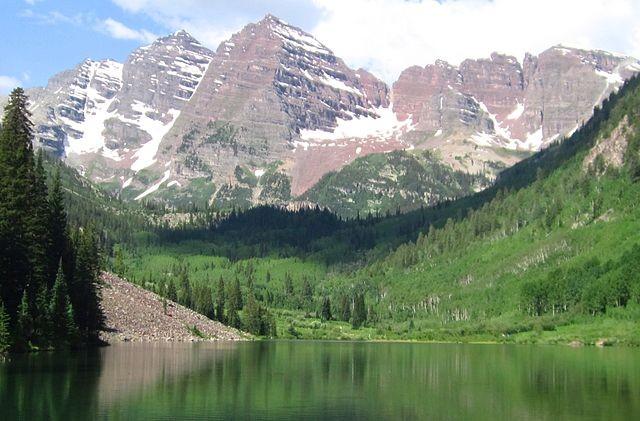
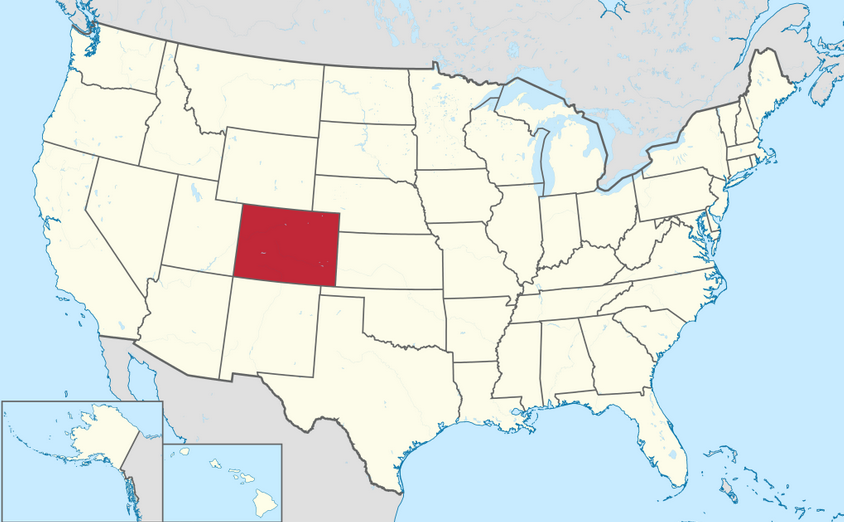
Colorado is located in the western region of the United States. The eastern half of the state is part of the Great Plains. Originally prairie grassland, it is now mainly covered in farmland. The plains rise steeply in the west to the Rocky Mountains, which run north-south through central Colorado. The mountains are divided into several ranges, separated by high valleys and basins, known as parks. Farther west lies the high Colorado Plateau, an arid region, into which deep canyons have been carved by westward-flowing rivers. The area of Colorado to the west of the Continental Divide (which runs along the crest of the Rockies) is called the Western Slope. More than two-thirds of Colorado's population lives in cities along the eastern edge of the Rocky Mountains.

Name
The state was named after the Colorado River. In 1776, the Spanish priest Silvestre Vélez de Escalante discovered that the local Native Americans called it the "Coloured River" in their own language, because of the reddish-brown silt it carried in its waters from the mountains. He gave it the Spanish version of the name: Río Colorado. When Colorado became a state in 1861, William Gilpin, the first governor, decided to call it Colorado.
Climate
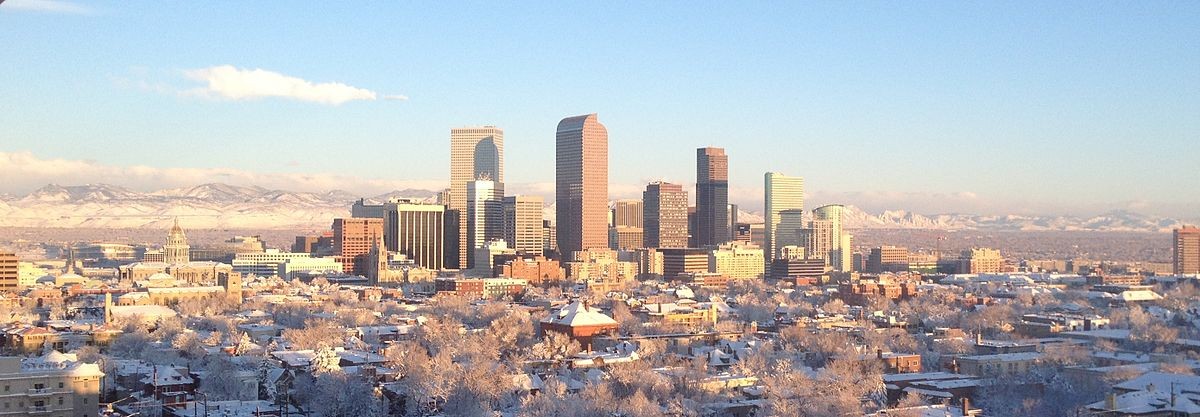
The climate of the Colorado plains in the eastern part of the state is semi-arid, with low precipitation and frequent drought. Most of the precipitation comes from thunderstorms and snowstorms that occur in the winter and early spring. The area is known for its clear nights, which give it a high average temperature range over the course of a day. The eastern edge of the Rockies, where most of the population of Colorado lives, lies in a rain shadow.
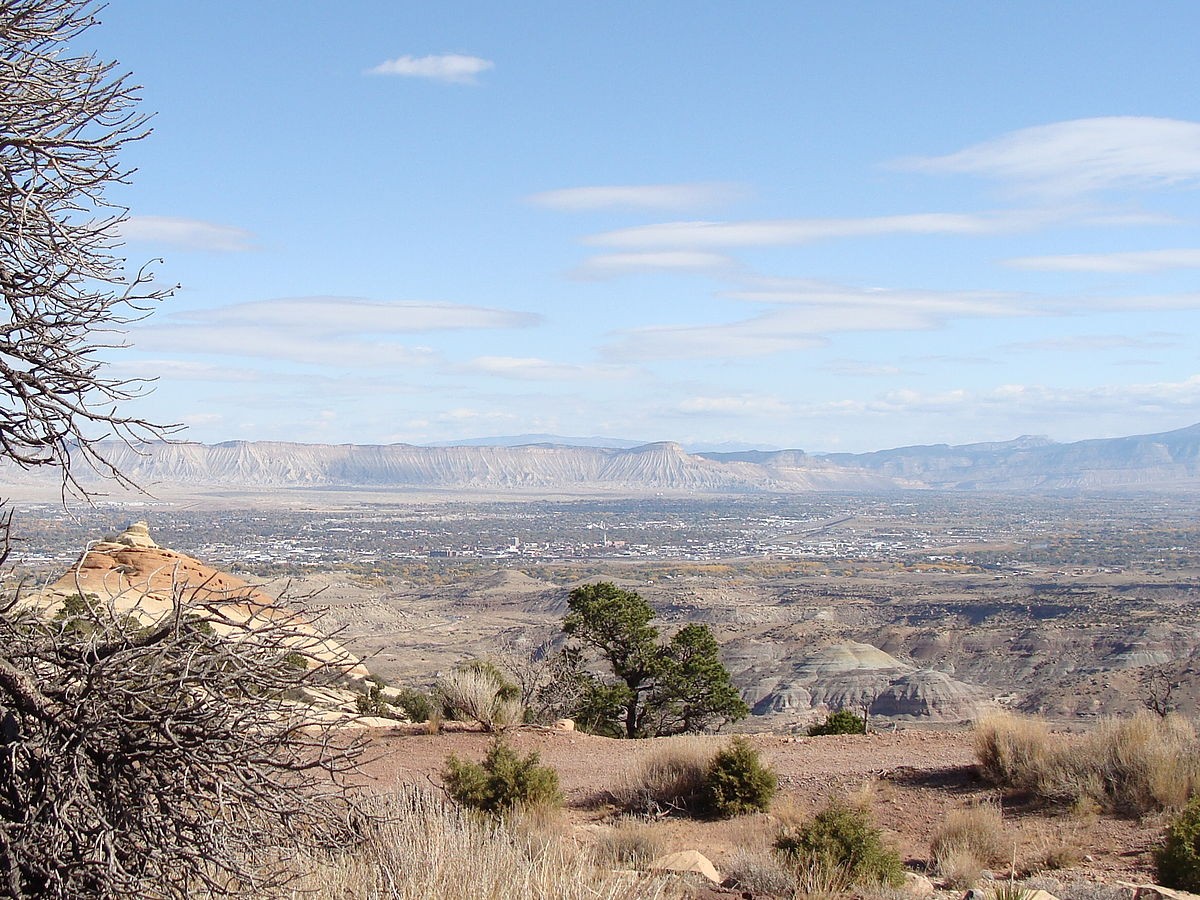
In the highlands of western Colorado, the climate is much less uniform. Most valleys are semi-arid, while the mountains have mild summers but with many days of high temperatures. The winters bring abundant snowfall to the higher slopes. While Colorado is itself a dry state, rivers flowing out of the Rocky Mountains in Colorado are a vital source of water for the farms and cities of the southwest.

Economy
Once chiefly a mining and agricultural state, Colorado's economy is now dominated by service and manufacturing industries, including scientific research and hi-tech industries. Important manufactures include food products, beer, printing and publishing, machinery and electrical goods. The main crops in Colorado are maize, hay, wheat, soya beans and sugar beet. Eastern Colorado also has abundant cattle ranches and pig farms.
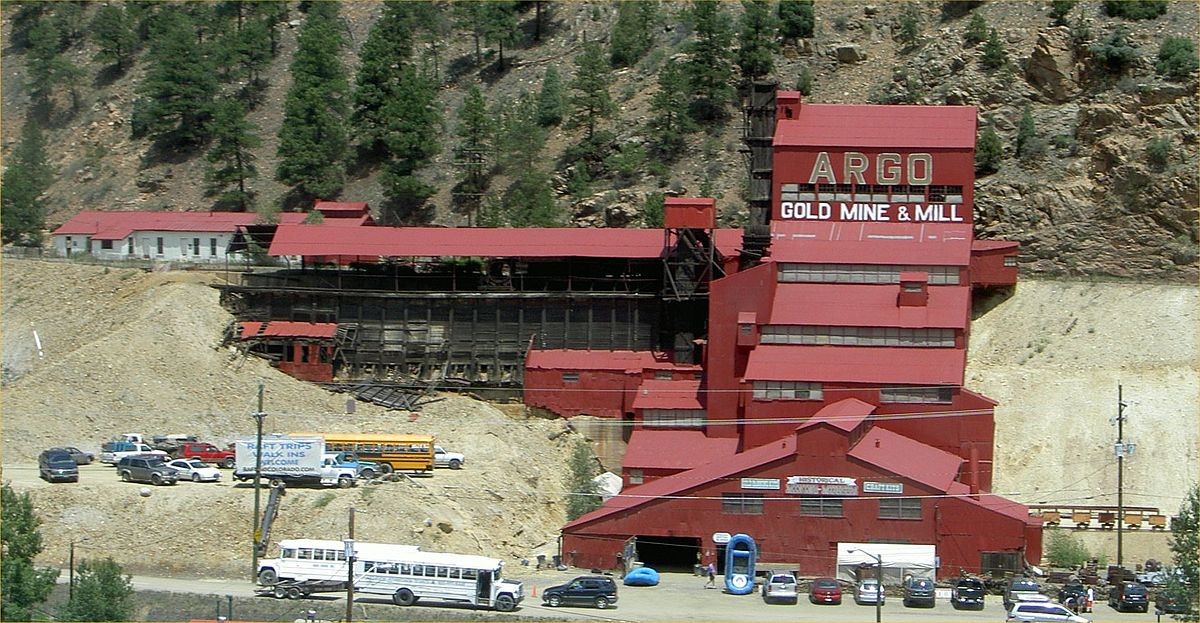
The mountain scenery and skiing make Colorado and its resorts, such as Vail and Aspen, a prime tourist destination. The Colorado Mineral Belt, stretching from the San Juan Mountains in the southwest to Boulder and Central City on the Front Range, contains most of the historic gold- and silver-mining districts. Gold is no longer mined extensively, but uranium mining continues.
Facts about Colorado
Area 103,717 sq miles (268,627 sq km)
Highest point Mount Elbert 14,440 ft (4401.2 m)
Population 5,877,610
Capital Denver
Largest cities Denver, 716,577; Colorado Springs, 488,664; Aurora, 395,052; Fort Collins, 170,376; Lakewood 155,961
Nickname The Centennial State
State bird Lark bunting
State flower Rocky Mountain columbine
State tree Colorado blue spruce
Consultant: Nicholas Harris
History of Colorado
c. 1200 BC–c. 1300 AD
Ancestral Puebloan people live in the valleys of the Colorado Plateau. They construct Cliff Palace, Mesa Verde National Park, from adobe and stone between 1190 and 1260 AD
16th century
At the time when the first European explorers arrive, the Native American Ute people live in the mountain areas of Colorado, while the Comanche, Apache, Cheyenne, Arapaho and Shoshone inhabit the Great Plains
16th century
Spanish conquistador Francisco Vásquez de Coronado was probably the first European to enter the region
1706
The area is claimed for Spain by Juan de Ulibarri, although no Spanish settlements have yet been established there.
1762
Having also claimed the eastern portion of the Colorado area, as part of Louisiana, France cedes the area to Spain
1800
The French regain Louisiana in 1800 by the Treaty of San Ildefonso concluded with Spain
1803
The US acquire the area north of the Arkansas River and east of the Rocky Mountains in the Louisiana Purchase; the federal government sends expeditions to Colorado, exploring routes previously opened by mountain men, trappers and fur traders
1806
Pikes Peak is discovered by US Army lieutenant Zebulon M. Pike
early 1800s
Most settlers pushing westwards across the Great Plains continue on to the more fertile lands of Oregon, Washington and California and do not settle in Colorado
1819
The Adams-Onís Treaty between US and Spain is agreed: the US gives up its claim to large parts of the West, including what is now Colorado (part of New Spain, soon to become independent Mexico), in exchange for acquiring Florida from Spain
1821
The Adams-Onis Treaty takes effect: the southeastern portion of the Territory of Missouri becomes the state of Missouri while the remainder, including what would become northeastern Colorado, becomes unorganized territory
1840
The tribes of the plains combine forces to halt the invasion of their homelands and hunting grounds by settlers
1848
The US acquires the remainder of present-day Colorado from Mexico by the Treaty of Guadalupe Hidalgo
1851
Settlers found the village of San Luis, Colorado's first permanent Euro-American settlement
1858
Prospectors led by Green Russell discover gold at Cherry Creek, where part of the city of Denver now stands; after another strike the following year, the mining boom begins
1859
Goldminers form the illegal Territory of Jefferson
1861
Territorial status is passed by Congress; William Gilpin, the first territorial governor, chooses the name Colorado
1864
James Huff discovers silver near Argentine Pass
1870
A railroad link from Denver to the Union Pacific in Cheyenne, Wyoming, is completed; this and later railroad construction helps to stimulate the expansion of farming and the growth of cattle ranches as well as to encourage settlers; between 1870 and 1880 Colorado’s population increases almost fivefold.
1872
Silver is discovered in the San Juan Mountains on the Ute Indian reservation in southwestern Colorado; the Ute people are removed from the area in 1873
1876
A bill granting Colorado's statehood is finally passed by Congress; it becomes the 38th state
1878–90
Further discoveries of silver and gold draws more prospectors to Colorado
1913–14
The Colorado Coalfield War: after the United Mine Workers of America go on strike against the Rockefeller-owned Colorado Fuel and Iron company, dozens die in battles between the miners and the Colorado National Guard on the Southern Colorado coalfields.
1999
Columbine High School massacre: two high school students open fire on their campus in Jefferson County killing 12 students and a teacher and wounding 24 others before killing themselves.
2012
Twelve people are killed and 70 people are injured in a movie theatre (cinema) in Aurora by a lone gunman.
2020
Cameron Peak Fire burns 845 sq km (208,913 acres) of forest to become the most extensive Colorado wildfire in recorded history.