
States of the US
Texas
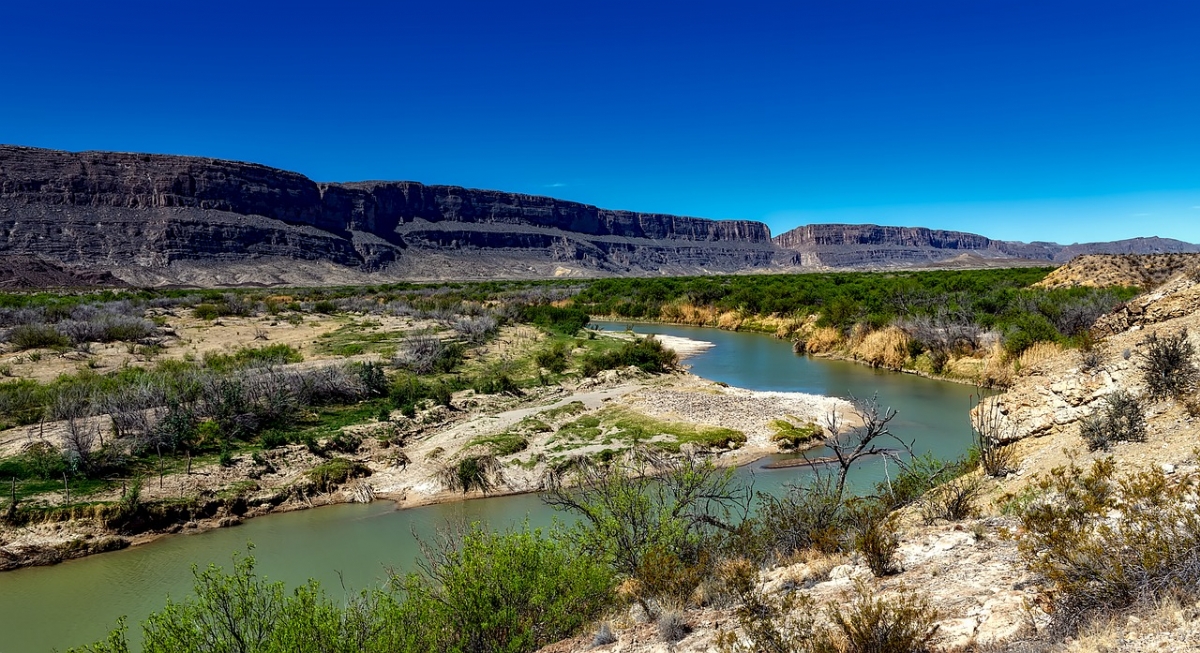
Texas is situated in the south central region of the United States. In the east, a coastal plain extends inland from the barrier islands and salt marshes along the coast of the Gulf of Mexico. Texas's major cities are located on this plain. Forming the western edge of the coastal plain is the Balcones Escarpment, marked by hills (“Texas Hill Country”) and waterfalls. Stretching to the west of this escarpment are the Great Plains, given over to cattle raising, especially in the Rio Grande Valley, and arable farming. The land rises to the dry, windswept Llano Estacado (Staked Plain), while to the south, beyond the Pecos River in the far west (“Big Bend Country”), there is a mountainous, arid wilderness.

Name
The name Texas is believed to come originally from the word tayshas in the Caddo language, spoken by the Native American Hasinai people, which means “friends” or “allies”. In 1541 the Spanish explorer Francisco Vásquez de Coronado may have taken tayshas to be the name of the people he met on his travels through the area. In Spanish, the word became Teyas or Tejas. (By a different theory, the name Teyas was how the Hasinai were known to the Pueblo people, and it was this name that the Spanish adopted.) Whatever its origin, the name, which eventually turned into into "Texas", became the official Spanish name for the area north of the Rio Grande and east of New Mexico.


Climate
Texas's climate varies from humid subtropical in the east, to semi-arid in the central Great Plains area, to arid desert climate in the far west Big Bend Country. Subtropical eastern Texas and lower Rio Grande Valley, where it is hot in summer and usually warm in winter, receives the most rainfall. In the eastern Piney Woods region, for example, this may exceed 60 inches (150 centimetres) per year. This is due to winds carrying moist air from the Gulf of Mexico. The central Texan high plains are much drier with no more than 32 inches (80 centimetres) of annual rainfall. This region, which is sometimes prone to drought, has hot summers and cold winters. The far west may receive only 16 inches (40 cm) of rainfall or less.
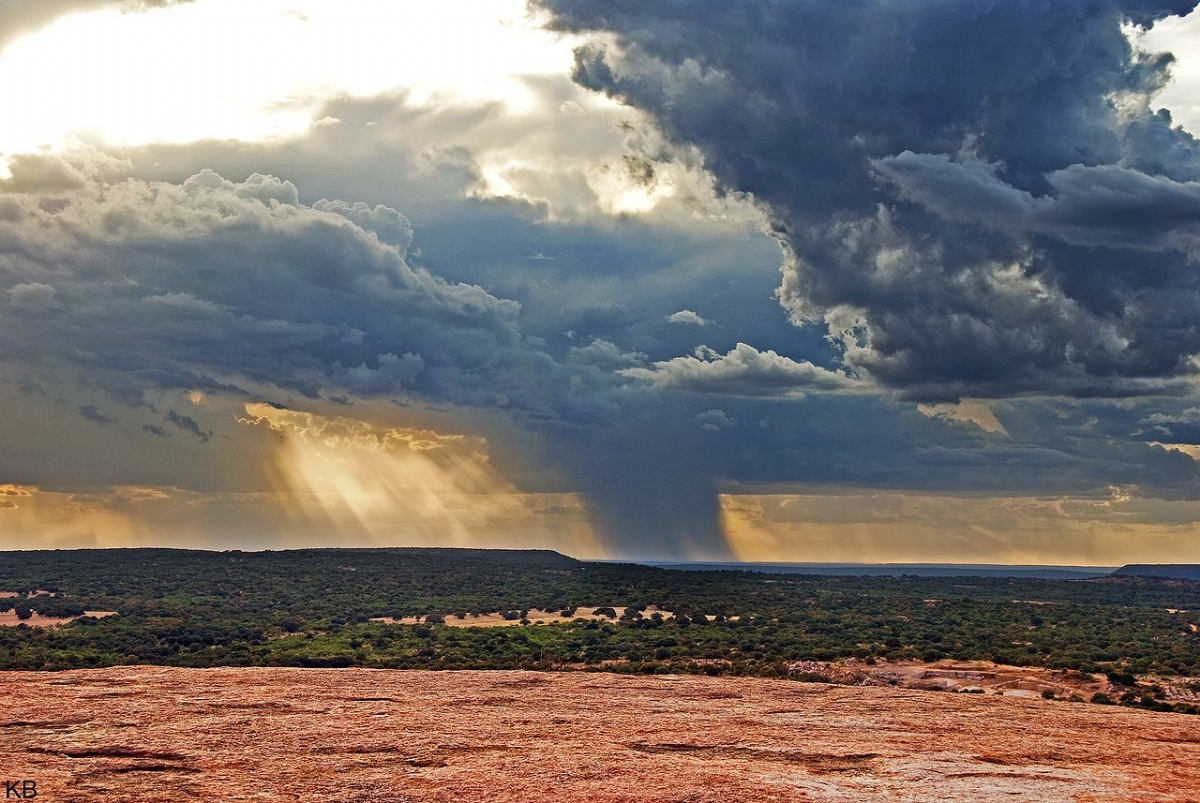
Thunderstorms are common in Texas, especially in eastern and northern parts. Northern Texas also lies in Tornado Alley and experiences the most tornadoes in the country, an average of 139 a year, most frequently in April, May and June, when westerly and southerly winds meet. Hurricanes sometimes strike the coastal plain. The most disastrous hurricanes were the Galveston Hurricane in 1900, Hurricane Rita in 2005—and Hurricane Harvey in 2017, in which floods devastated the region, forcing more than 30,000 people from their homes. It was one of the worst natural disasters in the history of the United States.


Economy
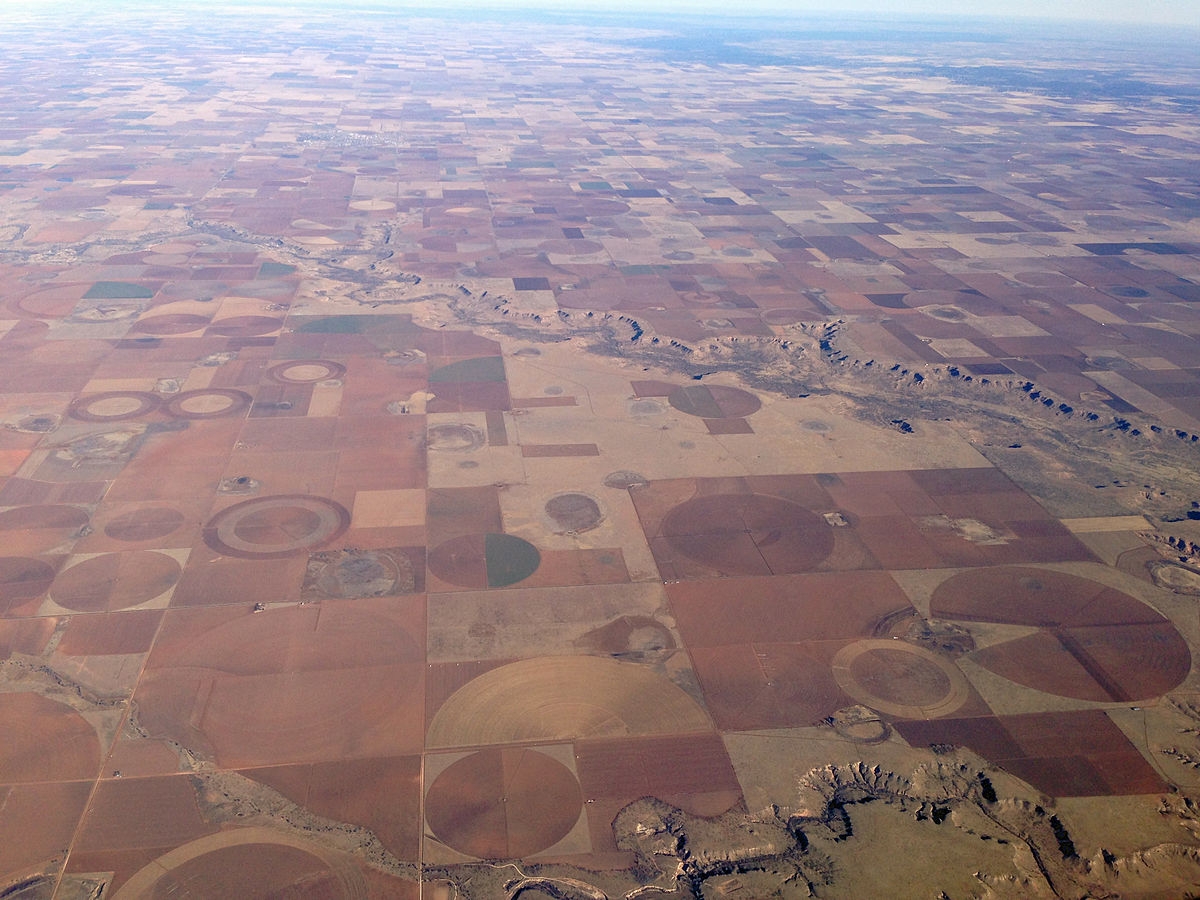
Cattle is the Texas’s most valuable agricultural product, of which it produces more than any other state. The state also leads the nation in sheep and the production of cotton. Texas’s farms also produce poultry and eggs, dairy products, greenhouse and nursery products, wheat, hay, sorghum, rice, sugar cane, pecans and a variety of fruits and vegetables. The state also has a large commercial fishing industry.
Texas is the leading US producer of oil and natural gas, although production is now in decline. Renewable energy is on the rise, and the state now produces the most wind power in the US. Texas is also a major producer of helium, salt, sulphur, clay, gypsum, cement and talc. Manufacturing, including chemicals, petrochemicals, food, transportation equipment, aircraft, machinery and metals, is also important. Hi-tech industries have developed in Texas, where companies such as Dell, AT&T and Texas Instruments have based their headquarters. The Austin area is known as the "Silicon Hills”, while the Dallas-Fort Worth area is nicknamed the "Silicon Prairie" (a take on California's famous Silicon Valley).


Houston
Houston is the most populous city in the Texas and its urban area is the fifth-most populous in the United States. Founded in 1836, near the banks of Buffalo Bayou (now called Allen's Landing), it was named after General Sam Houston, who, earlier that year, led his troops to victory over Mexico at the Battle of San Jacinto (just 25 miles or 40 kilometres east of where the city was established), and who became president of the independent republic of Texas.
Houston grew up as a port and rail hub for the export of cotton, but the discovery of oil in 1901 triggered rapid expansion. The Houston Ship Channel was opened in 1914, making Houston a deepwater port with access to the Gulf of Mexico. This boosted the city’s oil refining and petrochemicals industries, along with shipbuilding. Today, petroleum products, chemicals, and oil- and gasfield equipment account for approximately two-thirds of its exports.

In the mid-20th century, Houston became the home of NASA's Lyndon B. Johnson Space Center, where the Mission Control Center is located. Nicknamed the "Space City", Houston is an international centre of business, renewable energy, trade, entertainment, culture, fashion, technology, aeronautics and biomedical research. Its port is still one of the biggest in the country. Houston has one of the most ethnically diverse populations in the US: more than 90 languages are spoken in the city.


Dallas
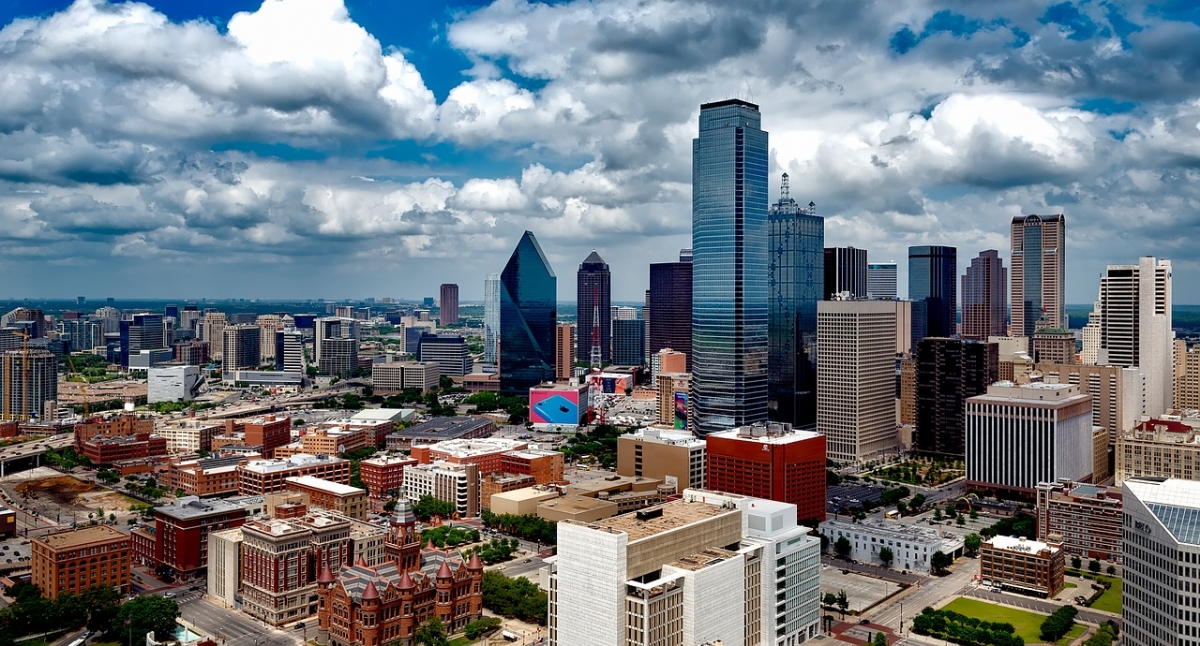
Together with neighbouring Fort Worth, Dallas forms the sixth-most populous urban area in the US with a population of around 5.7 million. About a sixth of all Texans live in the Dallas-Fort Worth Metroplex.
John Neely Bryan first established a permanent settlement near a crossing point on the Trinity River in 1841 and named it Dallas (no one knows why). With the construction of railways in the 1870s, Dallas became a business and trading centre, especially in cotton and leather goods. Having become an industrial city, it was booming by the end of the 19th century. It later became a centre for petroleum financing.
The city's economy today is based chiefly on banking, commerce, telecommunications and technology. Richardson, a northern suburb of Dallas, is home to thousands of hi-tech companies (giving rise to the area’s nickname “Silicon Prairie”), including Texas Instruments, a major manufacturer and employer. Dallas/Fort Worth International Airport is one of the largest and busiest in the world. Dallas’s population includes significant numbers of immigrants from Mexico, Russia, Asia and the Horn of Africa.
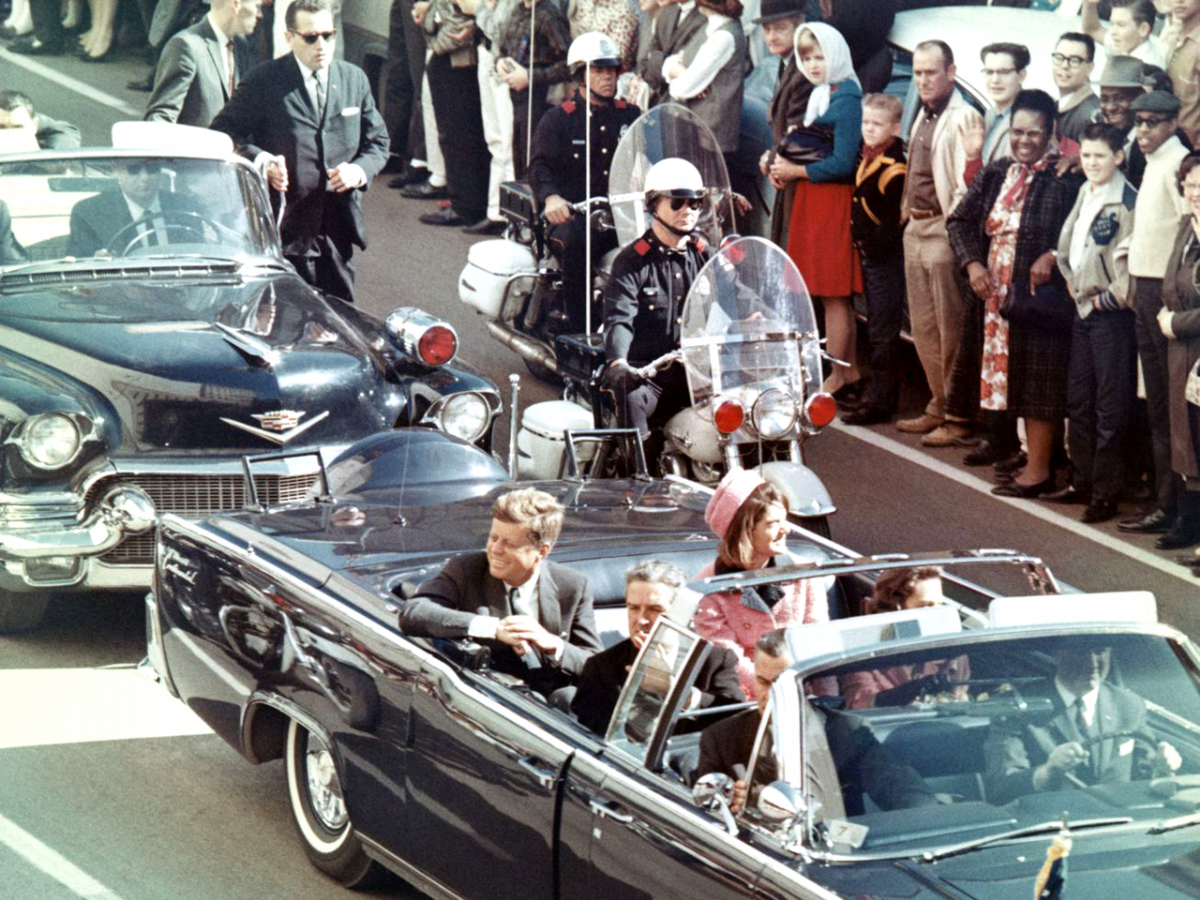
On 22nd November 1963 President John F. Kennedy was assassinated on Elm Street while his motorcade passed through Dealey Plaza in downtown Dallas. Two floors of the building from which Lee Harvey Oswald shot Kennedy, the Texas School Book Depository, have been converted into a Kennedy museum.
Facts about Texas
Area 268,581 sq miles (696,241 sq km)
Highest point Guadalupe Peak 8751 ft (2667 m)
Population 30,503,301
Capital Austin
Largest cities Houston, 2,314,157; San Antonio, 1,495,295; Dallas, 1,302,868; Austin, 979,882; Fort Worth, 978,468; El Paso, 678,958; Arlington, 398,431; Corpus Christi, 316,595; Plano, 290,190; Laredo, 257,602
Nicknames The Lone Star State
State bird Mockingbird
State flower Bluebonnet
State tree Pecan


Consultant: Nicholas Harris
History of Texas
before 16th century
Native American peoples living in present-day Texas at the time of the arrival of Europeans include the Caddo, Apache, Choctaw, Comanche, Atakapa, Coahuilteco, Pueblo, Hasinai, Wichita and Natchez
1528
Shipwrecked Spanish explorer Álvar Núñez Cabeza de Vaca and his crew become the first Europeans to set foot in what is now Texas; they explore the interior
1541
Spanish explorer Francisco Vásquez de Coronado crosses northern Texas
1682
The first Spanish settlement in Texas is established at Ysleta (near present-day El Paso)
1685
Robert Cavelier, Sieur de la Salle, establishes the colony of Fort Saint Louis near Matagorda Bay; it is abandoned two years later
1690
The first Spanish mission is founded near Weches, and named Francisco de los Tejas
1718
Settlers led by Martín de Alarcón establish a mission and settlement at present-day San Antonio
1803
Louisiana Purchase: US acquires from France all the lands between the Mississippi and the Rocky Mountains, but the area of Texas is disputed with Spain
1819
Adams-Onis Treaty: Spain gains undisputed control of Texas in exchange for US recognizing the Spanish claim to Florida; the boundary between New Spain and the United States is set at the Sabine River (the present-day border between Texas and Louisiana)
1821
Following the Mexican War of Independence, in which Mexico breaks from Spain, Texas becomes part of newly independent Mexico; Mexican Texas permits immigrants from outside Mexico and Spain: empresarios (promoters) encourage settlers from the United States, Europe and elsewhere
1822
An American group, three hundred families (the “Old Three Hundred”) led by Stephen F. Austin, establish a settlement between the Brazos and Colorado rivers; Austin, as it is later named, becomes the first American settlement in Texas
1820s
A large number of American settlements are established in Texas, including Brazoria, Washington-on-the-Brazos, San Felipe de Austin, Anahuac and Gonzales; Americans soon outnumber Mexicans by more than three to one
1835
Texas Revolution breaks out when Mexican forces attempt to disarm Texans in Gonzales. Victorious at the Battle of Gonzales, the Texans drive Mexican troops from the region
1836
Texan Declaration of Independence made on 2nd March 1836: the Republic of Texas is formed. The Mexican army under their leader Antonio López de Santa Anna moves to crush the rebellion, overwhelming Texan defenders at the Battle of the Alamo after a 13-day siege (February–March) and massacring several hundred Texians captured at Goliad (March). Texan Army commanded by Sam Houston attacks and defeats Mexican forces at the Battle of San Jacinto (April); Mexican leader Antonio López de Santa Anna is captured and forced to sign the Treaties of Velasco, granting the independence of Texas and ending the war (April)
1836–45
Texas is an independent republic with Austin, after 1839, its capital. Texas’s attempts to join the US are rebuffed. Mexico refuses to recognize Texas’s independence and launches attacks on San Antonio
1845
Texas is admitted to the Union as a state in December
1846–48
Mexican–American War is triggered by Mexico’s objection to the US annexation of Texas and disputes over land north of the Rio Grande. The first battles of the war—the Siege of Fort Texas and the battles of Palo Alto and Resaca de la Palma—are fought in the new state
1848
Following a series of US victories, the Treaty of Guadalupe Hidalgo ends the war; Mexico grants the US undisputed control of Texas with its borders established along the Rio Grande, as well as ceding other territory in the American Southwest
1840s–50s
Attracted by cheap land, settlers start to pour into Texas, including German and Czech migrants. Cattle ranching spreads rapidly, but cotton, produced on plantations with slaves, is the state's chief crop
1861
Texas secedes (breaks away) from the US and joins the newly created Confederate States
1870
Texas is readmitted to the Union after the Civil War
1870s–80s
Stock raising on the plains becomes dominant: Texas cowboys drive herds of longhorn cattle over trails such as the Chisholm Trail to the railheads in Kansas, and even as far north as the grasslands of Montana
1880s
The coming of the railways ends the long cattle drives
1900
Galveston hurricane, the deadliest natural disaster in US history: storms and floods kill up to 8000 people and devastate Galveston
1901
Discovery of the Spindletop oil field near Beaumont; oil industry develops rapidly during the early 20th century
1930
East Texas Oil Field is discovered
1947
Texas City disaster: a fire on board the French-registered ship SS Grandcamp docked in the port of Texas City, Galveston Bay, detonates her cargo of about 2300 tons of ammonium nitrate. This starts a chain reaction of fires and explosions in other ships and nearby oil-storage facilities, killing at least 581 people and injuring at least 4000 more
1950s
A period of drought lasting until 1957 in which the state receives 30 to 50% less rain than normal, while temperatures rise above average. The number of farms and ranches shrinks by nearly a third as a result
1963
Lee Harvey Oswald assassinates President John F. Kennedy in Dallas
1993
Waco Siege: US federal agents storm the Mount Carmel Center ranch near Waco, where cult leader David Koresh and his followers, members of a religious sect called Branch Davidians, are reportedly storing weapons. The assault results in the deaths of four agents and 82 Branch Davidians
2014
American immigration crisis: a surge of unaccompanied children and women from the Northern Triangle of Central America (Guatemala, Honduras and El Salvador) seeking entrance to the US overwhelms local border patrols in Texas
2017
Hurricane Harvey makes landfall near Rockport; around 185,000 homes are damaged and 9000 destroyed; 300,000 people are left without power; 88 people lose their lives
2021
As a result of three severe winter storms sweeping across the US on February, the state's power grid becomes overworked. ERCOT, the main operator of the grid, implements blackouts across Texas, causing more than 4.5 million homes and businesses to be left without power, some for several days, leading to hundreds of deaths
2022
(May) Nineteen children and two teachers are killed in a shooting by a lone gunman at Robb Elementary School in Uvalde, a town lying 137 km (85 miles) west of San Antonio. Seventeen other people are wounded. It is the third deadliest American school shooting, after the Virginia Tech (2007) and Sandy Hook Elementary School (2012)
2025
(July) Deadly flash floods occur in Texas Hill Country, particularly in Kerr County, as water levels along the Guadalupe River rise rapidly. More than 140 people are confirmed dead, including girls from Camp Mystic summer camp. A further 100 are reported missing. The flooding is in part caused by rains from Tropical Storm Barry.