
Africa
Egypt
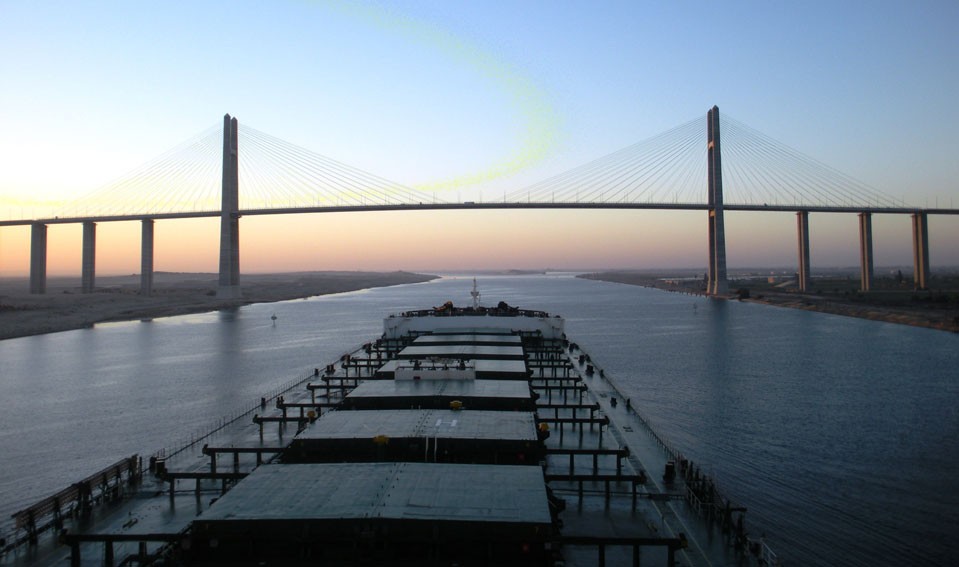
Over 5000 years ago, one of the world’s greatest civilizations grew up in Egypt along the banks of the River Nile. Today, almost everybody in Egypt still lives along the Nile, in towns, cities and villages on its fertile floodplain. Egypt has a hot, dry desert climate, and desert covers much of the rest of the country. East of the Nile, the desert meets the Red Sea coast at a range of mountains. The Libyan Desert, part of the vast Sahara, stretches off to the west. Where it flows into the Mediterranean Sea, the Nile splits into two main channels and many smaller ones, forming a wide delta. Here lies the richest farmland in Egypt. The Suez Canal, in the northeast, gives ships a short cut between the Mediterranean Sea and Red Sea.


People
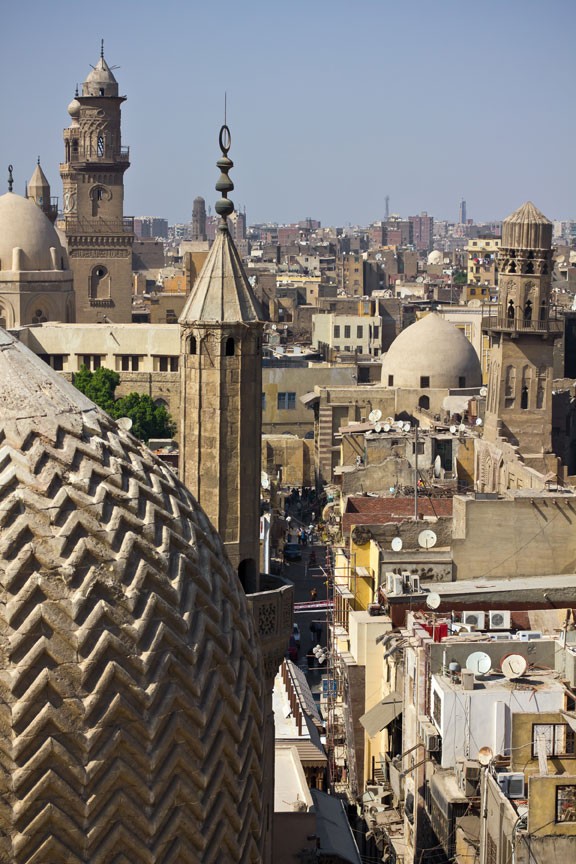
Around 90% of Egypt’s people are ethnic Egyptian: they are descendants of the people who have lived here for thousands of years. While the majority of the population are Muslim, there are about 7–12 million Coptic Christians, who follow a branch of Christianity that has its roots in Egypt 1900 years ago. In Egypt’s cities, many people work in services such as banking, education and tourism. Traditional coffee houses are popular places for people to meet their friends, play games and talk.
Just over half of Egyptians live in the countryside. There is a shortage of farmland on the narrow Nile floodplain, and some is being lost to the desert each year. The rest is farmed intensively, with cotton, rice, wheat, corn, sugar cane, fruit and vegetables among the main crops. The cotton that is grown in Egypt has especially long fibres, making it softer and stronger than other types of cotton.

Oil and tourism
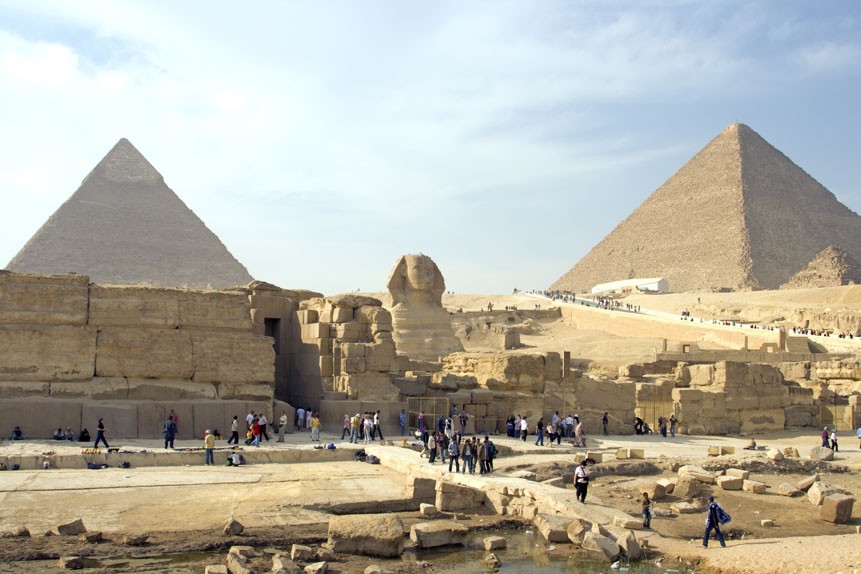
Oil reserves were first discovered in Egypt’s Gulf of Suez in the early 20th century. Today, petroleum products, oil and natural gas are the country's major exports. Egypt's principal source of income is tourism. Around 15 million tourists come every year to visit the country’s ancient monuments, especially the pyramids, tombs and temples, as well as its Red Sea beaches.
Aswan Dam
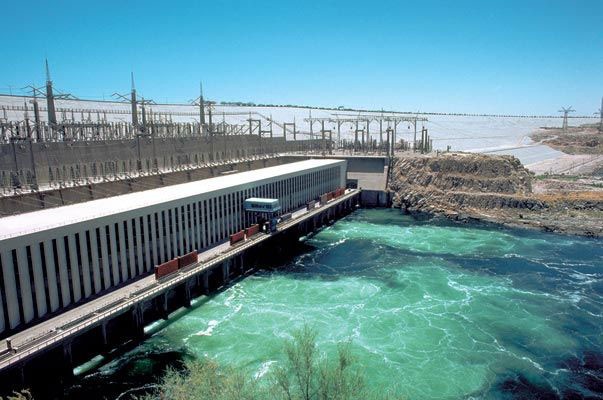
Egypt receives very little rain, so nearly all the water used in agriculture comes from the River Nile. Historically, the Nile flooded once each year, leaving behind minerals that enriched the soil. But crops were sometimes destroyed whenever there was either a particularly high flood—or a drought. The completion of the High Dam at Aswan in 1970 has helped to manage the Nile floods, provide a reliable water supply for irrigation from the new reservoir Lake Nasser, and enable hydro-electric power to be generated. When the river swells, the dam holds back some of the water so that it can be distributed later in the year. Canals channel water into the fields. Farmers can now produce two or more crops per year.

Consultant: Nicholas Harris
Facts about Egypt
Population 107,304,000 (2024 estimate)
Area 997,739 sq km (385,230 sq miles)
Highest point Mount Catherine 2629 m (8625 ft)
Capital Cairo (pop. 9,801,536; metro area pop. 25,600,000)
Other major cities Alexandria (5,362,517), Giza (4,458,135), Shubra El Kheima (1,275,700), Port Said (791,749), Suez (716,458)
Languages Modern Standard Arabic (official language), Egyptian Arabic, Sa’idi Arabic
Religions Muslim (mostly Sunni) 90%, Coptic Christian 9%, other 1%
Ethnicity Egyptian 91%, Bedouin 1%, Beja 1%, Nubian, Abazas and other 7%
Currency Egyptian pound (EGP)
Chief exports Oil and petroleum products, cotton, textiles, metals, processed food, chemicals

History of Egypt
c.3100 BC
Upper and Lower Egypt are united, probably by King Menes.
2575–2134 BC
The Old Kingdom: the age of pyramid-building in ancient Egypt
1560–1070 BC
The New Kingdom: often referred to as the "Golden Age" of ancient Egyptian civilization
31 BC
Mark Antony and Cleopatra VII are defeated by the Romans at the Battle of Actium, and Egypt becomes part of the Roman Empire.
AD 640
Muslim Arabs invade and Egypt becomes part of the Islamic Empire. They introduce a new religion: Sunni Islam.
1517
Ottoman Turks conquer Egypt and it becomes part of the Ottoman Empire.
1798–1801
The French, led by Napoleon, attempt to take control of Egypt. They are defeated by the British.
1869
The Suez Canal opens.
1882
The British take control of Egypt, aiming to keep the Suez Canal open: it is an important shortcut for ships sailing between Europe and Asia.
1952
Egyptian Revolution of 1952: King Farouk, supporter of the British, is overthrown, and the British occupation of Egypt is ended.
1956
Gamal Abdel Nasser becomes president and starts a programme of modernization.
1956
Suez Crisis: Forces from Israel, Britain and France invade Egypt in order to regain control of the Suez Canal. They are made to withdraw by the United Nations.
1970
The Aswan Dam is completed.
1997
Sixty-two people, mostly tourists, are killed by Islamist militants in the Luxor Massacre.
2011
Egyptian Revolution of 2011: protests lead to the resignation of Egypt’s president, Hosni Mubarak. The country is ruled by the military.
2012–13
Mohamed Morsi is elected president. Further protests and violence lead to the army removing Morsi and installing an interim government.
2014
Abdel Fattah el-Sisi, former commander-in chief of Egypt’s army, is elected president.