
States of the US
Florida
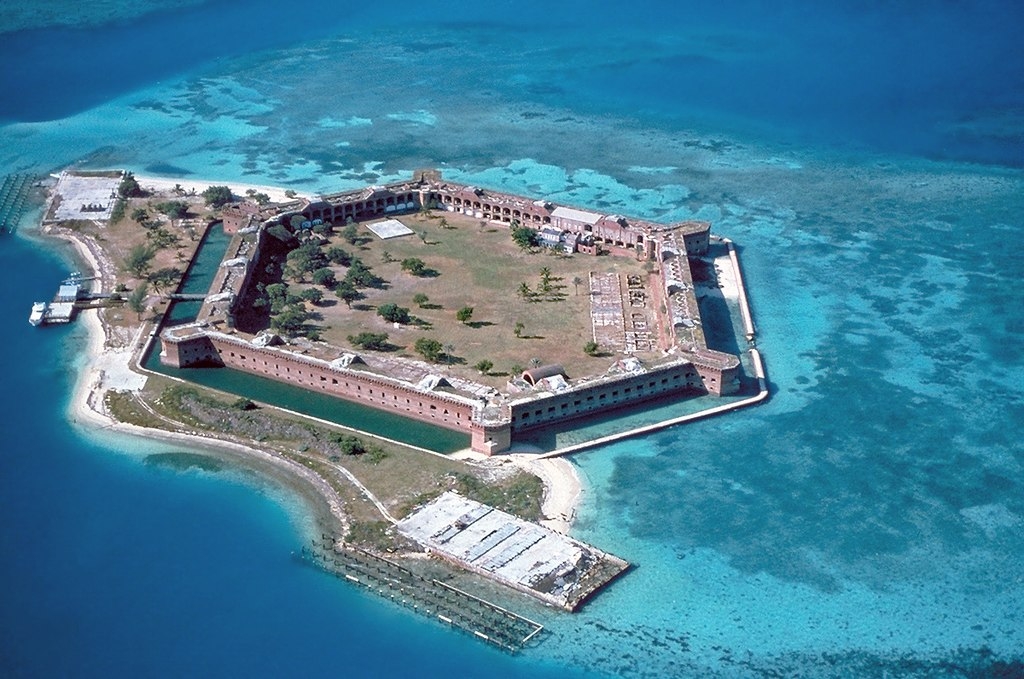
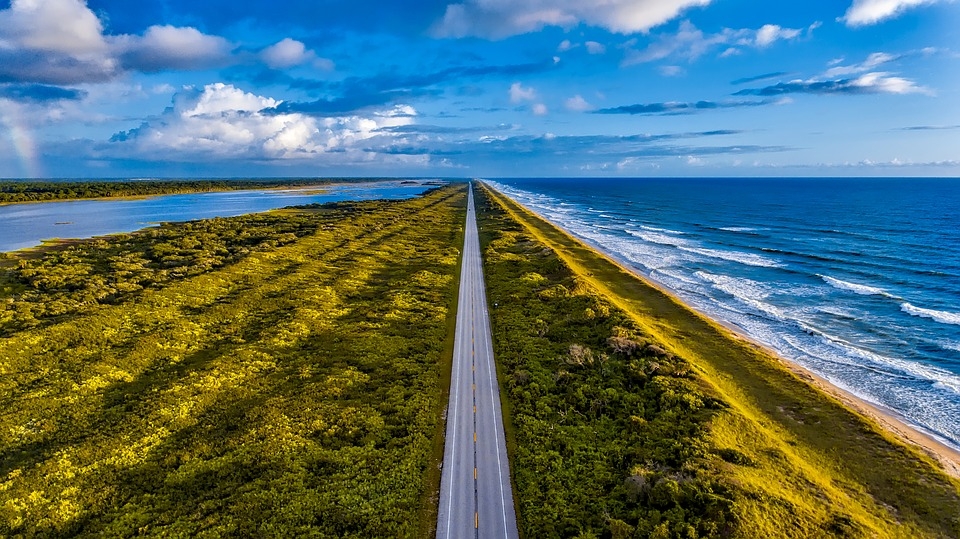
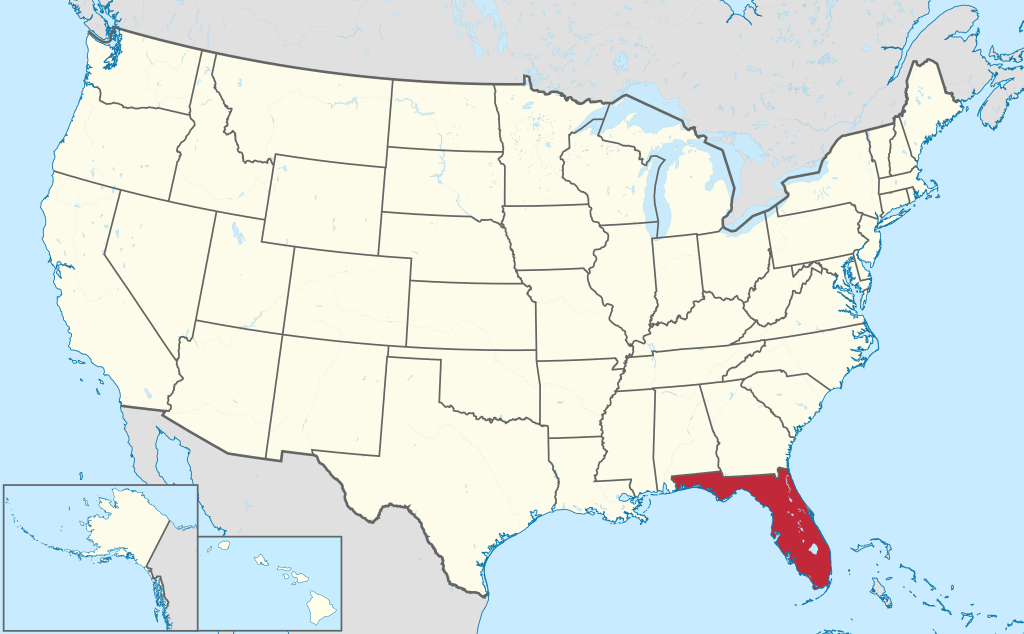
Florida is located in the southeastern United States. The northwestern “panhandle” is gently rolling country, interspersed with swamps along the coast. Most of the state occupies a peninsula lying between the Gulf of Mexico and the Atlantic Ocean. It is low and flat with a few rolling hills. Much of the east coast is flanked by sandbars and barrier islands. Central Florida is dotted with lakes, with Lake Okeechobee the largest. The Everglades in the south, which includes Big Cypress Swamp, is an extremely wide, slow-flowing river. Stretching off from the peninsula's tip are the Florida Keys, a chain of islands and reefs linked to the mainland by a causeway.

Name
Spanish explorer Juan Ponce de León was the first European to set foot on what is now Florida. Landing there during the Easter season—called Pascua Florida (“Feast of Flowers”) in Spanish—in 1513, he named it La Florida (“Land of Flowers"). It is said Ponce de León was searching for the Fountain of Youth, a spring that supposedly restored the youth of anyone who drunk or bathed in it, but this is a myth.
Climate
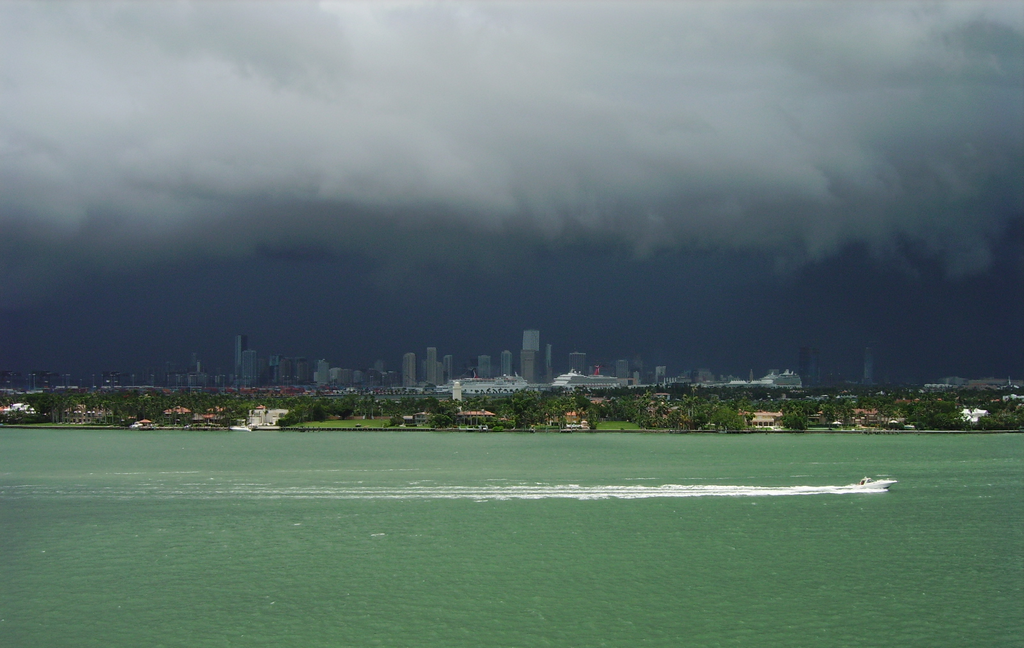
Warmed by surrounding waters and cooled by ocean winds, Florida, the Sunshine State, is famous for its pleasant year-round climate. This varies from subtropical north of Lake Okeechobee, to tropical in the south. Florida has one of the highest average precipitation levels of any state, with afternoon thunderstorms common from late spring until early autumn. Florida is the most hurricane-prone of all the states, particularly from August to October. The latest significant ones were Hurricane Irma, which inflicted catastrophic damage and flooding in the Florida Keys in September 2017, and Hurricane Ian in September 2022, the third costliest weather disaster in history.

Economy
Florida is the country’s leading producer of oranges, grapefruits and tangerines. Other important crops include tomatoes, sugar cane, vegetables, melons, strawberries, sugar cane and peanuts. It is also known for its cattle and dairy products as well as fisheries, including crab, lobster and shrimp catches.
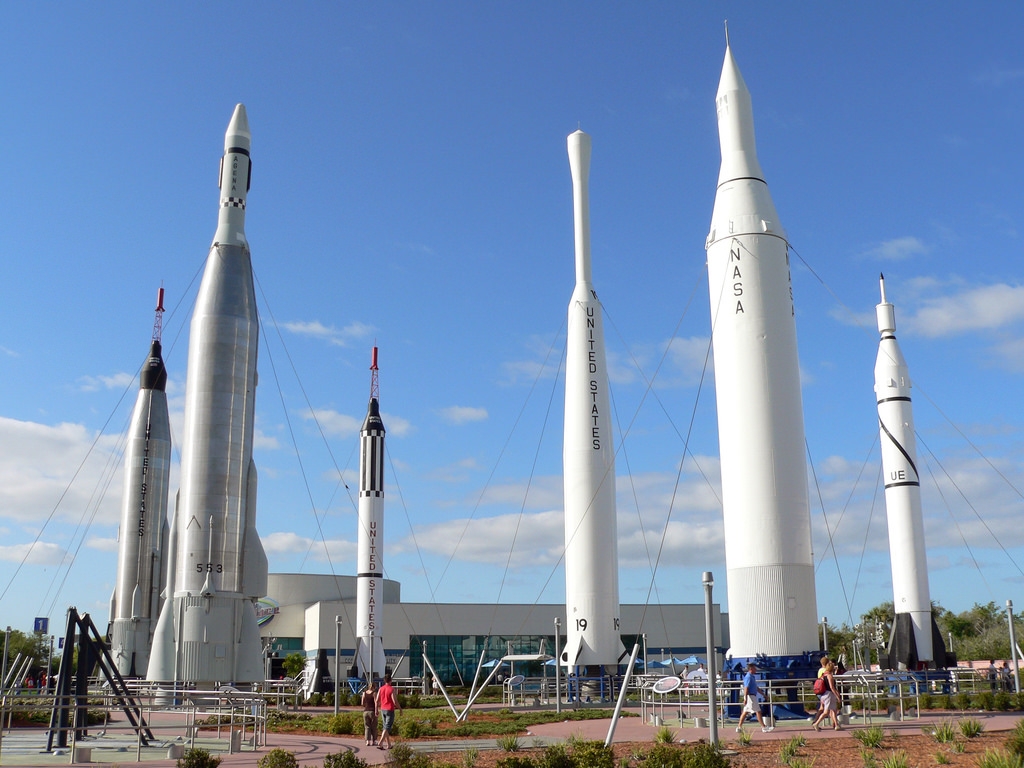
Florida’s industries include the mining (in Bone Valley) of phosphates, electrical equipment and electronics, printing and publishing, transportation equipment (including power boats), food processing, timber and machinery. Cape Canaveral, from where many space flights have been launched, is the site of the John F. Kennedy Space Center. Many defence and scientific research companies are located nearby.
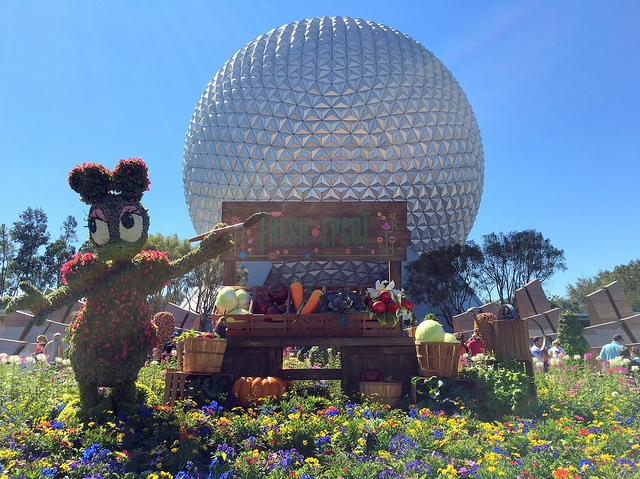
Tourism plays a vital role in the state's economy, with Disney World, a huge cluster of theme parks, and Universal Studios—both in the Orlando area—leading tourist attractions. Florida's beaches, including those at Miami Beach, Daytona Beach and Fort Lauderdale, attract many vacationers. Other attractions include Everglades National Park and Palm Beach.
The Everglades
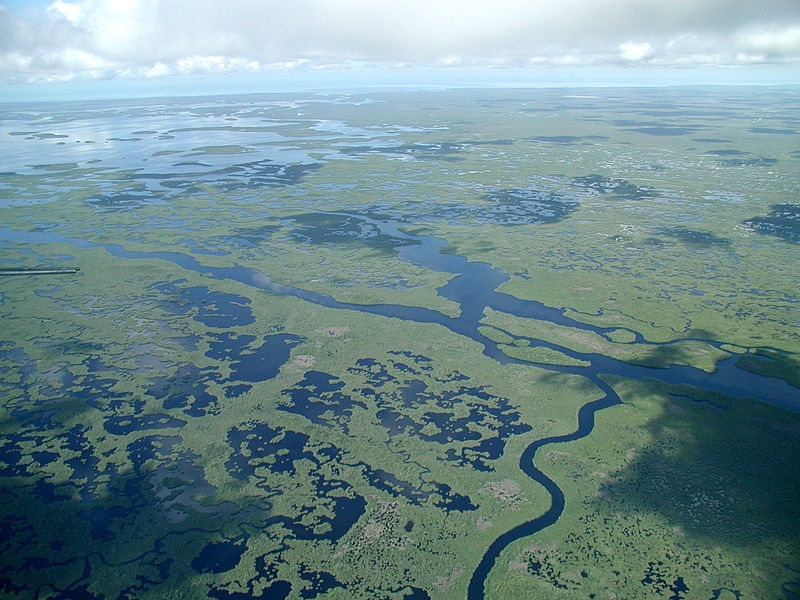
The Everglades in southern Florida is a natural region of tropical wetlands, made up of marshes, swampland and slow-moving water. Much of the Everglades is covered by sawgrass marsh or prairies. There are also cypress swamps and mangrove forests at the river estuaries. Water channels, called sloughs, flow between the sawgrass prairies. The waters rise and fall according to the seasons. Wading birds, such as flamingos and spoonbills, feed in the shallows, while alligators roam in the deeper water. Approximately half of the original Everglades has been developed as farmland or residential areas.


Water leaving Lake Okeechobee in the summer wet season forms a slow-moving river 60 miles (100 kilometres) wide and over 100 miles (160 kilometres) long, flowing south across a limestone shelf towards Florida Bay at the southern tip of the state. The slow movement of a broad, shallow river is known as sheetflow, and gives the Everglades its nickname, “River of Grass”. The water is prevented from draining away because the saturated limestone, which is porous like a sponge, can absorb no more water. So water collects on the surface, forming the wetland.
Much of the coast and estuaries of Florida Bay are lined with mangroves. They are considered to be part of the Everglades. The fresh water flowing into Florida Bay from the wetlands to the north creates perfect conditions for vast beds of turtle grass. Marine turtles and manatees feed on the grass.
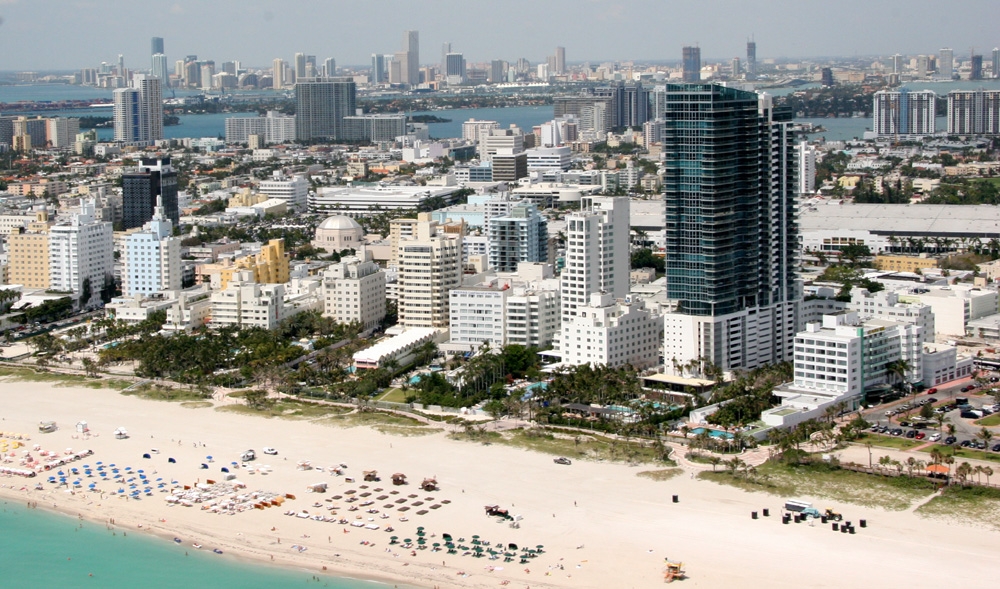
Miami
The village of Miami was established on the site of an abandoned plantation in the 1840s. Its population was still only about 1000 people when the first railroad train arrived in 1896 and the city of Miami was officially incorporated. It was named after the nearby Miami River, itself from Mayaimi, the original name of Lake Okeechobee.

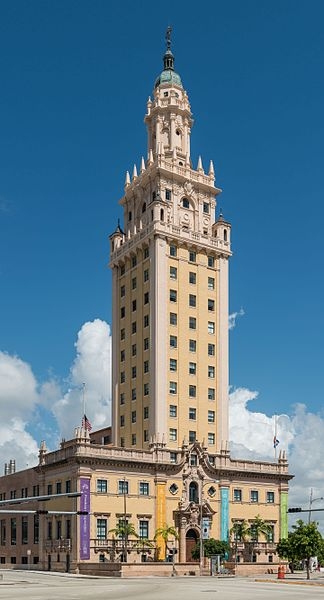
Miami grew quickly in the 1920s and especially after World War II, when military personnel who had been based there set up homes on the coast to take advantage of the year-round warm climate. At the same time, winter visitors flocked to Miami, seeking escape from the winter cold of the northeastern and midwestern states. Following Fidel Castro’s takeover of Cuba in 1959, the city provided a haven for wealthy Cuban refugees. It later became a destination for refugees from other Latin American countries, such as Nicaragua. Around 70% of the city’s present inhabitants claim Hispanic ancestry.
The Miami area is today an important financial centre and home to headquarters of a number of multinational corporations. Miami International Airport and the Port of Miami are some of the busiest points of entry into the United States. It forms with Fort Lauderdale the fourth-most populous urban area in the US with a population of more than 6 million. The city's nickname, the Magic City, comes from its rapid growth: winter visitors remarked that the city grew so much from one year to the next, it was like magic.
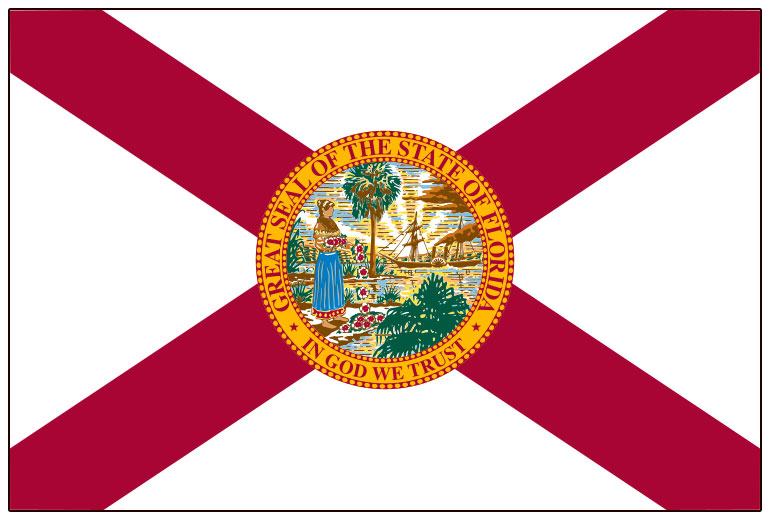
Facts about Florida
Area 53,927 sq miles (139,671 sq km)
Highest point Britton Hill 345 ft (105 m)
Population 22,610,726
Capital Tallahassee
Largest cities Jacksonville, 985,843; Miami, 455,924; Tampa, 403,364; Orlando, 320,742; St Petersburg, 263,553; Port St Lucie, 245,021; Cape Coral, 224,455; Hialeah, 221,300; Tallahassee, 202,221; Fort Lauderdale, 184,255
Nicknames Sunshine State
State bird Northern mockingbird
State flower Orange blossom
State tree Sabal palm
Consultant: Nicholas Harris
History of Florida
16th century
At the time of European exploration, Native American groups living in Florida include the Apalachee (of the Panhandle), Timucua, Ais, Tocobaga, Calusa and Tequesta
1513
Spanish conquistador Juan Ponce de León lands on the peninsula, although at the time he believes it is an island
1539
Spanish conquistador Hernando de Soto navigates around the coast of Florida and establishes that it is not an island
1540s
Spain lays claim to whole of southeastern US and calls it Florida
1562
Frenchman Jean Ribaut discovers the St Johns River
1564
Frenchman René de Laudonnière founds Fort Caroline at the mouth of the St Johns River. King Philip II of Spain commands Pedro Menéndez de Avilés to drive the French out of the area
1565
The Spanish settlement of San Agustín (St Augustine) is established under the leadership of Pedro Menéndez de Avilés; it is the earliest European settlement in the continental US
early 18th century
Native American refugees start to migrate from what is now Georgia and Alabama into Florida. These Lower Creek (or Muscogee) people intermingle with other Native Americans and form a new culture which they call Seminole
1742
English colonists from Georgia defeat the Spanish in the Battle of Bloody Marsh on St Simons Island
1763
Spain cedes Florida to Great Britain in exchange for control of Havana, Cuba, which was captured by the British during the Seven Years' War; the British divide Florida into East Florida and West Florida with capitals at St Augustine and Pensacola respectively
1783
Spain regains both East and West Florida after Britain's defeat in the American Revolution and the subsequent Treaty of Versailles; the region becomes a haven for escaped slaves and a base for Indian attacks against US territories
1810
Rebellion leads to the establishment for 90 days of the so-called Free and Independent Republic of West Florida
1810
Parts of West Florida are annexed and incorporated into the newly formed Territory of Orleans by the US as part of the Louisiana Purchase
1812
Mobile District of West Florida is annexed to the Territory of Mississippi; Spain continues to dispute the area
1817–18
First Seminole War fought against the Seminole Indians by Andrew Jackson; the US now controls East Florida
1821
Spain formally cedes Florida to the United States by the Adams-Onís Treaty
1822
East Florida is merged with part of West Florida to form the Territory of Florida
1835–42
Second Seminole War, or Florida War; following their defeat in the war, many Seminoles are removed to Indian Territory (land further west set aside by the US government for Native American settlement)
1845
Florida becomes the 27th state to join the Union
1855–58
Third Seminole War results in the forced removal of most of the remaining Seminoles; American settlers begin to establish cotton and tobacco plantations in northern Florida, which require slave labour
1861
Florida secedes from the Union, and it becomes one of the founding members of the Confederate States
1896
City of Miami is officially incorporated after a railway link is completed
1920s
Florida land boom: many people from outside Florida rush to buy land in newly laid out communities such as Miami and Palm Beach
1949
Cape Canaveral is chosen as a test site for the US missile program; it later becomes a launch site for the US space exploration programme
1968
Kennedy Space Center, adjacent to Cape Canaveral, becomes NASA's primary launch centre of human spaceflight; Apollo, Skylab and Space Shuttle programmes are carried out from here.
1971
Disney selects Orlando for an updated version of their Disneyland Park in California. The Magic Kingdom, the first component of the Disney World resort, opens and becomes Florida's best known tourist attraction
1992
Hurricane Andrew strikes Homestead, just south of Miami, as a Category 5 hurricane, leaving 40 people dead, 100,000 homes damaged or destroyed and more than a million people without electricity.
1986
The Kennedy Space Center witnesses America's worst space tragedy when Space Shuttle Challenger explodes after take-off, killing all seven astronauts on board.
2000
During US presidential election, a vote recount in Florida triggers accusations of electoral fraud and manipulation. The final official count gives the victory to George W. Bush over Al Gore by 537 votes.
2014
With its population now exceeding 19 million people, Florida surpasses New York to become the third most populous state in the US
2017
(September) Hurricane Irma causes widespread and catastrophic damage, especially in the Florida Keys. After Hurricane Maria devastates Puerto Rico two weeks later, hundreds of thousands of Puerto Ricans arrive in Florida to escape the widespread destruction.
2018
Lone gunman opens fire on students and staff at Marjory Stoneman Douglas High School in Parkland, Florida, murdering 17 people and injuring 17 others. It is the deadliest high school shooting in US history.
2021
An apartment block in Surfside, Miami, collapses, killing at least 97 people.
2022
(September) Hurricane Ian, the deadliest hurricane to strike Florida since 1935, causes widespread damage, especially in Fort Myers Beach and Naples, and claims 129 lives across the state. Millions are left without power, while many are forced to take refuge from floods.
2024
(October) Hurricane Milton, the second-most intense Atlantic hurricane ever recorded over the Gulf of Mexico, strikes Florida, less than two weeks after Hurricane Helene, the deadliest to strike the mainland US since Katrina in 2005, devastates the state's Big Bend region. Milton spawns a tornado outbreak and causes widespread flooding.